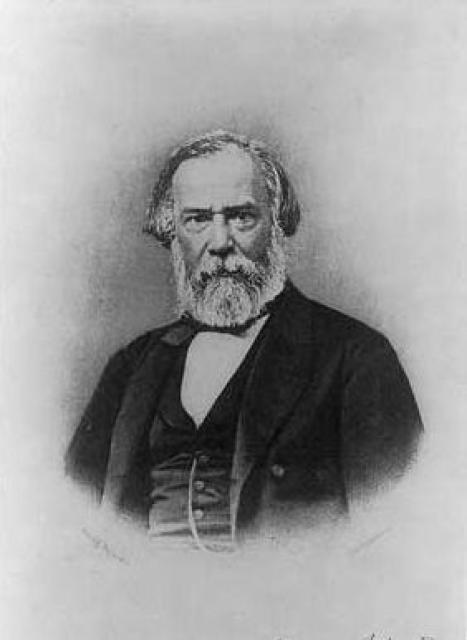
Charles-Edouard Brown-Sequard
 France
- Biography of Charles-Édouard Brown-Séquard
- Career and Achievements
- Contributions to Scientific Journals
- Legacy and Death
Biography of Charles-Édouard Brown-Séquard
Charles-Édouard Brown-Séquard was a French physiologist and neurologist who made significant contributions to the fields of endocrinology and neurophysiology. He was born on April 8, 1817 in Port Louis, Mauritius. Brown-Séquard completed his medical degree at the University of Paris in 1846.
Career and Achievements
From 1860 to 1863, Brown-Séquard worked at the National Hospital in London. He then lectured on physiology at Harvard University in the United States from 1864 to 1867. In 1868, he became a professor of experimental and comparative pathology at the University of Paris, where he taught until 1872. He later served as the professor of physiology at the Collège de France from 1878 to 1894.
Throughout his career, Brown-Séquard conducted extensive research on the pathology of the nervous system. He made significant discoveries and identified several phenomena that are now named after him. He also studied the functions of the adrenal glands and processes related to aging.
Contributions to Scientific Journals
In addition to his research, Brown-Séquard founded two scientific journals. He established the "Journal de la Physiologie de l'homme et des animaux" (Journal of Human and Animal Physiology) in Paris from 1858 to 1863. He also founded the "Archives de Physiologie normale et pathologique" (Archives of Normal and Pathological Physiology) in 1868, which continued to be published until 1894.
Furthermore, Brown-Séquard established the "Archives of Scientific and Practical Medicine" in New York in 1873. This journal aimed to bridge the gap between scientific research and medical practice.
Legacy and Death
Charles-Édouard Brown-Séquard was elected as the president of the Biological Society in 1887, further demonstrating his influence in the scientific community. He passed away on April 1, 1894 in Paris, leaving behind a lasting legacy in the fields of physiology, endocrinology, and neurology.