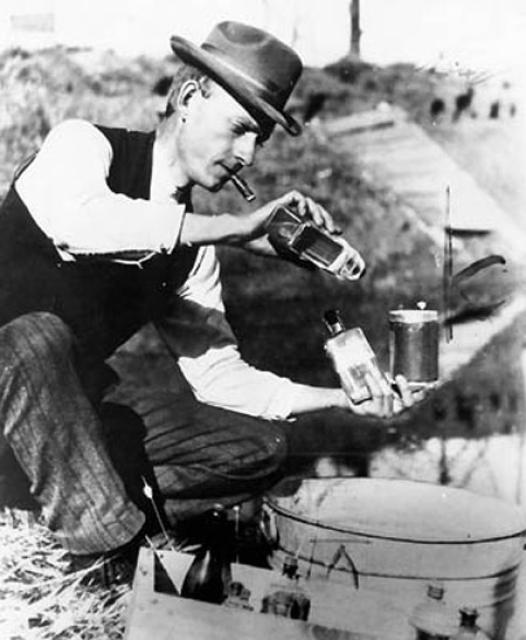
Charles Hatfield
 USA
USAAmerican Entrepreneur, Rainmaker
Charles Hatfield, an American entrepreneur, became famous for his ability to summon rain. Disillusioned with his life and job selling sewing machines for the New Home Sewing Machine Company, Charles began working on a chemical formula that could induce rainfall. Over the course of several years, he tirelessly worked on creating this miraculous concoction, understanding the demand for such services in the arid climate of the western United States. He finally perfected the formula in 1902 and, a few years later, moved to California. It is from this point onwards that his biography starts to resemble a fairy tale.
The Rainmaker's Success
In 1904, under the guidance of advertising agent Fred Binney, Charles began offering his services in several newspapers in California. His offer not only interested farmers, but they even agreed to challenge Hatfield's ability to create rain, as they believed it was solely the will of God. Within a few weeks, Charles and his brother Paul constructed a small tower with a tank containing the "rain formula," as he called his invention. The results were immediate – clouds gathered over the parched California fields, and rain poured down. Charles, elated with his success, counted his profits. Rumors of the "rain seller" spread with incredible speed, and Charles managed to travel and sell the results of his incredible formula, which he kept secret even from his family and friends. However, not everyone blindly believed in Charles's miraculous formula. When the American meteorological bureau attempted to discredit his abilities by attributing his past success to a cyclone, Hatfield boldly signed a contract with representatives from the Los Angeles City Council, promising them 18 inches of rainfall. Such an amount was atypical for Los Angeles, so no one believed in Hatfield's potential success. Yet, the morning after he sprayed his secret formula near Los Angeles, it poured as if from buckets, and Charles, satisfied with his achievement, collected his hard-earned money.
Expanding Success
Following this success, the number of orders multiplied several times over. Among them were drought-stricken farmers hoping to improve their fortunes through rain, as well as scientists and curious onlookers. However, for Charles himself, the process of summoning rain ceased to be magical and unusual, becoming rather a daily routine. One of the most memorable contracts was with the Canadian government, in which Charles was supposed to create rain in the dry territories of Yukon. Despite high expectations, the $10,000 contract was terminated due to Hatfield's failure, and he barely managed to cover his expenses. In 1915, Charles received a contract to fill one of the reservoirs in San Diego. For every inch of rainfall, he would receive $10,000 in cash. On January 5, 1916, a few days after spraying his formula, heavy rain began, soon turning into a flood. Railway lines, power transmission lines, and more than 20 people were lost in the first few days. Countless homes and farms were submerged underwater. After the flood caused by the rain, Charles not only did not receive any money, but he was summoned to court for compensation. Only after several years did the court agree that no living person can influence the weather, and summoning rain is solely in the hands of God. Charles, however, thanks to this unusual process, gained even more fame and continued his business.
Later Years and Legacy
In 1929, he attempted to stop a massive forest fire in Honduras using rain. During the Great Depression, Charles's business came to a halt, his wife left him, and he returned to selling sewing machines for the same company. On January 12, 1958, Charles passed away, and his rain formula died with him. He was buried at the Forest Lawn Memorial Park Cemetery in California. In total, Charles summoned more than 500 rains. However, critics still doubt the existence of a magical formula, citing data that suggests he carefully studied the climate of each location before signing a contract, possibly allowing him to predict when rain was likely to fall. Nevertheless, in the minds of an entire generation of Americans, Charles Hatfield remained the man who made it rain.




