Charles Jencks
 USA
USABiography of Charles Jencks
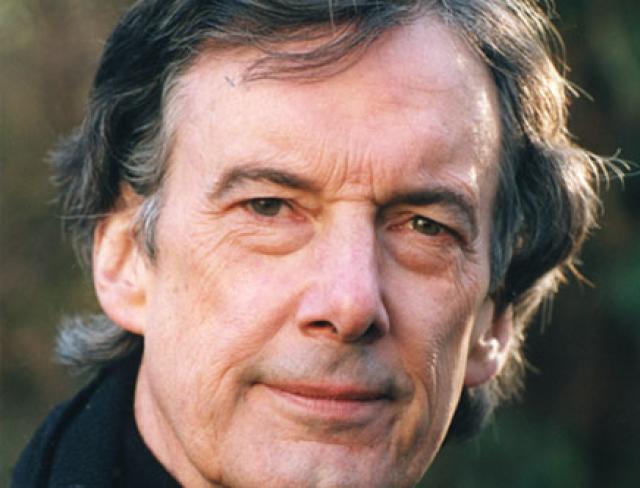
Charles Jencks is an American architect who played a significant role in the development and theory of postmodernism in contemporary architecture. He is also an architectural critic, historian, author of numerous articles and monographs, and a practicing architect and landscape designer.
In 1961, Charles Jencks graduated from Harvard University with a degree in English literature. In 1965, he obtained a Master of Arts degree from the Harvard Graduate School of Design, and in the same year, he defended his dissertation on the history of architecture at University College London.
Charles Jencks has lectured at numerous universities around the world, including Beijing, Shanghai, Paris, Tokyo, Milan, Venice, Frankfurt, Quebec, Montreal, Oslo, Warsaw, Barcelona, Lisbon, Zurich, Vienna, and Edinburgh. He has also given lectures at Harvard, Columbia University, Princeton, and Yale in the United States.
The Birth of Architectural Postmodernism
The birth of architectural postmodernism coincided with the emergence of poststructuralist ideas, making it a unique phenomenon in the field of architecture. Charles Jencks, considered the main ideologist of architectural postmodernism, first coined the term in 1975. He declared the death of modernism on July 15, 1972, at 15:32 in St. Louis, Missouri, at the site of the explosion of thirty residential high-rises designed by architect Minoru Yamasaki.
According to Jencks, modernism's ideology was based on utopian and idealized theories, centered around a single (international) style. Postmodernists, on the other hand, rejected any singular style, embracing a pluralism of solutions. They emphasized the importance of regionalism and the connection between aesthetics and the national, local, urban, and ecological contexts.
One example of postmodern architecture is Charles Jencks' "Thematic House" in London. Postmodern architecture revitalized interest in historical city centers, preserving ancient buildings and focusing on urban contexts and the streets as urban design elements. The movement also emphasized the role of color, form, material, sculpture, painting, and computer graphics in architectural solutions, as well as the combination of traditions and innovations, local and mass-produced elements, natural and artificial materials, and expressiveness and symbolism in the urban environment.
Influence and Contributions
In addition to Jencks, other architects such as Robert Venturi, Christopher Alexander, Aldo Rossi, James Stirling, Hans Hollein, Mario Botta, Ricardo Bofill, and Charles Moore have influenced the development of architectural postmodernism. Jencks' book, "The Language of Post-Modern Architecture," published in 1977, had a significant impact on the professional consciousness of architects and became the "bible of postmodernism." It was translated into Russian in 1985.
The book is divided into three parts: "The Death of the 'New Architecture,'" "Ways of Architectural Communication," and "The Architecture of Postmodernism." In the first part, Jencks criticizes the main postulates of modernism, particularly its one-dimensional nature. The second part examines architecture as a language, highlighting metaphors, words, syntax, and semantics. The third part explores new architectural movements influenced by postmodern theories, such as historicism, regionalism, and ad-hoc contextualism.
Jencks draws inspiration from architectural journals (which he actively contributed to), personal experiences as a practicing architect, interviews, and private conversations with colleagues.