Charles Murphy
 USA
USA- Charles Murphy: The First Cyclist to Break the One-Minute Mile
- Biography of Charles Murphy
- A Chance Encounter and a Record-Breaking Race
- Legacy and Retirement
Charles Murphy: The First Cyclist to Break the One-Minute Mile
Charles Murphy, an American cyclist and police officer, made history in 1899 by becoming the first cyclist in the world to complete a one-mile distance in less than a minute. He accomplished this athletic feat by closely following a railroad car on the track between Farmingdale and Babylon on Long Island. However, during the race, Murphy made a mistake and fell behind the train. He noticed the waving of the American flag, signaling the end of the race, when he was only 4.5 meters away from the car. Despite his efforts to catch up, Murphy was unable to slow down enough to avoid a collision with the train.
Biography of Charles Murphy
Charles Minthorn Murphy was born in October 1870. In 1890, he married Catherine Kissel. In 1899, Murphy achieved the remarkable feat of completing a mile on his bicycle in less than a minute, within the low-pressure zone created behind the train. He completed the mile in 57.8 seconds. Murphy claimed that the idea came to him after a debate with friends at his home in Brooklyn, New York, about the maximum speed that the most successful cyclists of the time could reach. Murphy stated, "I replied that there were no limitations for a cyclist, and that speed depended on the bicycle, its components, the track, and the adjustment of gears. I declared that no locomotive had been built that could outpace me. The more people laughed, the more confident I became in achieving the feat. I believed that a fast-moving train could create enough air displacement for me to follow behind it in a windless zone."
A Chance Encounter and a Record-Breaking Race
Charles Murphy's chance encounter with Hal Fullerton, a special agent of the Long Island Railroad, led to an interesting conversation. Murphy convinced Fullerton that his impressive bicycle race would prove that the Long Island road was just as good as the best roads available. Within 48 hours, a contract was signed. James Edward Sullivan, the secretary of the American Athletic Union, was responsible for overseeing the event, with the assistance of five timekeepers. They all arrived in Babylon, New York, at 5 PM on June 21, 1899. Fullerton laid a two-mile track made of wooden planks on the railroad tracks from Babylon to Farmingdale and built 3.3 meters of side wings and a small canopy on the car to create a "cap" behind which Murphy could ride without wind interference. Fullerton, along with officials and onlookers, sat in this car compartment as the train with a single car set off.
Murphy recalls, "I experienced completely different sensations compared to my previous races. The officials understood that something was wrong as I struggled to pedal. I couldn't comprehend the intense vibrations on the track; it felt like I was riding on waves rather than a horizontal path. It felt like hot rockets were burning my body and face. Later, I learned that the rubber from under the train was on fire." Murphy continues, "For five seconds, the speed was simply astonishing. I rode in a whirlwind of swirling dust, hot ash, paper, and other debris." He managed to cover half a mile in 29.4 seconds. However, at some point, Murphy made a mistake and fell behind the train. He saw the waving of the American flag, indicating the end of the race, when he was only 4.5 meters away from the car. Despite his efforts to close the gap, Murphy couldn't slow down enough to avoid a collision with the train. He grasped onto a support, and then Fullerton and a man named Joseph H. Cummin lifted him and his bicycle onto the platform.
Legacy and Retirement
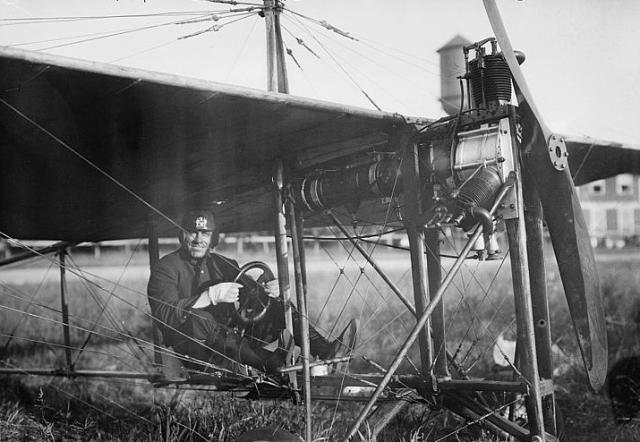
Charles Murphy not only completed a mile in less than a minute but also set a bicycle speed record of 100 km/h. Murphy later joined the New York City Police Department and received multiple commendations for his service. He was proud to be the first police officer in the world to fly in an airplane and the first in New York to ride a motorcycle in uniform. On September 3, 1916, during a collision with a car on the Manhattan Bridge, Murphy broke his leg in three places. This accident led him to retire on January 29, 1917.
One of his legs was amputated in 1948 due to gangrene. Murphy passed away on February 16, 1950, at the age of 80, due to complications from diabetes.


