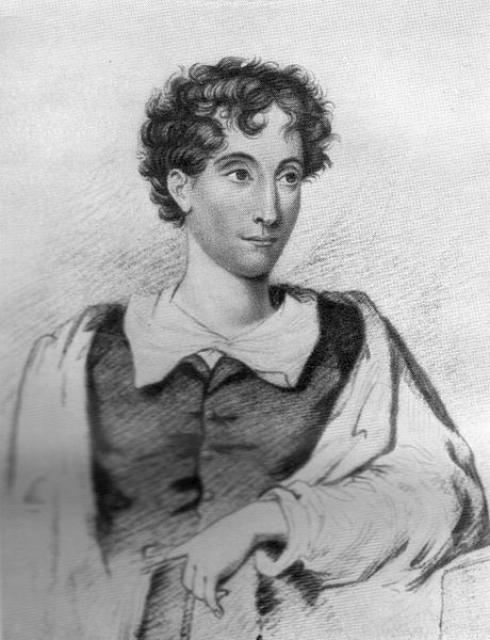
Charles Robert Maturin
 Great Britain
- Charles Robert Maturin: A Life of Literary Persecution
- Early Life and Education
- Literary Beginnings
- 'Bertram' and Financial Woes
- Critical Backlash
- Suppression and Financial Struggles
- Literary Legacy
- Death and Monument
Charles Robert Maturin: A Life of Literary Persecution
Charles Robert Maturin, a man of the cloth and an enigmatic writer, left an enduring mark on English literature despite facing adversity throughout his life.
Early Life and Education
Born in Dublin, Ireland, to Huguenot refugees, Maturin was destined for a career in the church. He received his education at Trinity College, where he pursued a degree in divinity. In 1803, he became the curate of St. Peter's Church in Dublin.
Literary Beginnings
Maturin's initial literary endeavors under the pseudonym Denis Jasper Murphy met with little success. However, his work caught the attention of literary luminaries Walter Scott and Lord Byron, who took notice of his talents.
'Bertram' and Financial Woes
In 1816, Maturin's play "Bertram," starring Edmund Kean, premiered to critical acclaim. Despite its success, financial stability eluded him as his father and other relatives faced bankruptcy, forcing him to assist them.
Critical Backlash
Maturin's success was met with a harsh critique from Samuel Taylor Coleridge, who denounced "Bertram" as "gloomy and loathsome" and an "afflicting proof of the lamentable state of public taste."
Suppression and Financial Struggles
The Irish Catholic Church, responding to Coleridge's criticism and Maturin's abandonment of his pseudonym, halted his ecclesiastical advancement. Deprived of additional income from writing, Maturin was forced to support his wife and children on his meager vicar's salary.
Literary Legacy
Despite the financial challenges, Maturin continued to write, producing novels alongside his plays. In 1820, he published his most famous work, "Melmoth the Wanderer," which gained widespread attention and left a lasting impression on Russian and 20th-century writers, including Nabokov, Bulgakov, and Lomonosov.
Death and Monument
Maturin died in Dublin on October 30, 1824, leaving behind a body of work marked by its Gothic and supernatural themes. His influence continues to resonate in literature, with scholars acknowledging his role as a precursor to the genre of the horror novel.