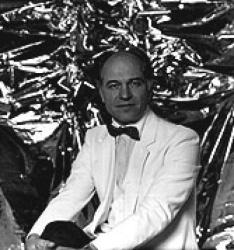
Charles Zeuner
 USA
USA- Early Life and Education
- Career in Europe and Emigration to the United States
- Musical Success in America
- Compositional Style and Legacy
Early Life and Education
Johann Heinrich Christian Zöllnerwas a German-born American composer and organist of note. His musical journey began in Weimar, where he studied under the tutelage of Johann Nepomuk Hummel, and later in Erfurt under the mentorship of Michael Gotthard Fischer.
Career in Europe and Emigration to the United States
Zöllner gained experience as a member of court and military orchestras. In 1822, he published a collection of piano pieces. Seeking new opportunities, he emigrated to the United States in 1824 and settled in Boston.
Musical Success in America
In 1830, Zöllner made his debut with a public organ concert, showcasing his impressive talent. He served as an organist in various Boston churches and led the Handel and Haydn Society from 1838 to 1839. Zöllner's reputation grew, and he eventually relocated to Philadelphia, where he continued his role as an organist.
Compositional Style and Legacy
Johann Heinrich Christian Zöllner's compositions encompass both organ and piano music, often with a light, march-like character. His lighter pieces were often arranged for piano. His sacred music is of particular significance, with his oratorio "The Feast of Tabernacles" (1832) holding a prominent place.
Zöllner's collection "The Ancient Lyre" (1833) became a popular resource for amateur musicians, providing both spiritual music and instructional content. Despite his musical achievements, tragedy struck Zöllner in 1857 when he exhibited signs of mental illness and ultimately took his own life.