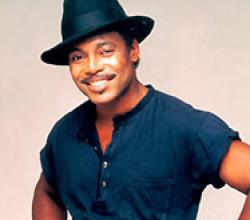
Charly Mingus
 USA
USABiography of Charlie Mingus
Charlie Mingus, whose full name is Charles Mingus, was an influential American jazz bassist, composer, and civil rights activist. He was born on April 22, 1922, in Nogales, Arizona, and passed away on January 5 in Kernavaka, Mexico. Mingus developed a passion for music at a very young age, inspired by spirituals and gospel songs he heard while regularly attending church. He spent his childhood in one of the African-American neighborhoods in Los Angeles. His interest in jazz was sparked when he discovered recordings of New Orleans musicians and attended concerts by Duke Ellington's orchestra. Mingus began studying music systematically at the age of 8, learning to play trombone and flute. At 16, he switched to cello and double bass, studied classical composition, and also took piano lessons. He wrote his first musical compositions in 1939 and 1940-41. In his early career, he played with various orchestras and bands, including those led by Lee Young, Louis Armstrong, Barney Bigard, Kid Ory, and Elvino Rey.

In 1951, Mingus moved to New York City to escape racial segregation and played in Red Norvo's trio. However, he left the group in protest against the racial discrimination he faced. He then joined the quartet of pianist Cecil Taylor in 1952-53 and performed in concerts by the Philharmonic Jazz ensemble. In 1952, he founded the record label Debut. Mingus had significant collaborations with renowned jazz musicians such as Charlie Parker, Dizzy Gillespie, Miles Davis, Thelonious Monk, and others. While he initially gained recognition as a bandleader and composer, his first significant success came later in his solo career with his trio in the album "Money Jungle" in 1962. He experimented with various styles and techniques, including the fusion of jazz and poetry.
In the 1960s, Mingus resumed his work as a manager for African-American musicians and organizing studio sessions. He formed a new record company during this period. He also performed in concerts, wrote arrangements for the Newport Jazz Festival, and appeared on television. In 1964, he embarked on a European tour with Eric Dolphy, Jaki Byard, and Clifford Jordan. Mingus faced financial difficulties and health issues, which forced him to take a break from his musical career. In 1971, he published his autobiographical book "Beneath The Underdog" with the support of the Guggenheim Foundation. Afterward, he returned to his creative practice. Mingus continued to collaborate with various artists and made his last recordings in January 1978. He passed away in 1979.
Charlie Mingus was a complex and contradictory figure in jazz history. He was not interested in appeasing public opinion for fame and titles. His music was characterized by profound seriousness and a tendency for dramatic expression. Mingus was a realist who aimed to convey the truth of human emotions and reflect the inner essence of individuals in a world divided by political and racial barriers. His innovative ideas and contributions influenced the development of various jazz styles and directions. He created new types of compositions, introduced unconventional harmonic structures and instrumental combinations, and reformed the technique of playing the double bass. Mingus's main method as a bandleader was collective composition, where he encouraged the improvisation of his orchestra members in dialogue-like interactions. His compositions were rooted in folklore, African-American gospel music, blues, early New Orleans jazz, and swing, while also incorporating influences from European classical music, the ideas of Schoenberg and Stockhausen, and various ethnic cultures.
Charlie Mingus also had a significant impact as an educator, influencing and nurturing many students and successors. His contributions to composition and the development of jazz orchestras cannot be underestimated, despite not achieving the highest levels of fame. His role in the evolution of jazz is immeasurable.