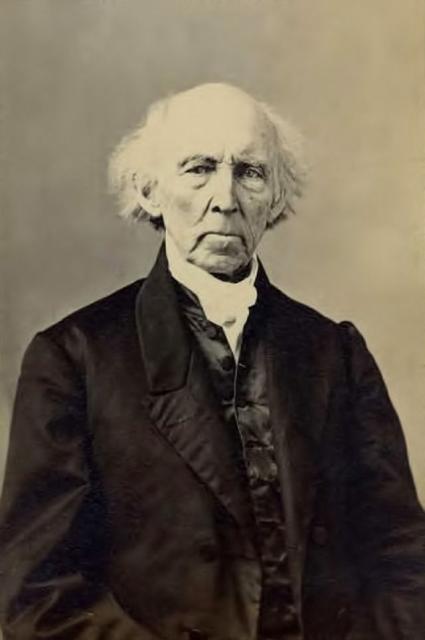
Chester Dewey
 USA
USABiography of Chester Dewey
Chester Dewey was an American botanist, priest, and educator who dedicated his life to various fields of study. Born on October 25, 1784, in Sheffield, Massachusetts, Dewey received his religious education at Williams College, where he graduated in 1806. He was appointed to Tryingham, Mass., as a clergyman but soon realized that preaching was not his sole purpose in life. Despite this, Dewey continued his preaching activities throughout his life and gladly accepted invitations to deliver speeches in various churches.
Academic Career
Dewey served as a professor of mathematics and natural philosophy at Williams College from 1810 to 1827. Later, from 1850 to 1860, he held the position of professor of chemistry and natural philosophy at the University of Rochester. Throughout his life, Dewey devoted himself to scientific pursuits and was highly esteemed by American naturalists. He conducted research on plants and discovered and described several new species. In 1825, he received a Doctor of Medicine degree from Yale Institute. In 1838, Dewey became a Doctor of Theology, and in 1850, he earned a Doctor of Law degree. He was a meticulous observer of weather conditions, and his notes were published in regular monthly reports. Some of his significant works, such as "Families and Natural Orders of Plants," were published in the scientific journal "American Journal of Science" and attracted the attention of leading European botanists, with whom Dewey began corresponding.
Contribution to Botany
Dewey was a recognized authority on the extensive family of "Caricaceae," commonly known as sedges, and his work on this topic evolved into a comprehensive monograph that he worked on for over forty years. His book, "History of the Herbaceous Plants of Massachusetts," was published by the state. His last written works included review articles on his own works, such as "The True Place of Man in Zoology" and "An Examination of Some Reasonings Against the Unity of Mankind." In the field of botany, Dewey is primarily known as an indefatigable researcher of perennial polycarpic herbaceous plants found in all climatic zones. For 43 years, from 1824 to 1869, he made constant contributions to the "American Journal of Science" through a series of works called "Caricography." He proposed correlating 97 species and varieties of plants with the "Caricaceae" family.
Personal Life and Legacy
Chester Dewey married Sarah Dewey in 1810, and they had five children together. Sarah passed away in 1823. In 1825, Dewey remarried Olivia Hart, the eldest child of Lemuel Pomeroy Jr. Dewey eventually passed away in Rochester, New York, on December 15, 1867. In his will, he bequeathed his herbarium, one of the most comprehensive in the country, as well as the "Sedge Library," to Williams College.


