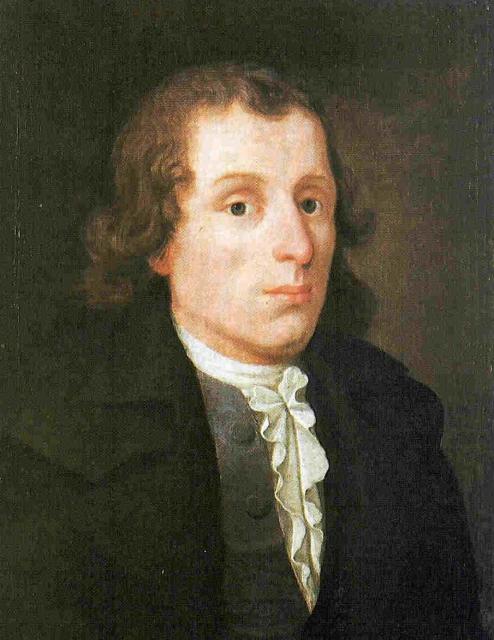
Christian Gottlob Neefe
 Germany
- Biography of Christian Gottlob Neefe
- Early Career and Collaboration with Hiller
- Teaching and Mentorship
- Later Life and Legacy
Biography of Christian Gottlob Neefe
Early Life and EducationChristian Gottlob Neefe was born on February 5, 1748, in Chemnitz, Saxony, Germany. He grew up in a working-class family, the son of a tailor named Johann Gottlieb Neefe and his wife Rosina Weyrauch. Neefe received his musical education in one of the churches in his hometown, where he served as a singer and studied under the organist Johann Friedrich Wilhelmi.
Early Career and Collaboration with Hiller
At the age of 12, Neefe began composing his own pieces. By the time he was 19, he became a student at the University of Leipzig, studying law from 1769 to 1771. However, during his time there, he met the composer Johann Adam Hiller, the founder and owner of a private singing school in Leipzig. Neefe became one of his first students and under his guidance, he wrote his first comic operas. One of his early significant works was ten arias he composed for Hiller's opera 'Der Dorfbarbier'. As a result of this collaboration, Neefe became Hiller's protégé and succeeded him as the music director of Abel Seyler's theatrical company. With this opera troupe, he performed in Dresden, Frankfurt, Mainz, and Cologne. In Leipzig, Neefe married the actress Susanna Zinck, with whom he had three daughters and three sons.
Teaching and Mentorship
In 1781, Neefe became the successor to the court organist Gilles van der Eeden in Bonn. As the court organist, he also taught composition, organ, and piano to young musicians. His most famous student was Ludwig van Beethoven, whom Neefe assisted in his early works and was the first to publish some of Beethoven's compositions. Neefe also arranged for Beethoven to undertake a study trip to Vienna, the center of European music at the time. In Vienna, the talented young student impressed even Mozart himself, but he had to return home upon learning of his mother's serious illness and impending death.
Later Life and Legacy
In 1794, when French revolutionary troops occupied the regions around the Rhine, Neefe lost his job. He attempted to find employment in Bonn but was unsuccessful. In 1796, he moved to Dessau, where he became the musical director of a theater company and held this position until the end of his life. Christian Gottlob Neefe passed away on January 28, 1798, at the age of 50. He left behind numerous piano works, choral and chamber music, as well as several operas. He is regarded as one of the finest German composers of his time in the genre of singspiel.