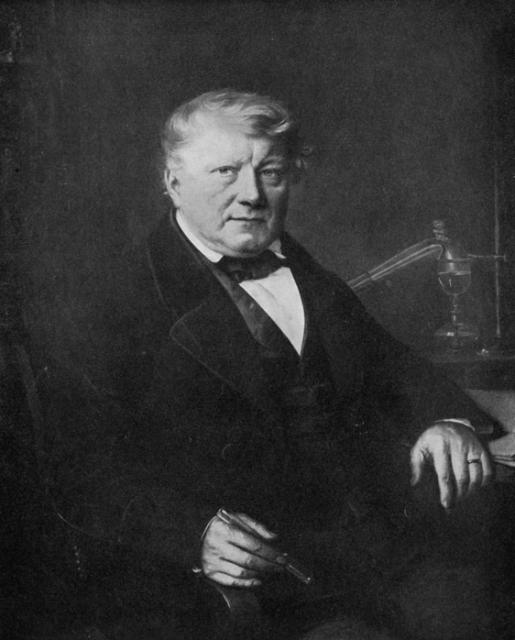
Christian Shenbeyn
 Germany
- Christian Friedrich Schönbein: A Pioneer in Chemistry
- Early Life and Education
- Discovery of Ozone
- Discovery of Nitrocellulose and Collodion
- Later Life and Recognition
Christian Friedrich Schönbein: A Pioneer in Chemistry
Born on October 18, 1799, in Metzingen, Germany, Christian Friedrich Schönbein emerged as a renowned chemist known for his groundbreaking discoveries.
Early Life and Education
Schönbein pursued his education at the universities of Tübingen and Erlangen. His early research focused on the study of iron's passivity and related electrochemical phenomena.
Discovery of Ozone
In 1839, while investigating the oxidation of white phosphorus and the electrolysis of water, Schönbein successfully isolated ozone through chemical means. Recognizing its distinct odor, he named it "ozone" after the Greek word "ozein," meaning "to smell." His work on ozone culminated in his publication "Über die Erzeugung des Ozon auf chemischem Wege" in 1844.
Discovery of Nitrocellulose and Collodion
Schönbein's subsequent research led to the discovery of numerous compounds, including nitrosaccharine, nitroamide, and most notably, nitrocellulose (1845). Popularly known as guncotton, nitrocellulose outperformed gunpowder in its explosive properties. Schönbein's accidental spillage of nitric acid on his wife's apron, which subsequently ignited, is a legendary tale surrounding the serendipitous discovery of this explosive substance. He developed methods for producing nitrocellulose, paving the way for its potential use in smokeless gunpowder.
Later Life and Recognition
Much of Schönbein's research appeared in "Verhandlungen der Naturforschenden Gesellschaft in Basel" and "Poggendorff's Annalen." He also authored notable publications, such as "Das Verhalten des Eisens zum Sauerstoff" (1837), "Beiträge zur physik. Chemie" (1844), and "Ueber die langsame und rasche Verbrennung der Körper in atmosphärischer Luft" (1845). After his demise on August 29, 1868, near Baden-Baden, scientists continued to build upon his legacy. His biography was written by Hagenbach in 1868, further solidifying his significant contributions to the field of chemistry.


