
Christina Brajcic
 Canada
Biography of Christina Braichich
Christina 'Krissy' Braichich was a Canadian interior designer who tragically passed away at the age of 42 due to complications from a vaginal mesh transplant. She fought persisting infections for three years following the procedure. In the months leading up to her death, Krissy released numerous Facebook videos detailing her "battle with vaginal mesh." These implants, known to compress, twist, and cut internal tissues, have ruined the lives of thousands of women, leaving some on the brink of suicide.

Krissy's death prompted British and Australian health officials to speak out against the controversial use of transvaginal mesh. The National Institute for Health and Care Excellence (NICE), a government health advisor, is expected to heed their recommendations, despite not issuing strict guidelines. In September 2016, the findings of a three-year investigation into vaginal mesh were published, but demands for a ban on the procedure were rejected. However, the Australian Therapeutic Goods Administration recently banned the use of mesh implants for vaginal prolapse after concerns were raised about the risks outweighing the benefits.

Before undergoing the implant procedure in 2013, Krissy was described as "fit and active." She suffered from mild stress urinary incontinence after the birth of her two sons, Ben and Jake. Soon after getting the mesh, she began experiencing "excruciating pain." This is a common complaint among thousands of other patients who have undergone the same procedure.

Dozens of other victims, like Krissy, continue to suffer from chronic infections. Eventually, her body became resistant to antibiotics, despite consuming a significant amount during her battle with the implant's consequences. According to reports, Krissy visited the emergency department at least once a month, where she was "pumped full of drugs."
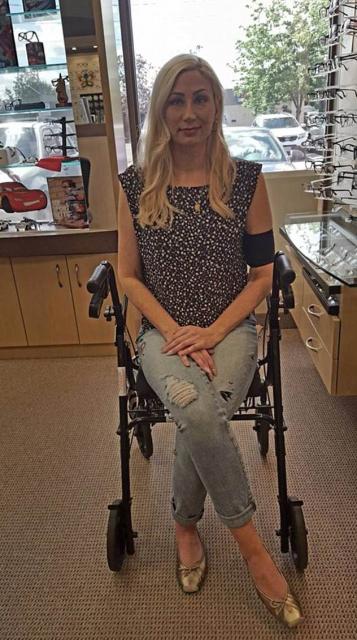
A fundraising page was created on JustGiving by Kat Sansom, the founder of the campaign 'Sling The Mesh,' which aims to raise awareness about the devastating effects of transvaginal mesh implants. The funds raised will be donated to Krissy's sons. Sansom described Krissy as a brave woman who remained strong, calm, and beautiful despite her suffering. She noted Krissy's determination to inform other women and protect them from the deadly dangers of the mesh.

Support for 'Sling The Mesh' has grown nearly fourfold in recent months, with almost 4,600 people, mostly victims of vaginal mesh, advocating for a ban on its use. The scandal reached its peak in April 2017 when the National Health Service (NHS) attempted to downplay the media's criticism of the implants that left hundreds of women in agony. Senior doctors became involved in a public inquiry, with some even drawing parallels between transvaginal mesh and the thalidomide tragedy.
At that time, at least 800 women filed legal claims against the NHS and implant manufacturers. However, it is currently unknown how many of them will pursue their cases to the end. The mesh, which was introduced 20 years ago as a cheaper alternative to complex surgical procedures for incontinence and vaginal collapse, has been classified as high risk in the United States for nearly a decade. Reports suggest that around 40% of women who have received the implant experience side effects, but concerns about the safety of the product arose when it was only at 10%.
Several studies published in scientific journals have shown that pain, erosion, and perforation after the procedure are considered "normal" in nearly 75% of women. Troubling data prompted officials from three U.S. states to suspend mesh implantations and reassess the risks. Scottish officials also called for a suspension of the practice in Scotland in 2014 until similar investigations were conducted. However, it is believed that hundreds of women are still subjected to the dangerous transplant.
Approximately 10,000 women are implanted with transvaginal mesh each year, with around 4,800 experiencing lacerations and nerve damage due to mesh fragmentation. Activists fighting against the implants emphasize that this is just the tip of the iceberg, and they believe there are many more victims who choose to remain silent about their suffering.
Leading mesh manufacturer, Johnson & Johnson, was forced to pay $57 million to Ella Ebaugh, a 51-year-old woman from Philadelphia, in September 2017. Ella had received a vaginal mesh implant, and a jury found Johnson & Johnson guilty of criminal negligence and producing a defective product.


