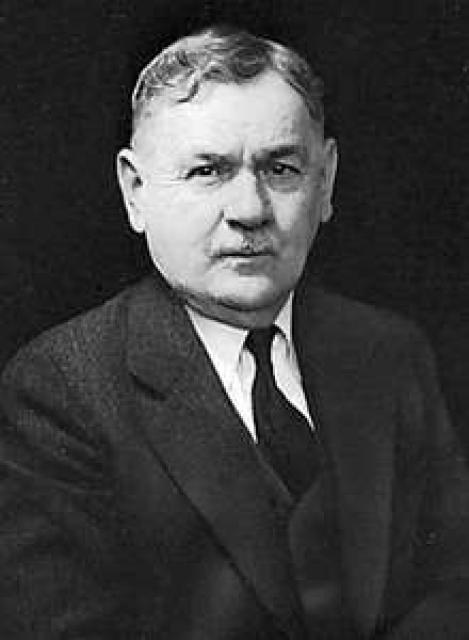
Clark Wissler
 USA
USA- American Anthropologist
- Influence of Franz Boas
- Field Research
- Career at the American Museum of Natural History
- Contributions to Anthropology
- Legacy
American Anthropologist
Early Life and EducationAmerican anthropologist Clark Wisslerwas born in 1870 in Richmond, Indiana. His passion for studying culture and psychology led him to pursue his doctoral studies at Columbia University, where he earned his Ph.D. in 1901.
Influence of Franz Boas
Inspired by the works of renowned anthropologist Franz Boas, Wissler developed a keen interest in anthropology. Boas's emphasis on cultural relativism and the importance of fieldwork had a profound influence on Wissler's approach to the field.
Field Research
In 1902, Wissler embarked on his first major field research expedition among the Blackfoot and other tribes of the northern Great Plains. These expeditions lasted from 1902 to 1905 and provided invaluable insights into Native American culture.
Career at the American Museum of Natural History
In 1902, Wissler joined the American Museum of Natural History as an assistant curator. He advanced to become the curator of the Department of Anthropology in 1907, a position he held until 1942. During his tenure, he oversaw the expansion of the museum's anthropology collection and led numerous field expeditions.
Contributions to Anthropology
Wissler made significant contributions to the field of anthropology. He developed concepts such as the "culture area" and the "universal pattern," which helped to define the scope of anthropological research. His work on cultural universalism challenged the idea of primitive versus advanced societies.
Legacy
Clark Wissler died in 1947, leaving behind a lasting legacy in the field of anthropology. His pioneering research and contributions continue to influence the way anthropologists understand and study human culture. His legacy as a visionary anthropologist endures, inspiring generations of scholars to delve into the complexities of cultural diversity.


