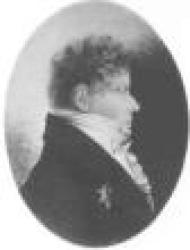
Claude Debussy
 France
Biography of Claude Debussy
Claude Debussy, a French composer and music critic, was born on August 22, 1862, in Saint-Germain-en-Laye, near Paris, in a modest family. His father was a former marine infantryman and later owned a shop selling ceramic products. He received his first piano lessons from a talented teacher, Antoine-Flora Mote, who was the mother-in-law of the poet Verlaine.
In 1873, Debussy entered the Paris Conservatory, where he studied piano under Antoine Marmontel and music theory under Andre Gedalge, Emile Durand, and Olivier Bassil. Around 1876, he composed his first songs based on the poems of Banville and Burghers.
From 1879 to 1882, Debussy spent his summer vacations in Chateau Chénonceau and later with Nadezhda von Meck, where he traveled to various countries, including Switzerland, Italy, Vienna, and Russia. These travels exposed him to new musical horizons, especially through his encounters with Russian composers of the St. Petersburg school.
In love with the poetry of Banville and Verlaine, Debussy, with his restless mind and experimental nature, gained a reputation as a revolutionary. Nonetheless, in 1884, he received the Rome Prize for his cantata "L'Enfant prodigue."
Debussy spent two years in Rome, where he became acquainted with the poetry of the Pre-Raphaelites and started composing a poem for voice and orchestra, "La Demoiselle lue," based on Gabriel Rossetti's text. He was deeply influenced by his visits to Bayreuth, and Wagner's influence is evident in his vocal cycle "Cinq Poèmes de Baudelaire" (Five Poems of Baudelaire). Other influences on the young composer included exotic orchestras he heard at the 1889 World Exhibition in Paris, Mussorgsky's compositions that were gradually permeating France, and the melodic ornamentation of Gregorian chant.
In 1890, Debussy began working on the opera "Rodrigue et Chimène" based on a libretto by Catulle Mendes, but he left the work unfinished. During this time, he became a regular attendee of the symbolist poet Stéphane Mallarmé's circle and discovered the works of Edgar Allan Poe, who became one of Debussy's favorite authors. In 1893, he started composing the opera "Pelléas et Mélisande" based on Maeterlinck's drama, and a year later, inspired by Mallarmé's eclogue, he completed the symphonic prelude "Prelude à l'Après-midi d'un Faune" (Prelude to the Afternoon of a Faun).
Throughout his life, Debussy was acquainted with prominent literary figures of the time, and his friends included writers Paul-Louis, André Gide, and Swiss linguist Ferdinand de Saussure. He was also influenced by impressionism in painting. In 1894, Debussy's first concert dedicated solely to his music took place in Brussels in an art gallery, against the backdrop of new paintings by Renoir, Pissarro, Gauguin, and others. In the same year, he began working on three nocturnes for orchestra, initially conceived as a violin concerto for the famous virtuoso Eugène Ysaÿe. Debussy compared the first of the nocturnes, "Nuages" (Clouds), to a "landscape seen through mist."
By the end of the 19th century, Debussy's music, considered the musical counterpart of impressionism in painting and symbolism in poetry, embraced an even wider range of poetic and visual associations. Among his compositions during this period were the String Quartet in G minor (1893), influenced by Eastern modes; the vocal cycle "Proses Lyriques" (Lyrical Proses, 1892-1893) with his own texts; "Chansons de Bilitis" (Songs of Bilitis) based on the poems of Pierre Louÿs, inspired by the idealism of Ancient Greece; and "La Saulaie," an unfinished cycle for baritone and orchestra based on Rossetti's poems.
In 1899, shortly after marrying the model Rosalie Texier, Debussy lost his source of income as his publisher Jacques Durand passed away. Despite being burdened with debts, he managed to complete the "Nocturnes" in the same year and the second revision of his five-act opera "Pelléas et Mélisande" in 1902. The premiere of "Pelléas" in Paris on April 30, 1902, was a sensation. It was hailed as the greatest achievement in the opera genre since Wagner.
The following year brought the suite "Estampes," which showcased Debussy's distinctive piano style. In 1904, Debussy entered into a new marriage with Emma Bardac, an event that almost led to the suicide of Rosalie Texier and sparked merciless public scrutiny of Debussy's personal life. However, this did not hinder the completion of his finest orchestral work, the three symphonic sketches "La Mer" (The Sea), as well as remarkable vocal cycles such as "Trois chansons de France" (Three Songs of France, 1904) and the second book of "Fêtes galantes" based on Verlaine's poems.
Despite struggling with illness and poverty for the rest of his life, Debussy worked tirelessly and prolifically. Starting in 1901, he began writing witty reviews of current musical events in periodicals (these were later compiled in the collection "Monsieur Croche - Antidilettante" published in 1921). During this period, he also created the majority of his piano works. Following two series of "Images" (1905-1907), he composed the suite "Children's Corner" (1906-1908), dedicated to his daughter, Chou-Chou. In 1910, he composed the "Douze Etudes" (Twelve Studies) in memory of Chopin.
Although signs of his cancer appeared as early as 1909, Debussy continued to make several concert tours to support his family. He conducted his own compositions in England, Italy, Russia, and other countries. The war temporarily interrupted his prolific creativity, but by 1915, he had produced numerous piano works, including the completion of the three sonatas from his chamber sonata series: for cello and piano (1915), for flute, viola, and harp (1915), and for violin and piano (1917). He also revised the opera libretto based on Poe's story "The Fall of the House of Usher," a subject Debussy had been working on since his youth. However, he received the official commission for the opera from Gabriele d'Annunzio's Teatro Regio in Turin. The score was prepared by the French composer and conductor André Caplet. Debussy passed away in Paris on March 26, 1918.