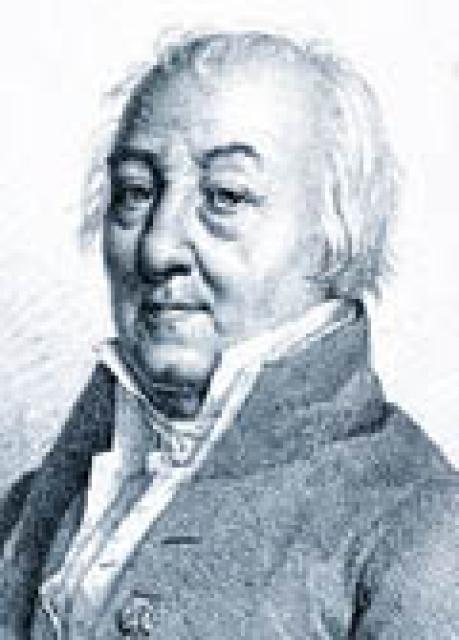
Claude Louis Berthollet
 France
- Claude Louis Berthollet: A Biography
- Collaboration with Lavoisier and Scientific Achievements
- Role in the French Revolution and Empire
- Legacy and Contributions
- Controversial Reputation
Claude Louis Berthollet: A Biography
Claude Louis Berthollet (1748-1822) was a French chemist known for his significant contributions to the field of chemistry. Born in Talloires, Savoy, Berthollet studied medicine in Turin and obtained his diploma in 1770. He then moved to Paris, where he began his scientific career as a physician while simultaneously studying chemistry under the guidance of renowned French scientists, Macquer and Bouquet.
Collaboration with Lavoisier and Scientific Achievements
After 1786, Berthollet formed a close relationship with Antoine Lavoisier, along with two other prominent scientists, Guiton de Morveau and Fourcroy. Together, they developed the foundations of chemical nomenclature and classification of substances. Berthollet made several important discoveries, including the use of chlorine for bleaching paper and textiles, the identification of alkaline metal hypochlorites, and the discovery of potassium chlorate (also known as "Berthollet's salt") in 1788. He also determined the composition of ammonia, hydrogen sulfide, and hydrocyanic acid.
Role in the French Revolution and Empire
When Napoleon rose to power, Berthollet joined him on the Egyptian campaign and was showered with honors and titles. Napoleon appointed him as a senator and granted him the title of Count. However, his political career did not hinder his scientific pursuits. During the Revolution and the Empire, Berthollet focused on national defense and applied chemistry, particularly in the dyeing of fabrics.
Legacy and Contributions
In his work "Essai de statique chimique" (1803), Berthollet linked the concept of mass to chemical reactions and proposed that elements can combine with each other in any proportion depending on the mass of the reacting substances. This conclusion was later challenged by Joseph Louis Proust. Nevertheless, Berthollet's understanding of mass and its influence on chemical reactions played a significant role in the development of chemical statics in the 19th century. He also founded the Arcueil Society, whose works were published from 1807 to 1817. Berthollet passed away in 1822 in Arcueil, where he had established his laboratory.
Controversial Reputation
Claude Louis Berthollet was often regarded as an opportunistic and vain courtier by his contemporaries and later generations. He was criticized for not defending his friend and colleague, Lavoisier, when he was condemned to death during the French Revolution. However, Berthollet's talent as a scientist and his numerous chemical discoveries solidify his place in history.



