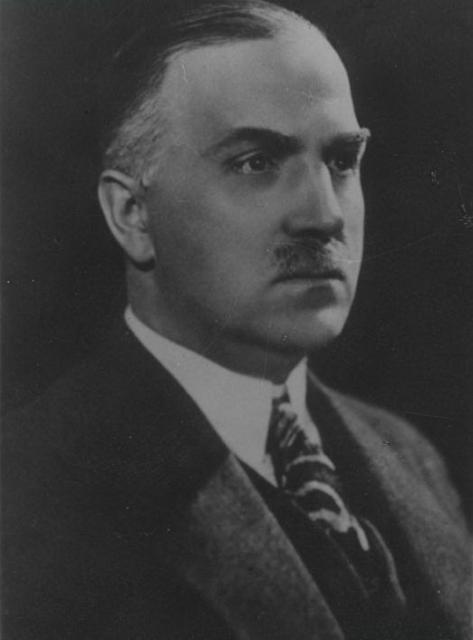
Jan Czochralski
 Poland
- Biography of Jan Czochralski
- Early Life and Education
- The Discovery of the Czochralski Process
- Contributions to Science and Professional Life
- Later Life and Legacy
Biography of Jan Czochralski
Jan Czochralski, a Polish chemist, is one of the most cited Polish scientists. He is known for his discovery of the Czochralski process, which is used for growing single crystals and in the production of semiconductor wafers.
Early Life and Education
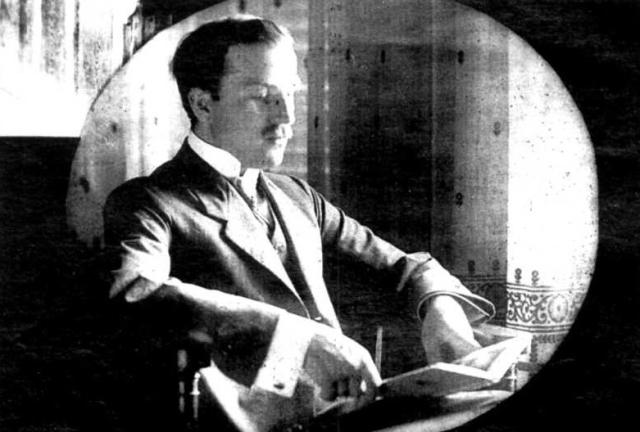
Jan Czochralski was born on October 23, 1885, in Kcynia, Poland, which was then part of the German Empire. He came from a family of carpenters. Around 1900, he moved to Berlin, where he worked in a pharmacy. He received his education at the Charlottenburg Polytechnic in Berlin, specializing in metal chemistry.
The Discovery of the Czochralski Process
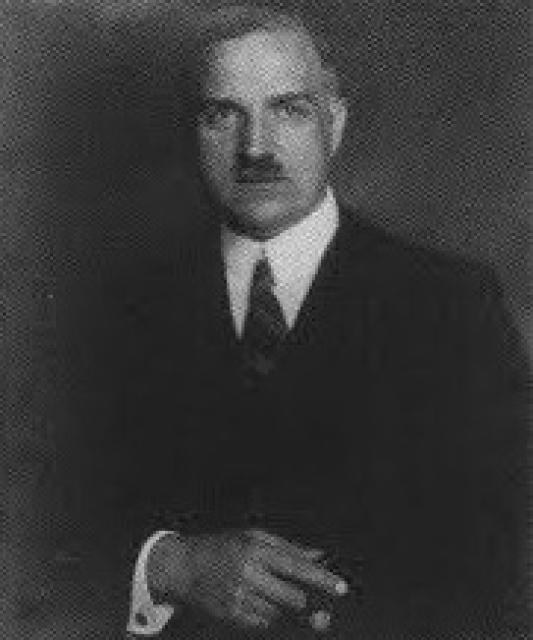
In 1907, Czochralski started working as an engineer for the German company 'Allgemeine Elektrizitätsgesellschaft.' One day, by accident, he dipped his pen into a container of molten tin instead of an inkwell. He pulled out the pen and noticed a thin thread of solidified tin attached to the metal nib. Curious, he replaced the nib with a capillary tube to see if the crystallized metal obtained in this way had a single-crystal structure. Through further experiments, Czochralski succeeded in obtaining a single crystal with a diameter of one millimeter and a length of 1.5 meters.
In 1918, he published an article titled 'Ein neues Verfahren zur Messung der Kristallisationsgeschwindigkeit der Metalle' ('A new method for measuring the crystallization rate of metals') in the German journal 'Zeitschrift für Physikalische Chemie,' where he described his discovery. From that time on, the Czochralski process has been used to measure the crystallization rate of metals such as tin, zinc, and lead.
Contributions to Science and Professional Life
In 1917, Czochralski established the research laboratory 'Metallbank und Metallurgische Gesellschaft,' which he directed until 1928. In 1919, he became one of the founding members of the German Society for Materials Science (Deutsche Gesellschaft für Metallkunde), where he served as president until 1925.
In 1928, at the request of Polish President Ignacy Mościcki, Czochralski moved to Poland and became a professor of metallurgy and metal research at the Warsaw University of Technology. During World War II, he was one of the engineers involved in the development and production of the hand fragmentation grenade RG-42 (R wz. 42), also known as 'Sidolówka,' for the Home Army – the Polish resistance army.
Later Life and Legacy
After the war, Czochralski was stripped of his professorship under the communist regime due to his connections with Germany during the war, although a later Polish court found no evidence of wrongdoing on his part. He returned to his hometown of Kcynia, where he managed a small company producing cosmetics and household chemicals until his death in 1953.


