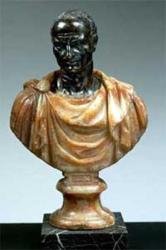
Claudius II
 Italy
Italy- Claudius II: The Gothicus Emperor
- Rise to Power
- Military Victories
- Domestic Policies
- Physical Appearance
- Death and Legacy
- Conclusion
Claudius II: The Gothicus Emperor
Claudius II Gothicus was a Roman emperor who ruled from 268 to 270 AD. Of Illyrian origin, he ascended to the throne at a time of crisis, with the empire facing threats from numerous barbarian tribes.
Rise to Power
Claudius's origins and early life remain shrouded in mystery. According to later sources, he may have been the illegitimate son of Gordian II or a barbarian from a Romanized background. In 268 AD, he was appointed tribune of an auxiliary unit guarding Ticinum. The troops there proclaimed him emperor, initiating a rebellion against the reigning emperor, Gallienus.
Military Victories
During his brief reign, Claudius II proved to be a formidable military commander. He successfully repelled an invasion by the Alemanni and achieved a decisive victory over the Goths at the Battle of Naissus in 269 AD. This victory earned him the title "Gothicus" and marked a turning point in the empire's fortunes. The Goths were driven out of the empire, and the threat of their invasions was averted for nearly a century.
Domestic Policies
Claudius II was known for his frugality and justice. He opposed the wholesale slaughter of Gallienus's family and friends by the senate and ordered the deification of his predecessor. He also paid stipends to soldiers who had been enraged by Gallienus's death.
Physical Appearance
Contemporary depictions of Claudius II portray him as a typical military officer of his time. He was clean-shaven, with a furrowed brow and tightly cropped hair.
Death and Legacy
In 270 AD, Claudius II died from a plague outbreak. Despite his short reign, he played a crucial role in stabilizing the empire and halting the incursions of barbarian tribes. He was succeeded by his brother, Quintillus, who would also reign for only a brief period.
Conclusion
Claudius II Gothicus's contributions to the Roman Empire were significant. He restored a sense of order and discipline to the military, repelled barbarian invasions, and initiated policies that laid the groundwork for the empire's recovery. Despite his premature death, he is remembered as one of the more successful emperors of the third century AD.