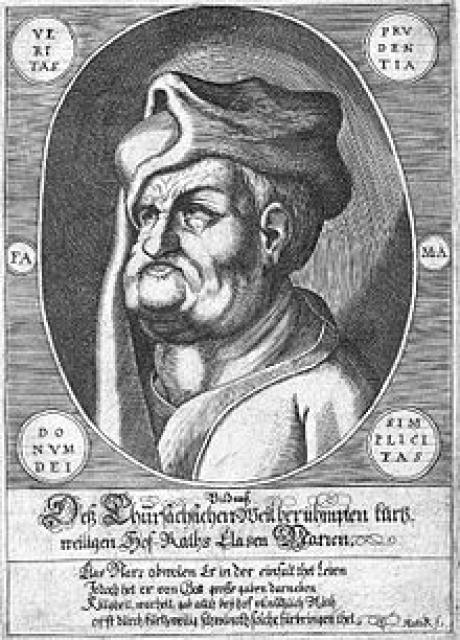
Claus Narr
 Germany
- Klaus Narr, the Saxon Court Jester
- Years of Service
- Reputation as a Fool
- Literary Inspiration
- Chronicles and Anecdotes
- Later Years and Legacy
Klaus Narr, the Saxon Court Jester
Early Life and Entry into CourtIn the 16th century, Klaus Narr emerged as one of Germany's most prominent court jesters. Born with physical and mental disabilities, he was brought to the Saxon court at the tender age of nine. His unconventional behavior and appearance, caused by his natural foolhardy nature, earned him a place in the entourage of Elector Friedrich II.
Years of Service
Throughout his life, Klaus Narr served as a jester under the rule of several Saxon monarchs, including Friedrich II, his successor Ernst, Friedrich III, Ernst II, Archbishop of Magdeburg, and Johann the Steadfast. His career spanned several decades, leaving an enduring legacy in the annals of Saxon court life.
Reputation as a Fool
Despite his mental deficiencies, Klaus Narr possessed a keen wit and a sharp tongue. His physical deformities, depicted in his portrait, included a massive neck and other severe disabilities. Nonetheless, he gained notoriety for his humor and critical observations, which often targeted the Catholic Church.
Literary Inspiration
Klaus Narr's fame extended beyond the court. Hans Sachs, a renowned playwright, immortalized the jester in his farce "Klaus Narren drey grose wunder in der stat zu Leipzig." In this play, Sachs used Klaus Narr's persona to voice witty criticisms of religious practices.
Chronicles and Anecdotes
Theologian Wolfgang Büttner compiled a collection of anecdotes about Klaus Narr, entitled "Sechshundert sieben und zwantzig Historien von Claus Narrenn" (1572). This book, immensely popular in the 16th and 17th centuries, provided a glimpse into the jester's life and eccentricities.
Later Years and Legacy
Klaus Narr's whereabouts become uncertain after 1530. His exact fate remains shrouded in mystery. However, his memory lived on through the numerous anecdotes and literary works that depicted his remarkable life as a court jester and a figure of both laughter and controversy.