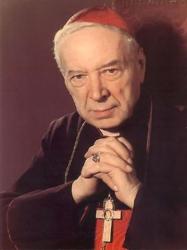
Clemens XIV
 Italy
Italy- Clement XIV: The Reluctant Pope
- Rise to Power
- Conclave and Election
- Papacy
- Suppression of the Jesuits
- Clement XIV and Mozart
- Death
Clement XIV: The Reluctant Pope
Early Life and EducationBorn Lorenzo Ganganelli on October 31, 1705, in Santarcangelo di Romagna, the son of a physician, the future Pope Clement XIV received his education at the Jesuit college in Rimini. At the age of 19, in 1724, he joined the Franciscan order, taking the name Lorenzo Francesco.
Rise to Power
Ganganelli's friendship with Pope Benedict XIV led to his appointment to a prominent role in the Roman Curia in 1758. Later, Clement XIII bestowed upon him the cardinal's hat at the urging of Lorenzo Ricci, the General of the Jesuits.
Conclave and Election
Cardinal Ganganelli made no secret of his desire for the papal tiara. The conclave, which began on February 15, 1769, was heavily influenced by political maneuvering by the ambassadors of Catholic kings who opposed the Jesuits. Despite the Jesuits' extensive influence in European courts, they had been expelled from Portugal and the Bourbons of France, Spain, Naples, and Parma. Opposing the Bourbons was the "Court of Cardinals," which resisted anti-Jesuit measures and royal policies of secularization. On May 19, 1769, Cardinal Ganganelli was elected pope, a choice favored by the Bourbons who expected him to suppress the Jesuits. He took the name Clement XIV and was crowned on June 4, 1769.
Papacy
Policy of ConciliationClement XIV's initial policy aimed to mend fences with the Catholic kingdoms strained during the previous pontificate. Through his conciliatory approach, Clement secured compensation for the loss of Avignon and Benevento and largely succeeded in reconciling secular and ecclesiastical authorities.
Suppression of the Jesuits
Despite his initial favor towards the Jesuits, Clement XIV turned against them to secure Bourbon support, which had been instrumental in his election. In 1773, he issued the bull Dominus ac Redemptor, dissolving the Society of Jesus, a mainstay of the Catholic Church for two centuries and a driving force behind the Counter-Reformation. The Jesuits were expelled from Brazil (1754), Portugal (1759), France (1764), Spain and its colonies (1767), and Parma (1768). The pope refused to meet with the Jesuit General, Lorenzo Ricci, and ordered them to stop recruiting novices. However, the order's suppression was ignored in non-Catholic countries, particularly Prussia and Russia, where papal authority was not recognized.
Clement XIV and Mozart
Pope Clement XIV and the mores of the Catholic Church in Rome are vividly described in the letters of Wolfgang Amadeus Mozart and his father, Leopold Mozart, who visited Rome in April and May 1770 during their tour of Italy. Leopold found the pope to be haughty but nevertheless welcomed the young composer warmly. The papal chapel was famous for its performance of Gregorio Allegri's Miserere Mei, Deus, the score of which was forbidden from being copied under penalty of excommunication. The 14-year-old Wolfgang managed to write down the entire score after hearing it just once. Clement made Mozart a knight of the Golden Spur.
Death
Clement's last months were marked by setbacks that cast him into gloom. Despite his generally good health, he fell ill, leading to rumors of poisoning. While there is no evidence of foul play, his illness is likely attributable to old age. Bedridden on September 10, 1774, he received the last rites on September 21, 1774. He passed away the following day, September 22. An autopsy revealed signs of scurvy and hemorrhoids compounded by overwork and the pope's habit of inducing artificial sweating even in extreme heat. His tomb, designed by Antonio Canova, is located in the church of Santi Apostoli in Rome.