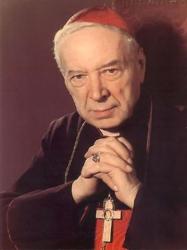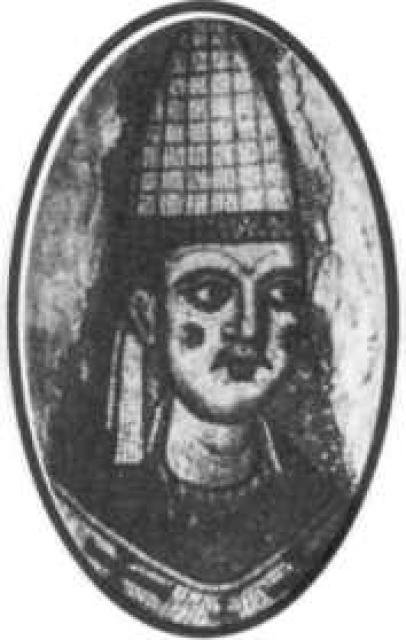
Innokentiy III
 Vatican
Biography of Innocent III
Innocent III, born Lotario dei Conti di Segni, was born around 1160 or 1161 in Gavignano, Lazio, Italy. He was the son of Trasimondo dei Conti di Segni and Clarice Scotti. Lotario belonged to the noble family of the Counts of Segni and was the nephew of Pope Clement III.
Lotario received his early education in Rome and studied theology in Paris and law in Bologna, becoming one of the most renowned experts in theology and law of his time. After the death of Pope Alexander III, Lotario returned to Rome and held various spiritual positions under subsequent popes. Gregory VIII made him a subdeacon, and Clement III appointed him as cardinal-deacon.
During the pontificate of Pope Celestine III, Lotario, who was one of the fiercest enemies of the Segni family, lived in exile in Anagni, where he devoted himself to contemplation and literary work. However, before his death, Celestine convinced the cardinals to elect the 37-year-old Lotario as the new pope. Reluctantly, he accepted the tiara and took the name Innocent III.
Restoring Papal Authority
Taking advantage of the weakened imperial power after the death of Emperor Henry VI, Innocent III vigorously sought to restore papal authority. The Prefect of Rome, who ruled the city on behalf of the emperor, and the Senator, who defended the rights of the citizens, pledged their loyalty to the pope. Innocent restored papal sovereignty over Rome and began to bring the surrounding regions under his control, including Romagna, Ancona, Spoleto, Assisi, and Sora.
Innocent was approached by Constance, the widow of Henry VI, who was unable to secure the Sicilian throne for her young son, Frederick II. Innocent demanded her recognition of papal suzerainty over Sicily and the renunciation of privileges granted to the Normans by Adrian IV. In November 1198, Innocent issued a bull proclaiming Frederick as the king. However, before the bull reached Sicily, Constance died, appointing Innocent as Frederick's guardian. Even the enemies of the papacy acknowledged that Innocent selflessly helped the young king and skillfully governed Sicily for nine years.
In Germany, two rival parties, the Guelphs and the Ghibellines, had elected two different kings. Innocent sent Bishop Sutri to one of the candidates, Philip of Swabia, with an offer of support in exchange for territorial concessions in Tuscany and the release of Sibylla of Sicily from prison. Philip responded ambiguously, and Innocent refused to recognize his election. The other candidate, Otto IV, also appealed to the pope. Before making his choice, Innocent called for a peaceful resolution among the contenders. When they resorted to armed conflict, Innocent solemnly declared Otto as the king on July 3, 1201, threatening excommunication for those who did not submit to his choice.
In addition to his involvement in Germany, Innocent resolved issues in France and England. He enforced a five-year truce between John Lackland and Philip Augustus through his legate Pietro Capuano. In 1199, Innocent imposed an interdict on all of France when Philip abandoned his lawful wife Ingeborg for his mistress Agnes. In 1205, a conflict arose in England regarding the election of the Archbishop of Canterbury. Innocent recommended Stephen Langton and refused the three thousand marks offered by John for the approval of his candidate, ultimately leading to the signing of the Magna Carta.
The Crusades and Heretical Movements
Like his predecessors, Innocent III was fervently committed to the liberation of the Holy Land. He organized the Fourth Crusade, but instead of battling for the Holy Sepulchre, the crusaders became embroiled in Byzantine disputes and sacked Constantinople in 1204. The Latin Empire, led by Baldwin of Flanders, was established in place of Byzantium, and the reunion of the Western and Eastern churches was proclaimed. Innocent was disappointed that the crusaders deviated from their original goal, but he had no power to change the outcome.
Innocent also fiercely fought against various heresies. His main adversary was the Albigensians, a large sect in southern France. They not only professed heretical doctrines but also sought to spread them by force. In 1208, the Albigensians murdered one of the missionaries sent by the pope to preach the true faith. Innocent imposed an interdict on several cities and called on the King of France to wage war against the heretics, which turned from a religious conflict into a straightforward conquest.
Throughout his pontificate, Innocent intervened in the affairs of various countries. He annulled the marriages of Leo of Armenia and Portugal, recognized Pedro II of Aragon as his vassal, defended the Norwegians against their King Sverre, and acted as a mediator in the Hungarian civil strife. In 1204, Innocent sent Cardinal Leo to Bulgaria to crown Kaloyan as the "King of the Bulgarians and Vlachs." He restored ecclesiastical discipline in Poland, intervened in the dispute between Sverker II and Eric X in Sweden, and attempted to restore unity with the Eastern Church.
In addition to his political endeavors, Innocent III founded universities in Paris and Oxford and approved the establishment of mendicant orders according to the rules of St. Francis and St. Dominic. With a well-organized administrative and fiscal apparatus, including the curial council and legates sent throughout Europe, Innocent's papal capital became the most powerful financial conglomerate in Europe, thanks to the economic progress and thriving trade between developing cities. The Franciscans' "movement of the poor," which was subservient to the papacy, neutralized the threat from socio-religious movements that undermined the authority of the church hierarchy.
Towards the end of his life, Innocent organized the Fourth Lateran Council, which opened on November 15, 1215. It was the most important council of the Middle Ages, where 70 canons were accepted, forming the foundation of new ecclesiastical legislation. The council condemned all religious and social doctrines propagated by the Cathars and Waldensians, who were heretics advocating for the rights of the poor. The council fathers called on the Christian people to reform their customs, criticized the corruption and immorality of the clergy, and tightened the requirement of celibacy for priests. Believers were obliged to confess to their parish priest and receive communion at least once a year during Lent. Confidentiality in confession was mandated. In the doctrinal realm, the council formulated theological aspects of the sacraments in the spirit of medieval scholasticism. The council also addressed the issue of church tithes and imposed special clothing on Jews, prohibiting them from going out in the streets during Holy Week. The council expressed support for the creation of separate quarters (known as ghettos) for Jews.
Innocent III died in Perugia during one of his apostolic journeys. His body, dressed in papal garments, was displayed on a catafalque in the local cathedral. During the night, thieves broke into the cathedral and stole the symbols of papal authority. When the cardinals gathered the next day to celebrate the requiem Mass, they found only the naked remains of the man who had ruled over the Christian world for 18 years. Innocent was buried in the cathedral, and it was only in December 1891 that his remains were transferred to the Basilica of St. John Lateran in Rome.