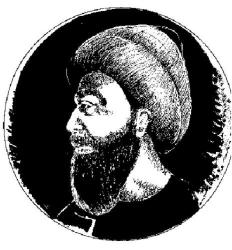
Cleveland Abbe
 USA
USA- Early Life and Education
- Civil War and Astronomical Pursuits
- Transition to Meteorology
- Development of the Time Zone System
- Establishment of the U.S. Weather Bureau
- Standardization and Innovation
- International Recognition and Legacy
Early Life and Education
Cleveland Abbe was born on December 3, 1838, in New York City. Raised in a wealthy merchant family, he exhibited exceptional academic abilities, particularly in mathematics and chemistry. In 1857, he graduated from the Free Academy of the City of New York (later known as City College of the City University of New York).
Abbe then pursued engineering at the University of Michigan for two years, but his passion for astronomy led him to study under renowned German astronomer Franz Brünnow.
Civil War and Astronomical Pursuits
During the Civil War, Abbe was unable to enlist due to poor eyesight. Instead, he worked in Cambridge, Massachusetts, as an assistant to Benjamin Gould, a leading astronomer and superintendent of the United States Coast Survey.
After the war, Abbe traveled to Russia to further his astronomical studies. Upon his return to the United States, he secured a position with the Cincinnati Astronomical Society in 1868. However, funding difficulties forced him to leave the job less than a year later.
Transition to Meteorology
Recognizing the impact of weather conditions on astronomical observations, Abbe shifted his focus to meteorology. He presented an influential paper advocating for the use of weather forecasting as a cost-effective and potentially profitable enterprise.
Development of the Time Zone System
To effectively gather and organize meteorological data, Abbe devised a time-keeping system that divided the United States into four standard time zones. In 1883, he convinced North American railroads to adopt his time zone system.
The United Kingdom had already established its own time standards, and with Abbe's efforts, international approval for a global timekeeping system was achieved in 1884.
Establishment of the U.S. Weather Bureau
Abbe realized the need for coordinated meteorological efforts. With funding from the Cincinnati Chamber of Commerce, he recruited a team of 20 volunteer observers. Western Union allowed these observers to communicate free of charge, and Abbe's team began collecting data.
On February 19, 1871, Abbe issued the first official weather forecast. He continued to provide forecasts for the next six months while training others. In the summer of 1871, he was joined by two army lieutenants and a civilian professor, allowing for an increased workload.
Standardization and Innovation
Abbe emphasized meticulous accuracy in weather descriptions, ensuring each forecast covered cloudiness, precipitation, temperature, wind direction, and atmospheric pressure.
He also advocated for state-of-the-art equipment at weather stations. Abbe not only tested and deployed thousands of instruments, but he also invented and improved existing technology in collaboration with colleagues from Britain, Germany, and Russia.
International Recognition and Legacy
In 1872, Abbe founded the journal "Monthly Weather Review," which continues to be published today. He was elected to the American Academy of Arts and Sciences in 1884, awarded the Symons Memorial Gold Medal by the Royal Meteorological Society in 1912, and received the National Academy of Sciences Medal in 1916.
Cleveland Abbe died on October 28, 1916, at the age of 77. He was buried at Rock Creek Cemetery in Washington, DC. Among his hobbies, Abbe pursued genealogy and co-authored a book, "The Abbe-Abbey Genealogy," tracing the paternal line of his family.