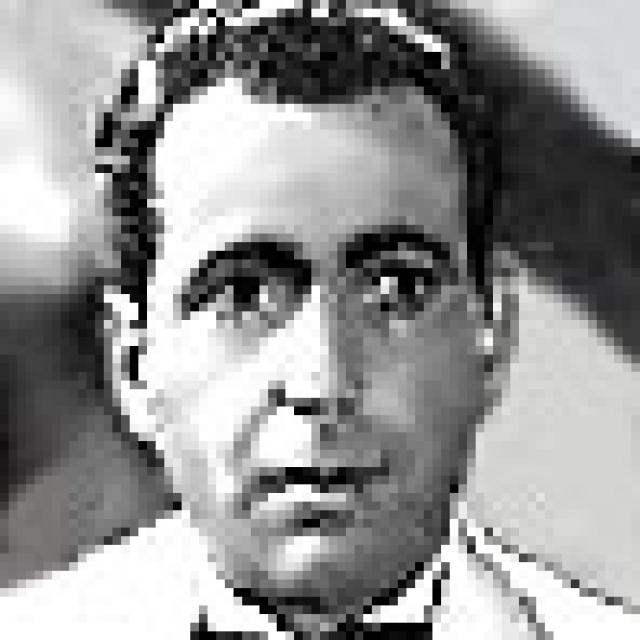
Conrad Veidt
 Germany
Biography of Conrad Veidt
Conrad Veidt (22.01.1893 - 03.04.1943) was a German actor and one of the most talented representatives of German theater and cinema. He began his career in 1913 at the theater of Max Reinhardt. In 1917, he made his film debut in the movie "When Dead Speak" and went on to star in educational films by Richard Oswald, such as "Prostitution" (1917-1918), "The Story of Dida Ibsen" (1918), and "Different from the Others" (1919).
Veidt gained worldwide recognition for his role as the sleepwalker Cesare in the film "The Cabinet of Dr. Caligari" (1919). His nervous and expressive performance not only met the requirements of expressionist style but also conveyed the tragic duality of the character, who became a tool in the hands of a maniac and criminal.
Leading Position in German Cinema
Veidt's career took off in German cinema due to his appearances in a series of complex psychological roles that demanded the ability to convey the inner world of extraordinary, sometimes demonic personalities using the limitations of the silent screen. His expressive hands, lively and thoughtful eyes, and "speaking" movements conveyed the uniqueness of each character he portrayed, such as the devil in "The Prince of Kurfurstendamm" (1920), Nelson in "Lady Hamilton," and Prince Ahmed in "The Indian Tomb" (both in 1921), as well as the role of Orlak in the film "The Hands of Orlac" (1924).
In 1926, after playing the lead role in the film "The Student of Prague," Veidt signed a contract with Hollywood. Among his many roles, he portrayed Gwynplaine in the movie "The Man Who Laughs" (1928). However, when sound films became popular, he decided to return to Berlin. With the rise of fascism, Veidt moved to England. He appeared in films of various genres, including "The Eternal Jew" (1933), "Power/Jew Suss" (1934), "William Tell" (1934), "Under the Red Robe" (1936), "Dark Journey" (1937), and "The Thief of Bagdad" (1940).
Anti-Fascist Films and Death
During World War II, Veidt acted in anti-fascist films in the United States, including the iconic film "Casablanca" (1942). Sadly, he passed away from a heart attack during the filming of "Casablanca" in 1943.


