Cornelis Jansen
 Netherlands
- Early Life and Education
- Theological Influences
- Academic and Ecclesiastical Career
- Major Work: 'Augustinus'
- Jansenism and Condemnation
- Controversy and Legacy
Early Life and Education
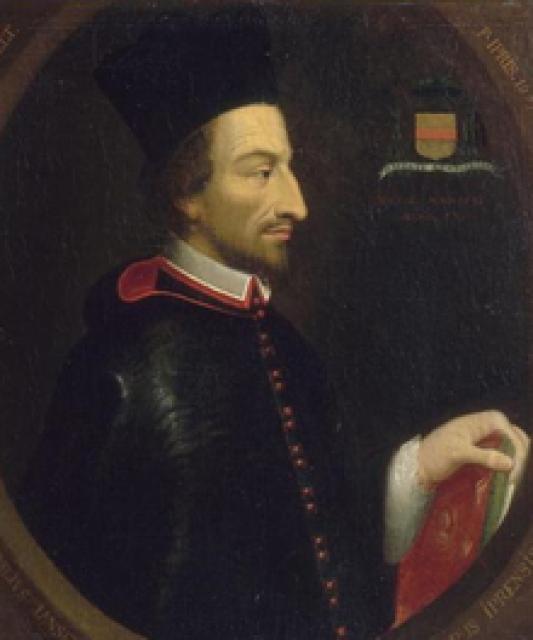
Cornelis Otto Jansenius, a Dutch theologian, was born on October 28, 1585, in Ackoy, near Lerdaam, Netherlands. In 1602, he enrolled at the University of Leuven, where he immersed himself in the ongoing theological debates between Spanish Jesuit Luis Molina and the followers of Michael Baius.
Theological Influences
Jansenius's intellectual pursuits extended to Paris, where he and his friend Jean Duvergier de Hauranne delved into the writings of the Church Fathers, particularly Augustine. Inspired by Augustine's teachings, Jansenius envisioned a religious reform that emphasized a deep understanding of human nature.
Academic and Ecclesiastical Career
Returning to Leuven as a theology professor at the College of Sainte-Pulchérie, Jansenius later assumed the role of Scripture professor at the University of Leuven. He ascended to the position of Bishop of Ypres in 1636. Throughout his career, he actively challenged Jesuit doctrines and French expansionism while countering the views of Dutch Presbyterian Gisbertus Voetius.
Major Work: 'Augustinus'
The culmination of Jansenius's scholarship was his monumental three-volume treatise, 'Augustinus,' published posthumously in 1640. In this work, he meticulously analyzed Augustine's teachings on the nature of human sin and salvation. Jansenius argued that salvation was a gradual process initiated by an act of divine grace and that human nature, corrupted by original sin, was incapable of resisting either the allurements of lust or the enticements of grace.
Jansenism and Condemnation
Jansenius's ideas, influenced by the writings of Michael Baius, paved the way for the theological system known as Jansenism. Pope Urban VIII condemned 'Augustinus' in 1642, citing similarities to Baius's condemned teachings. In 1653, Innocent X formally condemned five propositions extracted from 'Augustinus' as heretical.
Controversy and Legacy
The ensuing controversies surrounding Jansenism ignited a prolonged debate involving prominent figures such as Antoine Arnauld, Blaise Pascal, and the theologians of the Port-Royal Abbey. Jesuit opposition intensified, culminating in Pascal's satirical 'Provincial Letters.' Despite ecclesiastical condemnations, Jansenism persisted, marking a significant chapter in the history of Christianity. Contemporary manifestations of Jansenism can still be found in the form of the Old Catholic Church of the Netherlands, established in the 18th century.