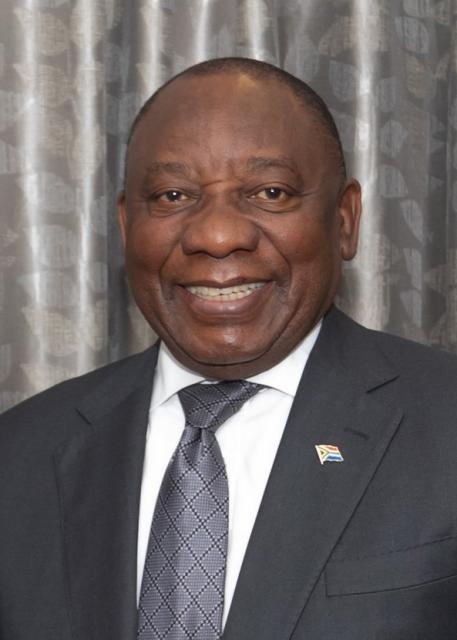
Cyril Ramaphosa
 South Africa
- Cyril Ramaphosa: A South African Icon
- Political and Trade Union Activism
- National Union of Mineworkers
- Work Towards Democracy
- Business Career
- Return to Politics
- President of the ANC and South Africa
Cyril Ramaphosa: A South African Icon
Early Life and EducationMatamela Cyril Ramaphosa was born on 17 November 1952, in the multiethnic Soweto township of Johannesburg. His grandfather worked as a miner and lived in the village of Kalavha, while his grandmother lived near the palace of the Venda king. From a young age, he experienced the realities of South Africa's apartheid system.
Cyril attended primary school in Chilidzi and later studied at Sekano-Ntoane High School. In 1971, he matriculated from Mfafuli High School in Sibasa, Venda. During his school years, he excelled in academics, participated in debates, and engaged in preaching, singing, and dancing.
In 1972, he enrolled at the University of the North to pursue a Bachelor of Laws degree.
Political and Trade Union Activism
Cyril's political awakening came as a student, where he joined the South African Students' Organization (SASO) and the Student Christian Movement. His activism led to his arrest and detention under Section 6 of the Terrorism Act for organizing meetings in support of the Mozambican liberation movement FRELIMO.
After his release, he became a member of the Black People's Convention, inspired by Steve Biko's Black Consciousness Movement. In 1976, he was again detained and held for six months without trial under the Terrorism Act following the Soweto Uprising.
In 1977, Cyril joined a law firm in Johannesburg as a clerk. He also continued his studies, completing his LLB degree through the University of South Africa in 1981.
National Union of Mineworkers
In 1982, Cyril joined the Council of Unions of South Africa (CUSA) as a legal advisor, marking his entry into the trade union movement. He played a pivotal role in the establishment of the National Union of Mineworkers (NUM) in the same year.
As the NUM's first general secretary, Cyril led a series of strikes and negotiations that aimed to improve the wages and working conditions of black miners. The 1987 mineworkers' strike, the largest in South Africa's history, marked a turning point in the country's labor relations.
Work Towards Democracy
In 1990, Cyril became the chairperson of the National Reception Committee for Nelson Mandela's release from prison. At the ANC's 48th National Conference in 1991, he was elected as the party's 9th General Secretary, succeeding Alfred Nzo.
Cyril served on the negotiating team that ended apartheid and led to the first democratic elections in South Africa in 1994. He was a member of the Constituent Assembly and played a key role in drafting the country's new constitution.
Business Career
After retiring from politics in 1996, Cyril became a successful businessman. He founded the Shanduka Group, an investment holding company with interests in mining, manufacturing, telecommunications, and other sectors.
He held various leadership positions in a range of companies, including Alexander Forbes South Africa, Lonmin, Standard Bank Group, MTN Group Limited, and Coca-Cola Shanduka Beverages.
Return to Politics
In 2012, Cyril returned to politics as deputy president of the ANC. In 2014, he was appointed South Africa's Vice President by President Jacob Zuma.
President of the ANC and South Africa
In 2017, Cyril was elected President of the ANC, succeeding Zuma. In 2018, he became South Africa's President, taking over from Zuma.
As President, he pledged to fight corruption, address racial inequality, and implement radical economic transformation policies. He has also played a leading role in the African Union and other international organizations.


