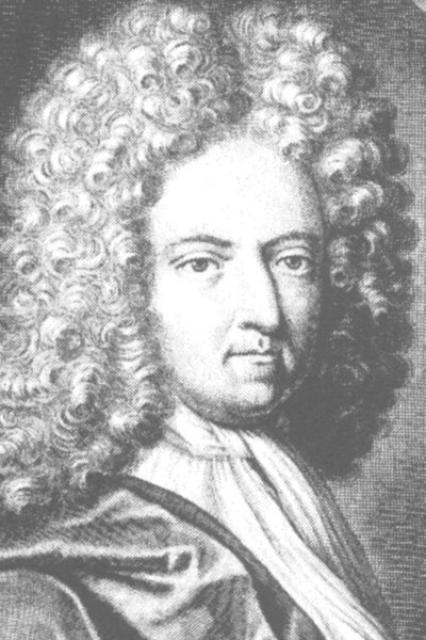
Daniel Defoe
 Great Britain
- The Extraordinary Life of Daniel Defoe
- Early Life and Political Involvement
- Ups and Downs
- Double Life and Literary Success
- Literary Achievements
- Robinson Crusoe: A Reflection of Changing English Society
- Legacy and Recognition
The Extraordinary Life of Daniel Defoe
Daniel Defoe, an English writer, led an extraordinary life. This enterprising bourgeois was involved in almost alluring commercial and political ventures of his time. Defoe traded everything, from tobacco and vodka to public beliefs. He confessed, "No one has experienced such fickle fortunes. Thirteen times I have been rich, only to become poor again."
Early Life and Political Involvement
Defoe was born in England in the late 17th century. He became a fervent supporter of the Dutch ruler William of Orange, who ascended the English throne during the "Glorious Revolution" in 1688. Defoe defended the new dynasty against the supporters of the Stuart family, who believed that a foreigner had no right to be the King of England. Defoe mocked the concept of "pure Englishness," arguing that the English nation was historically formed by the mixing of many tribes and therefore the idea of "pure blood" was a fiction.
Ups and Downs
Defoe gained favor with the King, and was even given a particle "de" to add to his surname. However, after the death of King William III, the political landscape changed. The nobility became more protective of their rights, not tolerating open mockery of their titles. The official church also began persecuting dissenting religious groups. Defoe found himself in the center of events once again. He published a pamphlet titled "The Shortest Way with Dissenters" in which he pretended to be a righteous churchman, attacking dissenters with exaggerated fury and calling for their punishment. However, his true intentions were soon discovered, and Defoe was arrested and spent three days in stocks. Yet, the people celebrated him, throwing flowers and singing songs in his honor.
Double Life and Literary Success
To avoid poverty or exile, Defoe accepted a dubious offer from the Prime Minister to become a secret agent for the conservative government while outwardly remaining an "independent" journalist. This marked the beginning of Defoe's double life, constantly changing his allegiances and often finding himself in difficult situations. The role Defoe played in the backstage intrigues of his time remains unclear. However, his political chameleonism can be explained by the peculiarities of English political life, where both the Tory and Whig parties were equally unprincipled and self-interested.
Literary Achievements
Despite his controversial political activities, Defoe's literary achievements brought him well-deserved fame. His novels, such as "Robinson Crusoe," "Captain Singleton," "Moll Flanders," and "Roxana," reflected his vast life experience and appealed to common sense rather than the refined taste of the elite. Defoe's works combined entertainment with philosophical and social content, delving into economic issues and promoting the development of England's foreign trade. His writings celebrated private initiative and the importance of trade for the prosperity of the nation.
Robinson Crusoe: A Reflection of Changing English Society
Defoe's novel "Robinson Crusoe" marked the entrance of a truly bourgeois hero into literature, whose adventures were closely tied to the desire for wealth. Robinson Crusoe was not only willing to engage in slave trading and plantation work but also traveled to the ends of the Earth in search of valuable goods. Defoe captured the spirit of the emerging middle class, portraying the protagonist as a practical and resourceful individual who, through hard work, transforms from a reckless youth into a strong and fearless man. The novel explores the clash between rationality and religious beliefs, as Robinson Crusoe begins attributing unexpected events on the island to divine intervention but eventually reverts to his rational understanding.
Legacy and Recognition
Daniel Defoe's novels were well-written and highly regarded by readers. He once said, "If I were asked what I consider the perfect style and language, I would answer... the one that is understood by everyone." "Robinson Crusoe" was so widely understood and accepted that it became a "book of generations." Defoe's works continue to be appreciated for their literary merit and their portrayal of the changing society of his time.


