Daniil Andreev
- Early Life and Influences
- Literary Pursuits and Political Persecution
- Imprisonment and Creative Endeavors
- "Russian Gods" and the Leningrad Apocalypse
- Post-Prison Life and Legacy
Early Life and Influences
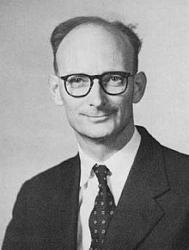
Daniil Leonidovich Andreev was born on October 20, 1906, in Berlin, the son of renowned writer Leonid Andreev. Following his mother's death during childbirth, Andreev was raised by his grandmother and aunt. The intellectual atmosphere of his home, frequented by luminaries such as Ivan Bunin, Maxim Gorky, and Alexander Scriabin, profoundly shaped his spiritual development. From a tender age, he displayed a gift for poetry and prose composition.
Literary Pursuits and Political Persecution
After completing secondary school and the Higher Literary Courses, Andreev worked as an artist-designer. Despite his inability to publish his written work, he continued to write poetry and prose. In 1937, he published his novel "Strangers of the Night," which expounded on his vision of a new religion that united all world religions, which he termed the Rose of the World.
During World War II, Andreev contributed to the unfinished poems "Amber" and "Germans." In 1942, he was conscripted into the army and fought in the battles near Leningrad. Demobilized after the war's end, he worked as an artist-designer at the Moscow Museum of Communications.
In 1946, Andreev co-authored "Notable Investigations of the Mountainous Regions of Central Asia." His work on a book about Russian travelers in Africa was abruptly interrupted in 1947 by his arrest alongside his wife. Falsely accused of planning a terrorist attack, Andreev was sentenced to 25 years in prison.
Imprisonment and Creative Endeavors
Confined to Vladimir Prison, Andreev's health weakened, but his creative spirit remained unyielding. Collaborating with fellow inmates, he co-wrote "The Newest Plutarch," a biographical dictionary of imaginary historical figures. Behind prison walls, Andreev penned his most significant works: "Russian Gods" (1955), "Iron Mystery" (1956), and "The Rose of the World" (1958). These writings embodied his religious-philosophical system of the cosmos.
Andreev claimed to have experienced transcendental journeys to other worlds, during which he received revelations about mythical figures and cosmic realms. His mystical insights are expressed through vivid metaphors, innovative rhythms, and newly coined words, reflecting his conviction that poets are responsible for creating language for new concepts.
"Russian Gods" and the Leningrad Apocalypse
"Russian Gods," a poetic ensemble encompassing poems, symphonies, and cycles, became Andreev's lifelong project. The central poem, "Leningrad Apocalypse," illustrates his "penetrating realism," where scenes of war and despair are intertwined with visions from other dimensions.
In "Iron Mystery," Andreev explores the eternal struggle between light and darkness, both in Russian history and throughout the cosmos. "The Rose of the World," meanwhile, presents a metahistory of Russian culture, intertwining the lives of influential artists with the unfolding of cosmic events.
Post-Prison Life and Legacy
Despite the death of Stalin and the Khrushchev Thaw, Andreev's release from prison was delayed for years due to his unyielding stance against Soviet censorship. He was finally freed in 1957 and resumed work on "The Rose of the World," while also translating Japanese literature. Andreev's writings continue to inspire and intrigue readers, offering a unique perspective on the human condition, the nature of the cosmos, and the potential for spiritual transformation.