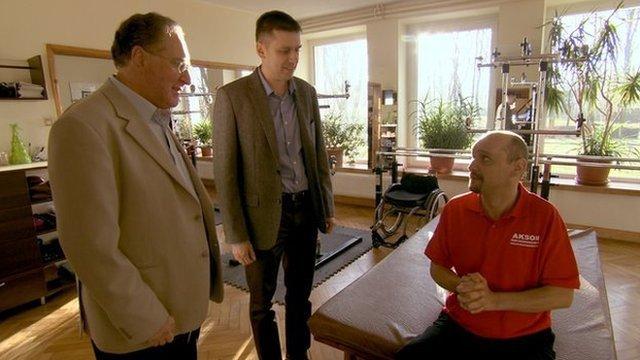
Darek Fidyka
 Great Britain
- Paradigm Shift in Paralysis Treatment
- Dareck Fidge: A Pioneer of Hope
- Journey from Immobility to Recovery
- Scientific Breakthrough: Nervous System Regeneration
- Professor Geoffrey Raisman: A Visionary
- Partial Recovery and Ongoing Progress
- Global Implications and Ripple Effect
Paradigm Shift in Paralysis Treatment
In a groundbreaking medical achievement, British scientists have engineered a technique that has brought hope to paralysis victims who once thought their condition was irreversible.

Dareck Fidge: A Pioneer of Hope
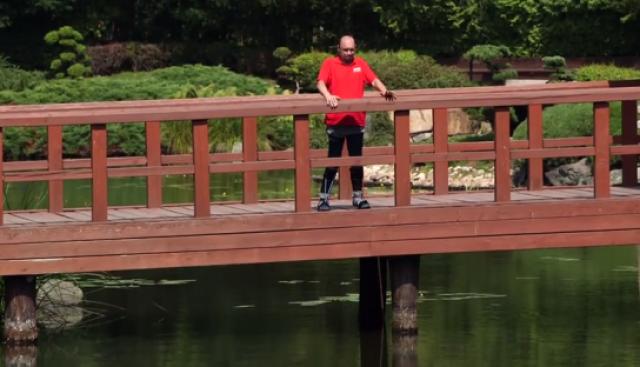
Dareck Fidge, a British firefighter, became the first person to recover from a severe spinal cord injury that had left him paralyzed from the waist down. This remarkable feat was made possible by a novel technique that repaired damaged nerve cells, restoring Fidge's control over his lower body.
Journey from Immobility to Recovery
Fidge's journey to recovery began four years ago when a severe knife attack inflicted a spinal cord injury comparable to that suffered by renowned actor Christopher Reeve. While prior treatments had shown promise for partial spinal cord injuries, paralysis from complete breaks was considered incurable.
Scientific Breakthrough: Nervous System Regeneration
The groundbreaking technique involved extracting cells from Fidge's nose and cultivating new nerve cells. These cells were then transplanted into his spinal cord, reestablishing connections that had been lost due to the injury. While the concept of nerve cell regeneration is not entirely new, Fidge is the first known recipient to achieve successful results.
Professor Geoffrey Raisman: A Visionary
Professor Geoffrey Raisman, who led the research team, hailed the breakthrough as a "watershed moment in recovery." He emphasized that while the technique needs further refinement, it holds immense potential for restoring mobility in patients whose cases were previously considered hopeless.
Partial Recovery and Ongoing Progress
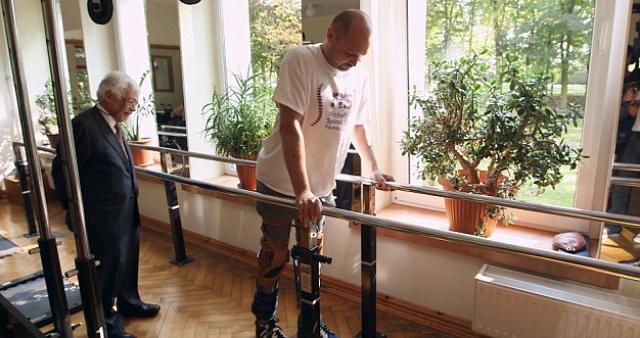
Fidge's recovery is ongoing, and he still requires some assistance when walking. However, his life has been drastically transformed, and he can now engage in activities that were once beyond his reach.
Global Implications and Ripple Effect
Across the globe, millions suffer from similar levels of paralysis. Professor Raisman aspires to persuade neurosurgeons worldwide to adopt the technique, hoping to unleash a wave of miraculous recoveries. According to the research, patients could regain sensitivity and mobility within four months of surgery, offering hope to those who have long endured the devastating consequences of paralysis.