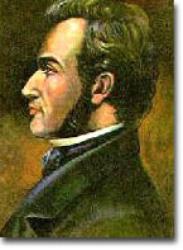
Darius III
- Darius III: The Last Great King of Persia
- Alexander's Invasion of Asia
- Crossing of the Hellespont
- Persian Forces and Tactics
- Battle of the Granicus River
- Macedonian Victory
- Liberation of Asia Minor
- Support for Democracy
- End of Persian Resistance
- Death of Memnon
- Legacy
Darius III: The Last Great King of Persia
Accession to the ThroneIn 336 BCE, after the assassination of his father Philip II, Alexander the Great ascended to the Macedonian throne. Darius III, a Persian king from the Achaemenid dynasty, had been in power since 336 BCE.
Alexander's Invasion of Asia
In 335 BCE, Alexander began preparations for an eastern campaign against Persia. The Persian command, believing that the Macedonians had abandoned their aggressive plans, made no significant defensive measures along the coast of Asia Minor.
Crossing of the Hellespont
In spring 334 BCE, the Macedonian army under Parmenion crossed the Hellespont into Asia Minor. The Persians failed to mount any resistance, allowing Alexander to land at Ilium (ancient Troy) and join with his main army.
Persian Forces and Tactics
Darius's vast army was composed of разнородные elements of varying military prowess. Discipline was weak, and the soldiers lacked the fighting spirit of Alexander's smaller but highly trained army.
Despite attempting to adopt Greek tactics, Darius relied heavily on Greek mercenaries. The overall numerical strength of the Persian army was likely significantly greater than that of the Greco-Macedonian forces.
Battle of the Granicus River
Despite belated preparations by Darius's satraps, the Persians decided to confront Alexander in a pitched battle at the Granicus River in May 334 BCE.
Macedonian Victory
According to ancient sources, the Persian army at Granicus numbered 20,000 cavalry and an equal force of mercenary infantry. Macedonian cavalry played a decisivo role in the battle, and after the death of around 1,000 Persian horsemen, Darius's army retreated from the field.
Liberation of Asia Minor
After leaving a small garrison to secure the Hellespont crossing, Alexander marched south to weaken Persia by seizing their naval bases on the coast of Asia Minor.
Support for Democracy
In contrast to his father, Alexander supported democracy in the Greek cities of Asia Minor, where the oligarchy was backed by the Persian king. This tactic won over large segments of the population to his cause.
End of Persian Resistance
Siege of Miletus and HalicarnassusOnly at Miletus and Halicarnassus did Alexander encounter significant resistance. The Persian commander Memnon, the satrap of Lower Asia, retreated to Halicarnassus to lead its defense.
After a prolonged siege, aided by siege engines, the Macedonians captured Halicarnassus, while the defenders took refuge in the fortress.
Death of Memnon
The sudden death of Memnon in 333 BCE, while besieging Mytilene on Lesbos, deprived Alexander of a formidable adversary. Darius's fleet was then withdrawn from Greek waters, leaving Alexander with the ultimate advantage.
Legacy
Darius III, the last great king of Persia, fought valiantly against the invasion of Alexander the Great. Despite his attempts to modernize his army and adopt Greek tactics, he was ultimately unable to withstand the superior military prowess of the Macedonians.