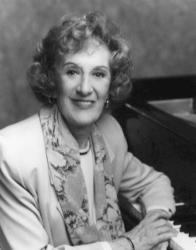
Dave Brubeck
 USA
USABiography of David Warren Brubeck
David Warren Brubeck was an American jazz composer, arranger, and pianist. He was born into a wealthy family and grew up in a musical environment, with his mother being a pianist and his two brothers being musicians and music teachers. Brubeck began studying piano at the age of four, receiving his first lessons from his mother, and began learning the cello at the age of nine. At thirteen, he started performing in public concerts.

In the late 1930s and early 1940s, Brubeck played in various popular ensembles, including hillbilly, dixieland, and swing orchestras. He attended Pacific College in Stockton from 1938 to 1942, where he led a 12-piece student ensemble. During this time, he also performed in clubs, including with vocalist and pianist Cleo Brown. Brubeck then enrolled in Mills College in Oakland, where he studied composition with Darius Milhaud and attended lectures by Arnold Schoenberg at the University of California.

Due to military mobilization, Brubeck had to interrupt his studies and served as the leader of a military orchestra in Europe in 1944. He also worked as an arranger and pianist during this time. After obtaining permission from the authorities, he returned to the US to continue his education, resuming his studies in 1946 with Milhaud and Fred Saatman. It was during this period that he developed a serious interest in jazz.
At Milhaud's initiative and with his support, Brubeck formed the experimental octet JAZZ WORKSHOP ENSEMBLE in 1948. The members of the ensemble included Dick Collins on trombone, Bill Smith on clarinet and baritone saxophone, Paul Desmond on alto saxophone, clarinet, and piano, David Van-Kriedt on tenor saxophone, Ron Crotty on double bass, and Cal Tjader on drums, vibraphone, and bongos. Brubeck recorded his first albums with this ensemble. He also collaborated briefly with Miles Davis.
From 1949 to 1950, Brubeck played in a trio formed from the rhythm section of the octet, which included Ron Crotty and Herb Barman. In 1961, he formed his own quartet with Paul Desmond and soon achieved worldwide fame. During the quartet's existence (until 1967), other members included bassist Ron Crotty, Fred Dutton on double bass and bassoon, Wyatt "Bull" Ruther, Bob Bates, and Eugene Wright on drums, and percussionists like Herb Barman, Lloyd Davis, Joe Dodge, and Joe Morello. The quartet performed in Chicago and from 1962 in New York, initially mainly in colleges and universities, and later in prestigious jazz clubs and concert halls, including multiple performances at Carnegie Hall. They consistently ranked high in Down Beat magazine's polls, reaching second place after the MODERN JAZZ QUARTET from 1958 to 1960. Brubeck extensively toured the US and various countries around the world, including Europe, the Middle East, Australia, Japan, and others. The quartet also performed at jazz festivals in Newport, Warsaw, Berlin, and more.
After Paul Desmond's departure to pursue a solo career, he was replaced by Gerry Mulligan on baritone saxophone, and Joe Morello was replaced by Alan Dawson on drums. The new lineup of the quartet debuted in London in 1968. In the 1970s, Brubeck continued his diverse activities as a performer and composer, creating a series of innovative works, including cantatas, oratorio, and symphonic poems. He also taught at the University of California. In 1972, he formed the "family" combo NEW BRUBECK QUARTET, which included his sons Chris on trombone and electric bass guitar, Darius on clarinet and electric keyboard, and Danny on drums. In 1987, he visited the USSR with an ensemble consisting of himself, Bill Smith on clarinet, Chris Brubeck on bass guitar and trombone, and Randy Jones on drums.
Brubeck's music had a unique individuality that could not be copied, leading to the recognition of the "Brubeck style" as a one-of-a-kind phenomenon. He was one of the leading representatives of mainstream jazz, with a range of interests from West Coast style to cool jazz, bebop, and the "third stream." He aimed to achieve an organic unity of the old and new, progressing as a consistent renewal of traditions and the perfection and universalization of the jazz language, similar to classical music. Brubeck showed a natural tendency to approach European musical thinking, moving away from the prioritization of African American idioms and the established forms of swing.
Brubeck's stylistic spectrum was extensive. He was considered one of the leaders of West Coast jazz, alongside Gerry Mulligan. He was the creator and leader of the first cool jazz ensembles from 1948 to 1951, along with Miles Davis, George Shearing, and Lennie Tristano. He also contributed to the development of chamber jazz style, together with Lennie Tristano, synthesizing elements of cool jazz, hard bop, and classical chamber music. Brubeck played a crucial role in the emergence of a distinct direction in jazz associated with the development of baroque stylistics and neo-bachianism, building on experiments that began in the 1930s with artists like Eddie Sauter, Stéphane Grappelli, Django Reinhardt, and Benny Goodman. He made significant contributions to the development of contemporary symphonic jazz and the music of the "third stream." As early as 1950, before Gunther Schuller, he called on musicians to actively work towards the integration of jazz and contemporary classical music, acquiring professional compositional techniques.
Another distinctive aspect of Brubeck's work was his "genre" experiments, attempting to incorporate atypical genres into modern jazz, such as rondos, chaconnes, fugues, inventions, chorales, marches, waltzes, mazurkas, ragtime, boogie-woogie, samba, and others. He visited Russia for concerts in 1997.