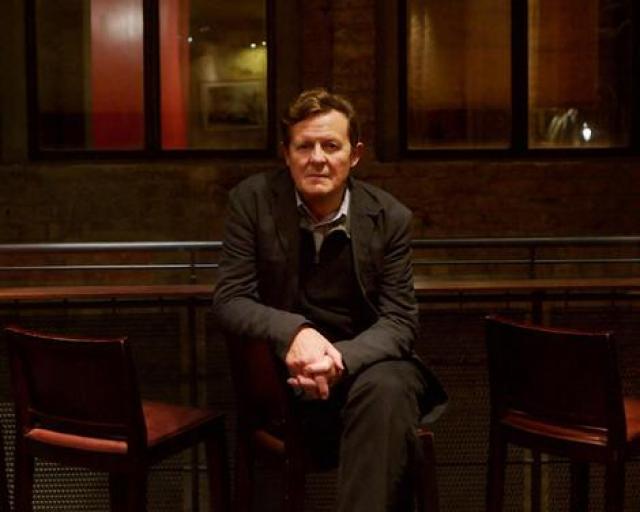
David Hare
 Great Britain
Biography of David Hare
David Hare, an English film playwright and theater director, was born in the summer of 1947 in St. Leonard's, one of the British counties. In 1965, Hare completed his education in Sussex and then studied at the college of the University of Cambridge, where he received various awards, including a gold medal.
Shortly after finishing his studies at Cambridge, David founded the "Mobile Theater" and began staging plays. One of his early works as a director was a theatrical performance called "Inside Out," which was an adaptation of Kafka's works.
Hare was one of the representatives of the so-called "second wave" in English drama after World War II. Throughout his career, he believed in socialist values and advocated for left-wing political parties. The director preferred to depict everyday post-war events in England, and although his plays did not always reveal the author's true worldview to the audience, Hare frequently used phrases such as "the destructive influence of class structure" and "the disintegration of Britain" in his own work.
In 1969, the play "How Brophy Got His Way" was staged, which was a light but biting parody of a television star. David worked with the "Mobile Theater" until 1971.
Prior to his work with the "Mobile Theater," Hare collaborated with the Hampstead Theatre Club on one of his plays. This collaboration resulted in the play "Slag," which portrayed inhumane relationships among female teachers in a notorious and extraordinary girls' school. Hare's subsequent plays explored the hypocrisy of different layers of society in England and the consequences of such perception among people.
In 1974, Hare was awarded the John Llewellyn Rhys Prize for his play "Knuckle." The work was considered one of the best by an author under the age of thirty. After that, Hare wrote several more plays, including "Fanshen," "Teeth and Smiles," "Plenty," "Map of the World," "Pravda: A Fleet Street Comedy," "The Secret Rapture," "Racism Demons," "Murmuring Judges," "No War," "The Blue Room," "The Judas Kiss," and other works.
Film also played a significant role in Hare's career. Some of the most popular films he wrote and directed include "Plenty," "Weatherby," "Paris by Night," and "Strapless."




