Samuel Beckett
 Ireland
- Childhood and Early Life of Samuel Beckett
- Literary Pursuits and Personal Struggles
- Resistance and Exile During World War II
- Triumph as a Playwright: Waiting for Godot
- Novels and Language Experimentation
- Endgame: Love, Hate, and the Desire for Cessation
- Nobel Prize and Literary Innovation
- Late Plays: Self-Reflection and Internal Dialogue
- Legacy of a Literary Giant
Childhood and Early Life of Samuel Beckett
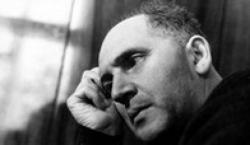
Born in 1906 in Dublin, Ireland, Samuel Beckett was the son of an affluent entrepreneur. From a young age, he exhibited a passion for sports and pursued higher education at Trinity College Dublin, where he excelled in modern literature, French, and Italian.
Literary Pursuits and Personal Struggles
Despite publishing early works like poetry and essays from 1930 onwards, Beckett initially struggled to gain recognition. The 1930s marked a period of mental distress for him, prompting extensive travels. In 1934, he released the short story collection "More Pricks than Kicks" and the novel "Murphy" four years later.
Resistance and Exile During World War II
In 1937, Beckett settled in Paris, where he encountered a traumatic stabbing incident. He met his life-long companion, the pianist Suzanne Dechevaux-Dumesnil, and during the German occupation, joined the Resistance movement.
In 1942, fleeing from the Gestapo, Beckett and Dechevaux-Dumesnil escaped to the village of Roussillon in Southern France. There, he worked as a farm laborer and penned the lesser-known novel "Watt," published in 1953.
Triumph as a Playwright: Waiting for Godot
Beckett's journey towards fame began in the early 1950s. His French-language play "En attendant Godot" ("Waiting for Godot"), premiered in 1953, catapulted him to international recognition. The play's absurd plot and existential themes, centered around two vagabonds endlessly waiting for a man named Godot, resonated deeply with audiences.
Novels and Language Experimentation
In parallel with his theatrical success, Beckett continued to explore the boundaries of language in his novels. His trilogy, "Molloy" (1951), "Malone Dies" (1951), and "The Unnamable" (1953), written in French and later translated into English, delve into the subjective experiences of characters seemingly devoid of purpose.
Endgame: Love, Hate, and the Desire for Cessation
In 1957, Beckett's second major play, "Fin de partie" ("Endgame"), premiered. The play centers on Hamm, a crippled and hopeless individual, and his servant, Clov, bound by a paradoxical relationship of love and hate. Their desire to end their existence is countered by the illusion of a better future, leading to further torment.
Nobel Prize and Literary Innovation
Eight years later, Beckett's novel "Comment c'est" ("How It Is") was published, and at the age of 63, he was awarded the Nobel Prize in Literature (1969). His efforts to reduce speech and action to their essentials, while exploring unconventional forms of storytelling, continued to shape his later works.
Late Plays: Self-Reflection and Internal Dialogue
In the 1980s, Beckett released plays that featured characters with fragmented identities, engaging in self-reflection. Works such as "Rockaby" (1981) and "Ohio Impromptu" (1981) delve into the inner workings of minds grappling with existence.
Legacy of a Literary Giant
Beckett's literary legacy remains profound and influential. His exploration of existentialism, the futility of human existence, and the boundaries of language continue to resonate with readers and audiences worldwide. He died in Paris in 1989, leaving behind a body of work that has indelibly shaped the literary landscape of the 20th century.