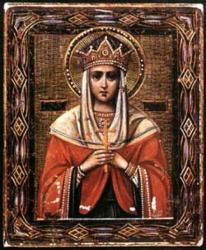
David IV
 Georgia
- King David IV the Builder of Georgia (1089-1125)
- Ascension to the Throne (1089)
- Early Reign (1089-1103)
- Reconquest of Lost Territories (1107-1118)
- - Capturing the strategic Armenian fortress of Lori in 1118.
- Further Conquests and Unification (1122-1125)
- Domestic Policy and Administrative Reforms
- Religious Reform and Church-State Relations
- Legacy
King David IV the Builder of Georgia (1089-1125)
King David IV the Builder was the ruler of the Kingdom of Georgia from 1089 to 1125. During his reign, he played a pivotal role in unifying fragmented Georgian principalities and establishing a centralized state.
Ascension to the Throne (1089)
David IV became king at the age of 16 after his father, George II, abdicated in his favor due to pressure from discontented courtiers. The circumstances of his father's abdication remain uncertain, with some historians suggesting a palace coup and others indicating a voluntary handover of power.
Early Reign (1089-1103)
Upon his ascension, David IV inherited a kingdom that had been severely weakened by Turkish Seljuk invasions. His immediate focus was on internal reforms to strengthen the central government and restore order. He implemented a series of measures, including:
- Establishing a new army composed of peasant-soldiers and loyal nobles granted land in exchange for military service.
- Strengthening the judicial system by creating a Court of Appeals to address grievances.
- Reorganizing the administration and appointing loyal officials to key positions.
Reconquest of Lost Territories (1107-1118)
With the consolidation of his internal power, David IV turned his attention to regaining territories lost to the Seljuks. His military campaigns focused on:
- Recapturing the province of Kakheti-Hereti, which had been independent for over a century.
- Defeating Seljuk forces in several battles, including the Battle of Ertsukhi in 1104.
- Liberating significant portions of Lower Kartli and Southern Georgia from Seljuk control.
- Capturing the strategic Armenian fortress of Lori in 1118.
Battle of Didgori (1121)In 1121, David IV faced a formidable coalition of Seljuk and allied Muslim forces that threatened to overwhelm his kingdom. In response, he forged an alliance with the Kipchak Turks, who provided him with much-needed cavalry support.
The Battle of Didgori took place in August 1121 and was a decisive victory for David's forces. The Seljuk army was routed, and the victory secured the independence of Georgia for centuries to come.
Further Conquests and Unification (1122-1125)
Following the Battle of Didgori, David IV continued his military campaigns. He liberated Tbilisi from Seljuk rule and established it as his capital in 1122. He also annexed the province of Shirvan and the Armenian city of Ani, further expanding the reach of his kingdom.
Domestic Policy and Administrative Reforms
Throughout his reign, David IV implemented a number of internal policies that strengthened the Georgian state and improved the lives of its people. These included:
- Land redistribution, seizing lands from rebellious nobles and distributing them among loyal retainers and the state.
- Urban development and economic reforms, including the construction and refurbishment of roads, bridges, and marketplaces.
- A judicial system based on the principle of "equity over law," where judges were given wide latitude in their rulings.
- The establishment of the Gelati Academy, a major center of learning and scholarship.
Religious Reform and Church-State Relations
David IV played a significant role in reforming the Georgian Church. He convened the Ruisi-Urbnisi Synod in 1103 to address issues of Simony and clerical misconduct. He also strengthened the authority of the king over the church by appointing and deposing bishops and abbots.
Legacy
King David IV the Builder is considered one of the greatest rulers in Georgian history. His reign marked a period of significant political, military, economic, and cultural achievements. He successfully unified Georgia, repelled foreign invaders, and established a strong and prosperous kingdom. His reforms and policies had a lasting impact on Georgian society, shaping its institutions, culture, and national identity for centuries to come.