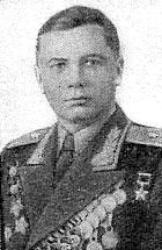
David McCampbell
 USA
USABiography of David McCampbell
David McCampbell, an American military pilot, was born in Bessemer, Alabama. He attended the Staunton Military Academy in Virginia and the Georgia Institute of Technology in Atlanta. He then enrolled in the United States Naval Academy, graduating in 1933. Due to the economic crisis, he was discharged immediately after graduation but returned to military service the following year.

In 1936-1937, McCampbell underwent flight training at the Pensacola Naval Air Station and later flew in the 4th Fighter Squadron on board the aircraft carrier "Ranger". When World War II began, McCampbell initially served in a non-combat role as a landing signal officer on the USS Wasp. In 1942, the USS Wasp participated in the delivery of British fighters to Malta. The aircraft carrier then arrived in the Pacific Theater of Operations and was sunk near Guadalcanal in September. McCampbell survived the sinking and was sent back to the United States, where he initially served as an instructor and was later appointed commander of the 15th Fighter Squadron in September 1943. Just six months later, in February 1944, he became commander of the 15th Air Group.
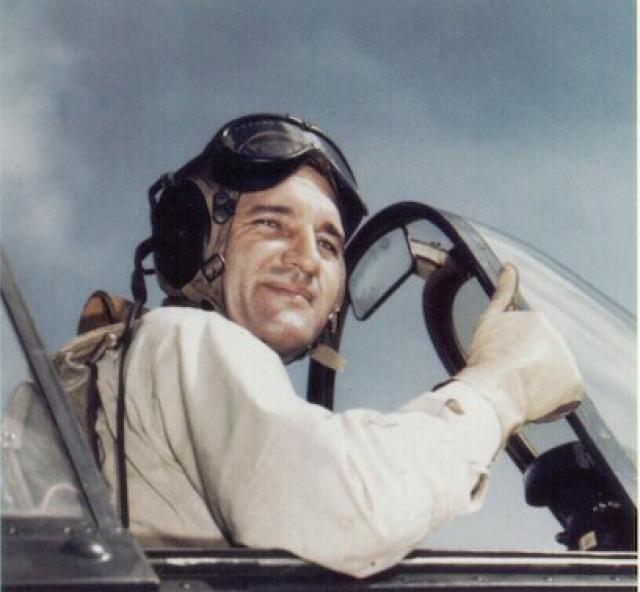
In the spring, the air group aboard the USS Essex embarked on a mission in the Pacific. McCampbell's first combat experience as a pilot occurred on May 19 during a raid on Marcus Island. However, his plane was severely damaged and had to be written off, though he managed to safely return to the aircraft carrier. On June 11, he achieved his first aerial victory by shooting down a lone A6M near Saipan. A week later, on June 19, the Battle of the Philippine Sea took place, during which the Japanese aviation suffered heavy losses. McCampbell became an "ace in a day" by achieving 7 aerial victories, 5 of which were in a single air battle. He achieved even greater success on October 24, 1944, during the Battle of Leyte Gulf. That morning, a large group of Japanese aircraft approaching American ships was detected. McCampbell ordered the other planes to attack the bombers while he and his wingman, Ensign Roy Rushing, engaged the enemy fighters. Despite facing more than 40 Japanese fighters, McCampbell and Rushing achieved 15 aerial victories (9 for McCampbell and 6 for Rushing) and safely returned to the aircraft carrier.
For his achievements in the battles on June 19 and October 24, 1944, David McCampbell received the highest military award in the United States, the Medal of Honor. In total, he achieved 34 confirmed aerial victories and 7 probable victories, as well as destroying 21 enemy aircraft on the ground. McCampbell became the third most successful American ace of World War II after Richard Bong and Thomas McGuire, and the most successful ace who survived the war. After the war, McCampbell held various positions, including senior advisor in the Argentine Naval Aviation, head of the technical specialist training center in Jacksonville, and captain of the USS Bon Homme Richard aircraft carrier. He retired in 1964 and lived in Florida until his death in 1996 at the Riviera Beach Hospital. He was buried at the Arlington National Cemetery. In his honor, a destroyer, the USS McCampbell (DDG-85), and a terminal at Palm Beach International Airport were named after him. McCampbell was married multiple times and had three children.