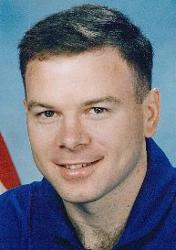
David Randolph Scott
 USA
USABiography of David Randolph Scott
David Randolph Scott, an astronaut from NASA, was born on a United States Air Force base called "Randolph" near San Antonio, Texas. He was named after the base, where he grew up and became an active Boy Scout. Scott pursued his education in Aeronautics and Astronautics at the Texas Military Institute and later at West Point.
After completing his studies, Scott defended his doctoral dissertation at the University of Michigan in 1971. He joined NASA as part of the third group of astronauts in October 1963 and went on to become the commander of the Apollo 15 spacecraft. This mission made him one of the twelve individuals who have set foot on the moon.
In his career, Scott achieved numerous accolades and awards, including the Air Force Distinguished Flying Cross and two Air Force Distinguished Service Medals. He was also honored with two NASA Distinguished Service Medals and the NASA Exceptional Service Medal. Scott's name is also enshrined in the U.S. Astronaut Hall of Fame.
However, Scott's career faced a setback following the Apollo 15 mission due to a scandal involving unauthorized postal souvenirs. Upon returning to Earth, it was discovered that Scott had taken 398 commemorative envelopes without permission, with the knowledge and involvement of his crew. He later sold one hundred of these envelopes to a German stamp dealer.
Although Scott's actions did not violate any laws, NASA leadership decided to punish him and the other crew members as a public example. As a result, none of them were allowed to fly to space again. According to the autobiography of astronaut group leader Donald Slayton, Scott, along with James Irwin and Alfred Worden, were viewed as having exploited the hard work invested in the Apollo 15 mission for personal gain, which went against NASA's principles.
After the incident, Scott transitioned to work at the Manned Spacecraft Center, while Worden joined the Ames Research Center. Irwin chose to leave NASA and became a preacher. Despite the controversy surrounding the post-flight events, Scott's contributions to space exploration and his career as an astronaut remain significant.