David Selznick
 USA
USA- David O. Selznick: The Man Behind Hollywood Classics
- Early Life and Career
- RKO Pictures and Success
- Selznick International and Monumental Productions
- Collaborations and Controversies
- Decline and Legacy
David O. Selznick: The Man Behind Hollywood Classics
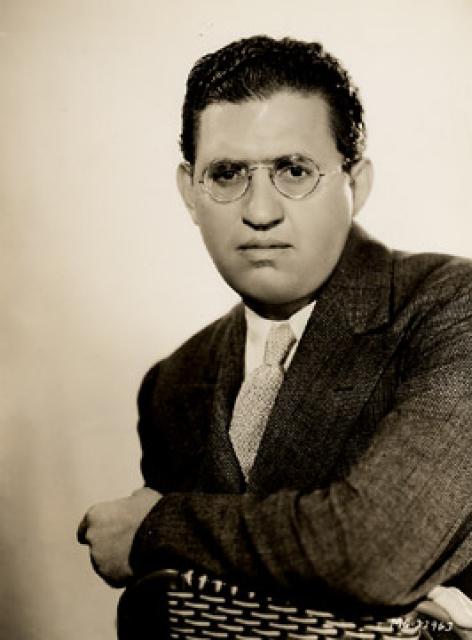
David O. Selznick was an American film producer widely regarded as one of Hollywood's most successful producers. He was responsible for creating some of the most iconic masterpieces of the mid-20th century.
Early Life and Career
David Selznick was born in 1902 to a Jewish film producer. In 1923, his father declared bankruptcy. Selznick moved to Hollywood in 1926 and began working as an assistant to Louis B. Mayer. A year later, he married Mayer's daughter, Irene.
RKO Pictures and Success
In 1931, Selznick joined RKO Pictures, which was on the brink of financial collapse. He played a pivotal role in the success of "King Kong" (1933), which helped turn RKO into a profitable studio. From 1933 to 1936, Selznick served as the vice president of Metro-Goldwyn-Mayer Studios. During this time, he focused on meticulously crafted adaptations of classic novels, including "A Tale of Two Cities," "David Copperfield," and "Anna Karenina" (starring Greta Garbo).
Selznick International and Monumental Productions
In 1936, Selznick established his own production company, Selznic International, and partnered with United Artists for distribution. In 1939, he secured the rights to Margaret Mitchell's bestselling novel "Gone with the Wind." Selznick spent the next three years working on the epic adaptation, which became a cornerstone of classic Hollywood. The film was a triumph, earning Selznick his first Academy Award (although most of the profits went to his father-in-law).
Collaborations and Controversies
In 1939, Selznick struck up a significant deal with British director Alfred Hitchcock. Despite an Oscar for Best Picture, their collaboration on "Rebecca" (1940) was marked by frequent clashes. Selznick began loaning Hitchcock to other studios while producing his own films, which often featured his young wife, actress Jennifer Jones. In 1946, Selznick attempted to replicate the success of "Gone with the Wind" with the ambitious Western "Duel in the Sun."
Decline and Legacy
By 1948, Selznick's worsening alcohol addiction forced him to leave the film industry. In 1957, he attempted a comeback with an adaptation of "A Farewell to Arms," but the film flopped. David O. Selznick died of heart failure in 1965 at the age of 63. He was interred in the "Holy Terrace" at the Glendale Cemetery. Selznick's contributions to the golden age of Hollywood continue to be celebrated, with his films enduring as testaments to his remarkable talent and influence.