Franco Zeffirelli
 Italy
Italy- Biography of Franco Zeffirelli
- Early Life and Education
- Theater and Opera Career
- Film and Later Works
- Later Years and Legacy
Biography of Franco Zeffirelli
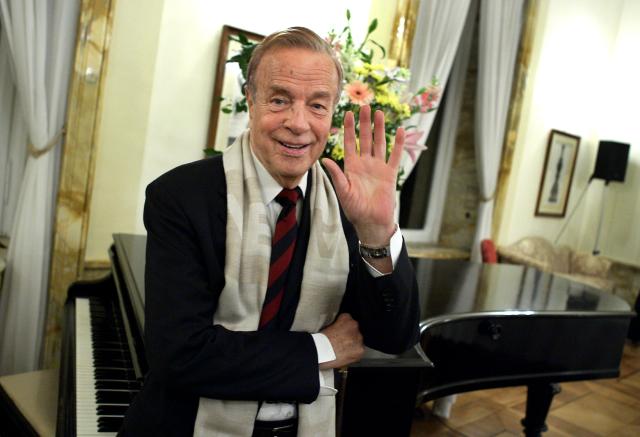
Franco Zeffirelli, an Italian artist, theater and film director, producer, and screenwriter, was born in Florence on February 2, 1923. His life story, as well as the talent of this Italian director, could belong to the Renaissance era. Florence, the birthplace of Zeffirelli, has given the world renowned names such as Dante, Petrarch, Leonardo da Vinci, Michelangelo, Galileo, and Vespucci. The circumstances of Franco's birth, the choice of his surname, his close relationship with one of the greatest figures in world art and a descendant of an ancient aristocratic family - all of this could be the biography of a character from an ancient novel. However, Franco Zeffirelli is our contemporary, although he is approaching the age of one hundred.
Early Life and Education
Franco Zeffirelli was born to unmarried Florentine Adelaide Garossi on February 2, 1923. His father, textile merchant Ottorino Corsi, did not intend to abandon his son, although he could not officially acknowledge him due to his marriage. When the birth of Franco was officially registered, Adelaide chose the surname Zeffiretti (little breeze or zephyr) - after a character in Mozart's opera "Idomeneo". However, the official made a mistake in the record, which was not corrected. When Franco was six years old, Adelaide passed away and he was placed under the care of her sister. Later, at the request of his father, who had extensive trade connections with England, Franco was educated by English ladies residing in Florence. It was during this time that the young boy mastered the English language and became acquainted with the plays of Shakespeare. These childhood impressions were later portrayed in his film "Tea With Mussolini" (1999).

Franco later studied at the Academy of Fine Arts, and in 1941, with the support of his father, began studying painting and architecture at the University of Florence. However, after two years, he left his studies and joined the Resistance movement. When British troops entered Italy, Zeffirelli became a translator for the Scottish Cavalry Regiment. After the war, Franco returned to his studies. However, he soon realized that he was more interested in theater than painting and began working on stage design at the city theater. In 1946, Zeffirelli decided to move to Rome, where he began working as an artist at the Pergola Theater. It was there that he had a fateful meeting with Luchino Visconti. Visconti, a descendant of a noble family and one of the greatest directors of our time, became Zeffirelli's mentor, guide through life, close friend, and lover. Zeffirelli appeared in Visconti's film "Rocco and His Brothers" and worked as his assistant in the films "The Leopard", "The Damned", "La Terra Trema". He also worked on the set design for Visconti's theater productions.

Theater and Opera Career
After the premiere of "Three Sisters", Zeffirelli received an invitation from the famous La Scala theater to become the set designer for the opera "Cinderella". While Zeffirelli agreed, he insisted on also being involved in directing. The new production of Rossini's opera caused a sensation, and Zeffirelli was hailed as a very talented young director. He was subsequently invited to opera houses in other countries. His productions in Paris, including "Norma" and "Tosca", were followed by "Lucia di Lammermoor", "Pagliacci", and "Cavalleria Rusticana" at Covent Garden. In an incredible turn of events, an Italian director was invited to stage Shakespeare in London's theaters, and in 1960 he directed "Romeo and Juliet" at the Old Vic. This production was later shown on other stages, including Moscow in 1966, and served as the basis for the film of the same name.
While continuing to work on opera productions, Zeffirelli decided to try his hand at filmmaking. His first work was the film adaptation of the opera "La Boheme" in 1965, which premiered simultaneously in 400 major theaters. After that, the director turned to his childhood favorite, Shakespeare. In 1967, his film "The Taming of the Shrew" was released. This vibrant comedy, starring Elizabeth Taylor and Richard Burton, was a huge success and was nominated for prestigious film awards. Contrasting with this work was the film "Romeo and Juliet" (1968), where unknown actors who were almost the same age as Shakespeare's characters starred. The film won two Oscars, three Golden Globes, BAFTA awards, and the Donatello award, among others. The costumes, which accurately reproduced the attire of the 14th century, the music by Nino Rota, and the visuals of the film, which reproduced not only the historical landscapes and buildings of Italy but also the picturesque compositions of that time, were particularly praised. The performances of the young students from the Juliet Academy of Theater Arts in the film continue to serve as a guide for students studying directing and acting.
Film and Later Works
After Shakespeare, Zeffirelli turned to Christian themes. In 1972, he directed the film "Brother Sun, Sister Moon" about St. Francis of Assisi, and in 1977, he directed the four-part series "Jesus of Nazareth" commissioned by the Vatican. His foray into contemporary themes, such as "Champion" (1979) and "Endless Love" (1981), received mixed critical reception, although the latter became a successful start for the acting careers of Tom Cruise and Brooke Shields. Zeffirelli then entered a period of making opera films. "Pagliacci", "Cavalleria Rusticana", "La Traviata", and "Othello" - all these films, created between 1982 and 1988, are unique recordings of Zeffirelli's best works on the opera stage. In continuation of the opera cycle, Zeffirelli directed the film "Young Toscanini" (1988) with Elizabeth Taylor in the lead role, which, however, is considered a failure in the director's filmography. After that, he surprised everyone with an unexpected turn in his creative thinking by directing Mel Gibson in the leading role of "Hamlet" (1990). Zeffirelli's interest in 19th-century novels was evident in films such as "Sparrow" (1993) and the acclaimed adaptation of "Jane Eyre" (1996). After the partly biographical film "Tea With Mussolini", the director returned to the idea of immortalizing the memory of Maria Callas. The great singer, with whom Zeffirelli had a long-standing creative friendship, passed away in 1977, but circumstances prevented him from starting work on a film about her until much later. In 2002, the film "Callas Forever" was released, based not on the real biography of the great singer, but on a fictional episode of her loss of voice by the time she had already passed away, echoing the famous legend of her pact with the devil. Fanny Ardant was invited for the lead role after numerous auditions. This work became the last major project in the filmography of the renowned director, who shifted his focus primarily to opera. In 2003, his production of "La Traviata" was shown at the Bolshoi Theater, followed by "Aida" in 2005, and a production of "Pagliacci" in 2007 at the Palace of Congresses.
Later Years and Legacy
In 2004, Zeffirelli was knighted and awarded the Order of the British Empire. In the same year, he received a joint award from the governments of Russia and Italy for his outstanding contribution to the culture of both countries. In 2006, the great director published his autobiography, where he candidly told about many episodes of his life, his relationships with famous people, and his work on his famous productions. In 2008, the Russian edition of his book was released. In his final years, Zeffirelli's health deteriorated sharply due to his age and a prolonged illness. On the morning of June 15, 2019, at the age of 97, he passed away.
A farewell ceremony took place on June 17, 2019, at the Capitol Square in Rome. Italy bid farewell to Franco Zeffirelli as a national treasure. On June 18, a solemn farewell and a mass were held in the main city cathedral, Santa Maria del Fiore, in Florence. According to his own wishes, Zeffirelli's body was cremated. On June 19, an alabaster urn containing his ashes was interred in the Zeffirelli family tomb at the historic Porte Sante cemetery, located within the fortified bastion of the San Miniato al Monte monastery in Florence. Maestro Zeffirelli wanted to rest in his hometown, and several years before his passing, he took care of the family burial place, where the remains of his mother, aunt, and other close relatives were also transferred.