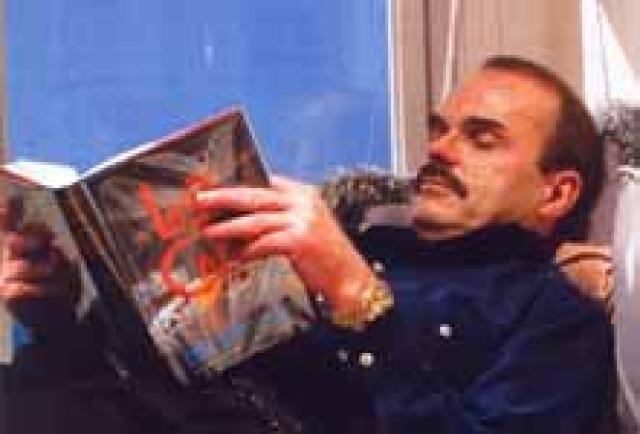
Dean Koontz
 USA
USABiography of Dean Koontz
Dean Koontz is a renowned horror author and one of the most popular writers of horror novels. Out of his sixty books, twelve have become national bestsellers in America. He earns nearly $1 million for each new thriller he writes. His books, such as "Mr. Murder," "Phantoms," and "Twilight Eyes" can be found in the Moscow metro and on the beaches of Thailand, in the hustle and bustle of New York City, and at the market in Cairo. Dean Koontz leads a calm and respectable life. But he has one secret...
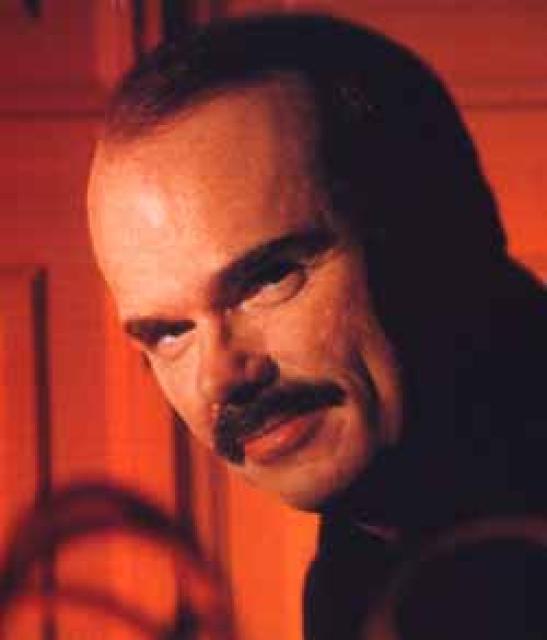
The Event in Bedford
Bedford is a small provincial town in Pennsylvania. It is not much different from thousands of other towns scattered throughout the northwest United States. In towns like Bedford, if anything extraordinary happens, it is not more often than once a century. When the Event happened in Bedford, it was September 1944. Strange people arrived in Bedford on two large black cars. The strangers were polite, efficient, and laconic, and their impeccable gray suits and hats were so similar that they resembled uniforms. The newcomers, whom the locals instantly dubbed "city folks," spent half a day at the Bedford hospital, had lunch at the local cafe, roamed around the town, and left as suddenly as they appeared. A few days later, guests arrived in Bedford again. On the evening of September 16, a strange convoy entered the town from the western highway. It consisted of a military police patrol car, two familiar black cars, and a large van with the word "LABORATORY" written in white. The guests drove around Bedford all night, making stops of thirty to forty minutes in different parts of the town. No one knew what happened during these stops. Rumors spread in Bedford that the government was searching for a secret headquarters of a German sabotage group. Considering it was wartime, it seemed quite plausible, so even the most curious residents were afraid to go outside. The convoy left the town in the morning. Of course, Bedford's taverns became the arenas of heated debates for several days. But since no one could say anything for sure, the conversations eventually died down, and people forgot about the Event. The secret remained a secret. At least for the next fifty years.
Childhood and Dream of Becoming a Writer
Dean Koontz dreamed of becoming a writer since childhood. In the evenings, the boy quietly sat in his room and drew under the dim light of a flashlight. Downstairs, his father's drunken voice roared, furniture was being overturned, and sharp slaps and his mother's quiet sobs could be heard. Occasionally, the boy would freeze and press his head against his shoulders, as if those blows and curses were directed at him. Then he would continue his activity, concentrating and somewhat clumsily drawing another comic strip story in which the brave hero defeated terrifying, hideous monsters. But the horrendous cacophony of the quarrel would subside, and his mother would come up to him, stroking his head and saying it was time to sleep. The boy obediently undressed and went to bed. But when the lights went out, the worst part began. Dean lay in his bed and waited. Waited for the door to open and something terrible to happen. Either his father would enter the room to finish him off once and for all, or huge rats infesting their basement would jump on the bed and start eating his face...
Dean Koontz changed jobs 44 times throughout his life. The days when he was employed could be counted on one hand. He had no skill or desire to make money because that would require leaving the bar and sobering up even a little, something that became increasingly difficult for Dean as time went on. He would end up lying amidst stinking garbage bags or in a puddle of stale beer. It meant "those bastards" had once again thrown him out of the bar, and now it was time to return home to his wife and son.
"Usually, my father would show up drunk, and the more intoxicated he became, the angrier and more uncontrollable he would get," Dean Koontz recalls the years of his "happy" childhood. "My mother would push me into the room, lock the door, and strictly forbid me to come out. When my father wanted to beat me, she would stand between us, taking all the scars, fractures, and concussions that were meant for me."
When Florence Koontz would come to her son in the evening to put him to bed, Dean was afraid to meet her eyes. He knew what he would see on his mother's face, and it was both frightening and shameful. His comic book heroes always defeated monsters, remaining unscathed and unharmed, without a bruise or scratch. But in real life, things never turned out that way.
After finishing another comic strip, the boy would carefully redraw it in color on large album pages. The pages would then be glued together, creating small books. Dean's relatives eagerly bought these books when they came to visit. "Look, Florence, a real writer is growing up!" aunts and uncles exclaimed. Florence smiled silently. She was grateful to these kind Samaritans who understood that with a father like Ray, the boy would never receive any praise or pocket money.
Dean grew up and quickly married - his chosen one was Gerda Cherra, a girl he met before graduation at a school party. Friends and acquaintances said they were a perfect match - Dean's silence and shyness were perfectly complemented by Gerda's liveliness and restlessness. However, Dean probably didn't seriously consider any harmony in their future marriage. Most likely, he simply wanted to leave his parents' home as soon as possible and start living independently.
"All we had back then was $150 between the two of us and two suits," Dean recalls. "I worked as an English teacher, and Gerda worked in a shoe factory. To be honest, we didn't see any prospects."
Indeed, there were no prospects. Moreover, it turned out that starting to live independently did not mean getting rid of the ominous specters of the past. Inside Dean, the little boy continued to live. And this boy constantly had nightmares: disgusting rats crawling in his crib, baring their dirty yellow teeth in the half-light, and a huge shadow of an angry giant loomed in the doorway.
Eventually, he told his wife about everything - about his father, the rats, the bruises on his mother's face, and his childhood comics. Partly because keeping these memories to himself had become unbearable, and partly because he saw how his strange behavior and night screams increasingly troubled his wife.
Gerda Koontz listened attentively to her husband and, after a short reflection, firmly declared, "Dean, you have only one way out - you need to become a writer."
Dean Koontz was not sure if this was the only way to solve his psychological problems, but Gerda had already thought it through.
"Yes, yes," she confirmed. "You can do it, and it will help both you and me. Don't postpone it - start right now. I will support the family and pay the bills. Don't worry about that. Just write - you can do it."
But knowing her husband's indecisiveness, she set a condition, "If you don't dare, find a way to climb out as you know how. I'm giving you five years to become famous."
Gerda Koontz probably didn't intend to carry out her threat. She loved her husband and firmly believed that by entrusting his fears to paper, he could eventually completely free himself from them.
However, Dean took it seriously. First, he was scared, then he agreed. And so, under his wife's coercion, the literary career of the man who would be called the "titan of horror" in America two decades later began.
Gerda found a job at a financial company - her passion for handling money, even if it was someone else's, drew her to it. Soon, the first streams of dollars earned by Dean flowed into the family budget. And although the fee for his science fiction thriller, "Star Quest," was only a thousand dollars, it was the first sign that Mrs. Koontz's strategy was correct.
But even she didn't realize how difficult it was for Dean to grasp the basics of the literary craft. He worked at such a speed and zeal as if he had only a few weeks left, not five years. The dark images of the past and peculiar childhood fears seemed to naturally flow onto the blank sheets of paper - perhaps because cramming into Dean's mind had become increasingly unbearable.
In his work, Koontz focused on meticulousness and a thorough knowledge of the subject matter. Over 30 years, he collected over 50,000 volumes of specialized literature in his library. He read textbooks on psychiatry, psychopathology, criminology, chemistry, and biology thoughtfully and seriously. Before starting a new book, he spent several days studying maps and guidebooks of the cities where his characters would act. If the books did not provide enough information, Koontz would consult with specialists who, after half an hour of conversation, would start groaning from his pedantic and relentless questions.
To facilitate and expedite his work, Koontz even started collecting a special "writer's card file." In it, he stored neatly written index cards with metaphors, hyperboles, and other figurative expressions. Some he invented himself, others he borrowed from books, movies, or overheard conversations. Some were suitable for describing murder scenes, while others were suitable for the protagonist's dramatic final line. Koontz divided all the phrases and epithets into themes, making it easier to search through his card file.
In the five years allotted to him by Gerda, Koontz published three dozen novellas, short stories, and novels and began to gain popularity. Gerda's dreams came true, and she became the chief manager of the family literary enterprise, which began to bring in a substantial income. In 1975, the Koontzes moved from the cold, lifeless Pennsylvania to bohemian Southern California and settled in a secluded house overlooking the Pacific Ocean.
Psychopaths, maniacs, deranged scientists, and horrifying monsters born from Dean Koontz's imagination spread across the world through publishers. Gerda's intuition did not fail her - the more Koontz poured his own fears onto the pages of his books, and the more people trembled over his heart-wrenching stories, the less she heard the cries of the frightened little boy at night. The Koontzes even started to believe that all their problems were already behind them. But the old ghosts soon returned, this time in a completely real manifestation.
Despite his frayed nerves, chronic alcoholism, and far from heroic health, Ray Koontz did not hurry to leave this world. And what was most unfortunate was that he did not become kinder or calmer with age.
"I never understood why Mom stayed with that man," Dean Koontz sadly said. "But as a child, I made a vow to myself - to be his complete opposite. And if I had disowned him, I would have treated him the same way he treated me in childhood."
In 1976, Dean and Gerda took the old man in to make it easier to take care of him, and the next fourteen years of the writer's life turned into a nightmare. His home became the setting for a real thriller called "The Return of the Hellish Father." "I don't even know what was worse - my childhood or those years," the writer recalls. "There was no fear. It was replaced by a dull feeling of exhaustion, helplessness, and constant anticipation of new horrific surprises."
The old man would steal alcohol, get drunk in his room, then start quarrels and try to attack the housekeeper. Almost every day, he would call doctors, complaining about his heart or rheumatism, demanding to be sent to the hospital, far away from "this damn house." When Ray went out to sunbathe in the yard, curses echoed throughout the neighborhood. Ray once attacked one of the neighbors with his fists, and now, no one wanted to cross paths with the elderly troublemaker.
In 1989, the belligerent old man was put on tranquilizers and sent to the hospital, where he was diagnosed with schizophrenia. Changing his jeans for hospital pajamas, Ray had no intention of giving up. On the third day, he attacked one of the patients and was subdued by the orderlies. The doctors called Dean Koontz to calm his father. But while Dean held him by the hand, persuading him to get some sleep, the "hellish father" (who was already almost eighty at the time) reached for the cabinet, pulled out a hidden pocket knife, and tried to stab his son. Panic broke out in the hospital. After a tense struggle, Dean managed to snatch the knife away. Hearing that the police had arrived, Ray Koontz, who had stopped resisting and cursing, quickly lay down on the bed. When the officers rushed into the ward, they witnessed the following scene: a stranger stood over the bed of the terrified, barely alive grandfather, holding a knife. They arrested Dean, handcuffed him, and accused him of attempted murder. "It was quite funny," Koontz sadly smiled, remembering this episode. "I even described a similar story in one of my novels."
Dean was always amazed at the lack of any resemblance between himself and his father. He couldn't get his mother's words out of his head. Dying, partially paralyzed Florence Koontz called her son to her and said, "I must tell you something. Your father..." At that moment, Ray burst into the room, as drunk as usual, ordering Dean to get the hell out. An hour later, Florence passed away, and her unfinished confession solidified Dean's belief that his true father was not Ray.
Years later, the mystery of Dean Koontz's birth received an unexpected continuation. It was the mid-1990s. By then, old Ray Koontz had left his family alone, going to torment the devil in hell for the past three years. One day, Gerda showed her husband an article she accidentally stumbled upon in one of the scientific journals. It described the early experiments on artificial insemination conducted by the American government in 1944. The experiments were conducted under the strictest secrecy, and the information about them only became available now, half a century later. Most importantly, the article stated that the scientists chose childless married women from poor families living in remote rural areas of Pennsylvania as volunteers, under the strictest confidentiality.
When Dean Koontz learned about this, he rushed to Bedford at the first opportunity and spent a week in his childhood town, questioning the old-timers and searching through old newspapers. He managed to establish that exactly nine months before his birth, those same strange guests from the big city, whom the locals mistook for German spy hunters, appeared in Bedford. Moreover, by researching the archives of the local hospital, Koontz found out that nearly six months before September 1944, Ray and Florence Koontz had undergone medical examinations there, and the results were extremely disheartening - the doctors told the young couple that they were unlikely to ever have children.
Dean Koontz was astonished - he vividly remembered his mother calling him a "miracle baby" in childhood and thanking


