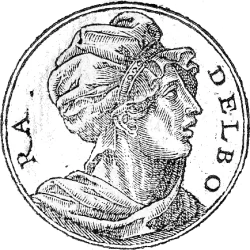
Deborah
Deborah is a prophet and judge in the Hebrew Bible’s Book of Judges. The text portrays her as a respected leader who settled disputes among the Israelites and helped direct a campaign against the Canaanite commander Sisera. Alongside the prose narrative, the book preserves the Song of Deborah, a powerful victory poem that is often regarded as one of the oldest poems in the Bible.
Prophet and Judge
Judges describes Deborah as the wife of Lappidoth and a prophetess. She held court beneath a palm tree in the hill country of Ephraim, where Israelites came to her for judgment. In the biblical account, she acted as both a religious and civic authority at a time when Israel had no central monarchy.
The narrative says that the Canaanite king Jabin oppressed the Israelites and that his military commander Sisera commanded a force equipped with iron chariots. Deborah summoned Barak, a leader from Kedesh, and told him to gather troops from the tribes of Naphtali and Zebulun. Barak agreed to lead the force on the condition that Deborah accompany him. She accepted, while prophesying that the decisive honor of the victory would go to a woman.
The Battle and Jael
The biblical story attributes the Israelite victory to divine intervention and the leadership of Deborah and Barak. Sisera abandoned his chariot and fled on foot. He sought shelter in the tent of Jael, a woman of the Kenite clan. While he slept, Jael killed him, fulfilling Deborah’s prophecy that the enemy commander would fall into a woman’s hands.
The account emphasizes the cooperation of different leaders and communities rather than the actions of a king. Deborah’s authority is central, but the text also gives substantial attention to Barak’s military role and Jael’s decisive act.
The Song of Deborah
Judges 5 contains a victory song that celebrates the defeat of Sisera and praises the tribes that answered the call to battle, while criticizing those that did not. The poem presents Deborah as a “mother in Israel” and uses vivid imagery to describe the conflict. Many scholars consider it among the oldest surviving compositions in the Hebrew Bible, though its precise date and relationship to the prose account remain debated. The text attributes the song to Deborah and Barak, but questions about its authorship and composition continue.
Legacy
Deborah has been remembered in Jewish and Christian traditions as a prophet, judge and leader. Her story has served as a touchstone in discussions of women’s religious authority and public leadership. Because details of her life survive within an ancient scriptural narrative rather than independent records, her biography is inseparable from the literary and religious traditions that preserved her story.