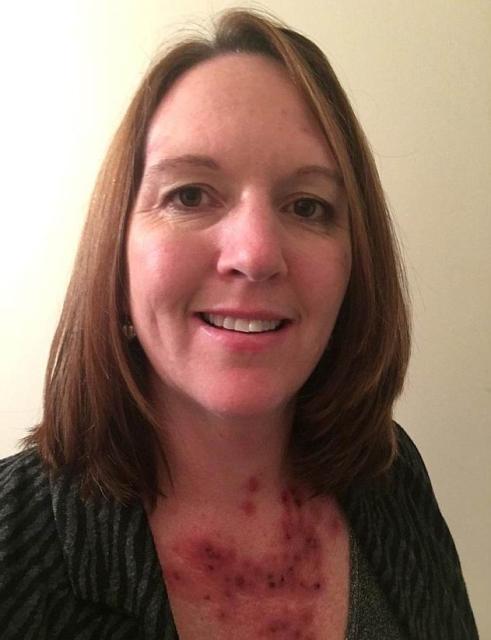
Deborah Crofts
 Great Britain
- A Lump That Changed Everything
- A Diagnosis Revealed
- Recurrences and Recovery
- The Hidden Clue
- Surgical Intervention
- Further Recurrences
- A Different Treatment Approach
- Prevention and Awareness
- Basal Cell Carcinoma
A Lump That Changed Everything
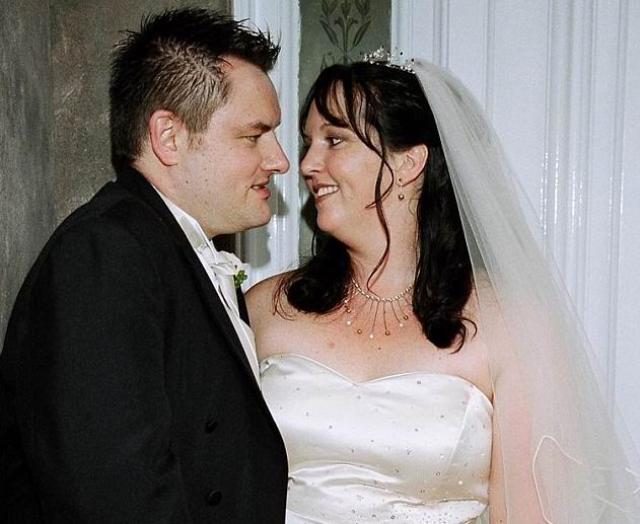
Deborah Croft, a British woman battling basal cell carcinoma, was horrified to find that unflattering bumps on her chest were visible in her wedding photos. Unbeknownst to her, these unsightly blemishes belied a deadly threat.
A Diagnosis Revealed
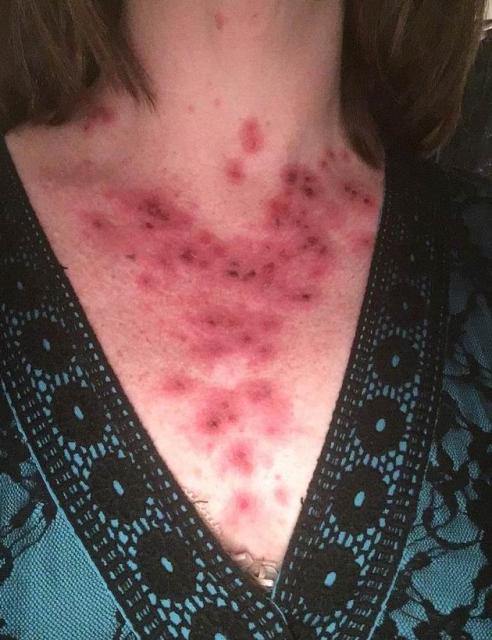
Nine years ago, on her wedding day, Croft, now 41 and a mother of two, noticed a spot just above her right breast. She dismissed it as a minor annoyance. A year later, she consulted her GP about a mole on her back, but the doctor was more concerned about the bump on her chest and insisted on a biopsy. Within a month, Croft was diagnosed with basal cell carcinoma (BCC), the most common type of skin cancer, most often caused by ultraviolet light exposure.
Recurrences and Recovery
Since her diagnosis, Croft has had two further recurrences of the cancerous cells. Fortunately, she is currently clear of the disease. In retrospect, she believes her wedding photos were a warning sign of something seriously amiss with her health. "I was in shock and frightened when I was first diagnosed," Croft says. "But I was reassured that the cancerous cells could be removed and I wouldn't need chemotherapy."
The Hidden Clue
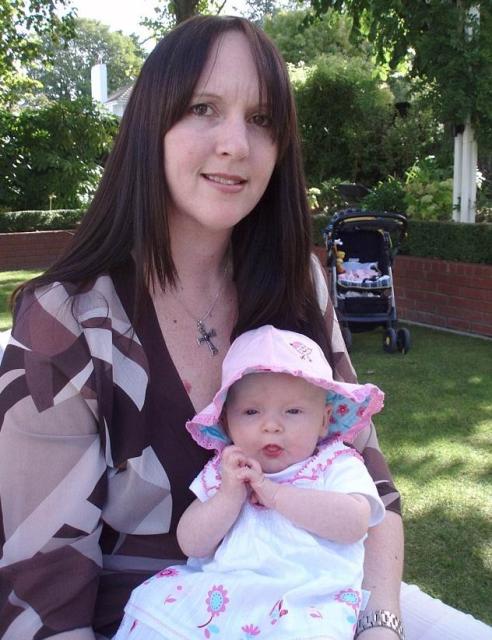
In February 2007, Croft married her husband, Martin, then 47, at a church in Auckland, New Zealand, near where she grew up. After their honeymoon, the lump on her chest scabbed over but did not disappear. Small and flat, it did not seem alarming enough to Croft to seek medical attention.
In March 2008, she visited her GP concerned about a mole on her back, which turned out to be benign. However, the doctor was concerned about the lesion on her chest, and a biopsy a month later revealed BCC.
Surgical Intervention
The cancerous spot was surgically removed under local anesthetic, sending Croft in and out of consciousness. She was left with a 15-centimeter scar on her chest after doctors cut out the "canoe-shaped area" to ensure the cancer was completely removed.
Despite wanting to "draw a line under it" and try to forget her ordeal, Croft's nightmare was not over. She later noticed a red mark on her back and a rough patch on her forehead, prompting her to visit her GP again.
Further Recurrences
Biopsies confirmed both lesions were malignant. The cells on her back were shaved off during the biopsy. Surgery under local anesthetic was performed at a different hospital to remove the "crabby" mark on her forehead.
In early 2015, Croft returned to her GP concerned about another spot in the middle of her chest. Tests once again confirmed the cancer had returned.
A Different Treatment Approach
She was prescribed a cream that reacted with her skin if it detected cancer cells. The cream treated the cells as an infection and destroyed the cancerous growths. "I ended up looking quite blotchy," Croft said. "A big patch of skin on my neck came up in a very red and sore rash. It showed I had a very high microscopic cancer cell count."
"I found the cream more frightening than the surgery." "I hated the thought of it being on my skin when my son was cuddling me, but my doctor explained that there was nothing to worry about."
Croft underwent four courses of the treatment. The risk of recurrence is high, and she will have six-monthly checkups. In the meantime, doctors believe she does not require further treatment.
Prevention and Awareness
Having never used sunbeds, Croft believes she developed skin cancer from overexposure to the sun during her childhood in New Zealand. She is now extremely cautious about her skin and has become a dedicated sun-avoider.
She uses sunscreen, sunglasses, and a hat and generally wears clothing that covers her shoulders. "I was almost in tears when my son went to school one sunny day last year without a hat or sun lotion," Croft says. "A tan is not worth the misery of having skin cancer treatment."
Basal Cell Carcinoma
Basal cell carcinoma is the most common form of skin cancer in the United Kingdom. The most common cause of BCC is overexposure to ultraviolet light from the sun or sunbeds.
BCC can develop anywhere on your body but is most common in sun-exposed areas such as the face, head, neck, and ears. Other possible causes of BCC include skin damage caused by burns, scars, or ulcers. Skin cancer is not contagious.
BCC is most often found in men and women over 50. It is rare in children and teenagers.