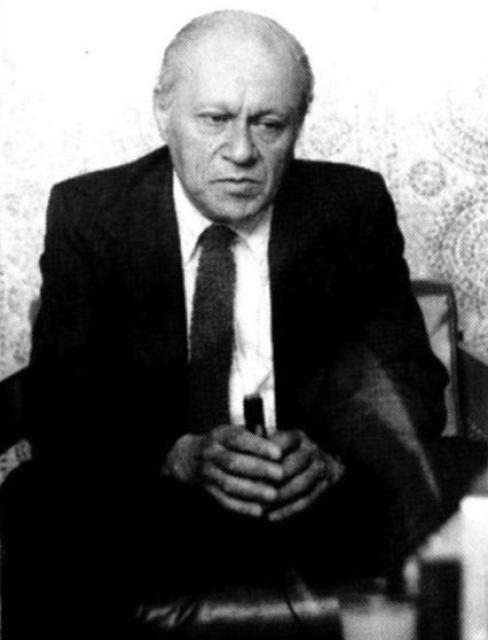
Demetrio Aguilera Malta
 Ecuador
- Early Life and Education
- Spanish Civil War and Diplomatic Service
- Literary Career
- Journalism and Drama
- Later Years and Legacy
Early Life and Education
Joaquín Gallegos Lara was born into a wealthy Ecuadorian business family. He graduated from secondary school in 1929 and briefly studied law in Guayaquil before dropping out in 1931. Later, he traveled to Madrid on an Ecuadorian Ministry of Education scholarship to study literature.
Spanish Civil War and Diplomatic Service
During the Spanish Civil War, Gallegos Lara served as a war correspondent on the front lines. After the conflict, he worked as a diplomat for Ecuador in Chile, Brazil, and Mexico. He also lectured at universities across the United States.
Literary Career
Gallegos Lara was a prominent member of the "Guayaquil Group" of Ecuadorian writers who focused on social protest in their works. His early short stories, published in the anthology "Those Who Go Away" (1930), and his subsequent novels, such as "Don Goyo" (1933) and "The Virgin Island" (1942), depicted the lives of the poor and marginalized.
In his novel "Canal Zone" (1935), Gallegos Lara explored the experiences of indigenous Panamanians affected by the Panama Canal. He also wrote "Cross on the Sierra Maestra" (1963), "Seven Moons and Seven Serpents" (1970, translated into English by Gregory Rabassa), "Requiem for the Devil" (1978), and numerous other novels.
Journalism and Drama
Gallegos Lara was an active journalist and also wrote several plays. His works often dealt with themes of social justice and the struggles of the working class.
Later Years and Legacy
In his later years, Gallegos Lara suffered from diabetes and lost his eyesight. He died from a stroke following a fall down a staircase. His literary legacy continues to be celebrated in Ecuador and beyond, as his works offer a poignant and powerful examination of social inequalities and the human condition.





