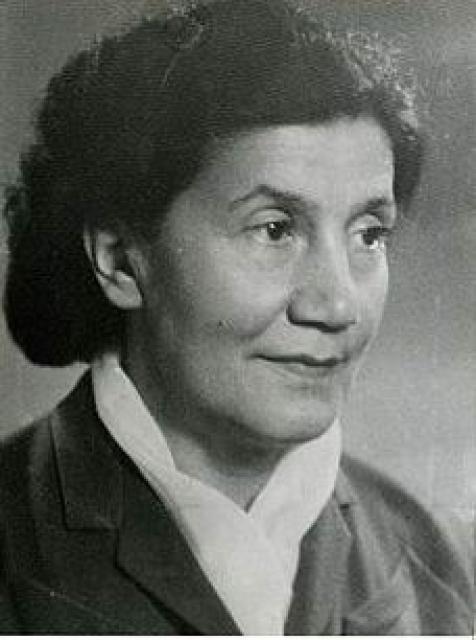
Desanka Maksimovich
- Desanka Maksimović: A Serbian Literary Icon
- Career
- Post-War Recognition
- Literary Style
- Translations and International Recognition
- Legacy and Influence
Desanka Maksimović: A Serbian Literary Icon
Early Life and EducationDesanka Maksimović was born on May 16, 1898, in the Serbian village of Rabrovica. Her father was a rural teacher, and she spent her childhood in the village of Brankovina. In 1919, she moved to Belgrade to pursue her studies. She graduated from the University of Belgrade in 1924 with a degree in philosophy. Later, she studied at the Sorbonne in Paris, where she earned a doctorate for her thesis on Joan of Arc.
Career
Maksimović began publishing her work in 1920. Her first collection of poems, "Green Thread," was published in 1924. She went on to publish over two dozen more collections of poetry, as well as several novels. Her work gained widespread recognition after World War II, and she was awarded numerous literary prizes. She was also elected to the Serbian Academy of Sciences and Arts.
Post-War Recognition
After the war, Maksimović's poetry resonated deeply with the Serbian people, who saw in her work a reflection of their own struggles and aspirations. Her patriotic and love poems became beloved classics, memorized and recited by generations of young Serbs.
Literary Style
Maksimović's poetry is characterized by its lyrical beauty and rhythmic flow, which draws heavily on the melodies and rhythms of the Serbian language. Her colorful and evocative language is rich in vocabulary, yet accessible, incorporating folk idioms and epithets. Her most famous collection, "I Demand Grace," is written in free verse with occasional rhyme and features monologues by King Stefan Dušan and the poet herself, defending the weak, the fallen, and the power of love and poetry.
Translations and International Recognition
Maksimović was fluent in Russian, French, and Polish and translated poetry from those languages into Serbian. Her own poems have been translated into numerous languages, including Russian, Ukrainian, Lithuanian, and Armenian. Notable Russian translators of Maksimović's work include Margarita Aliger, Leonid Martynov, David Samoilov, Boris Slutsky, Joseph Brodsky, and Vasily Konov.
Legacy and Influence
Desanka Maksimović passed away on February 11, 1993, in Belgrade. Her literary legacy continues to inspire and resonate with Serbs today. Her poems have become an integral part of Serbian culture, and her voice continues to speak to the hearts and minds of generations of readers.


