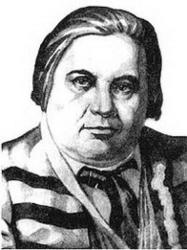
Yosa Buson
 Japan
JapanBiography of Yosa Buson
Yosa Buson, a Japanese poet of the 18th century, was a master of the haiku genre. He was also known as a writer, essayist, and artist. Alongside Matsuo Basho and Kobayashi Issa, Buson is considered one of the greatest Japanese poets of the Edo period. Buson is a pseudonym that the poet used in his mature years. Before that, he had used different aliases. The use of pseudonyms is characteristic of Japanese culture. In Japan, it was not customary to engage in poetry outside of a specific school or movement. Therefore, when a poet started publishing his poems, he became a member of a poetic society and, according to tradition, had to choose a pseudonym. The pseudonym allowed him to feel like a person who had experienced a new turn in his spiritual life, and since there could be many such turns and poetic schools could change, pseudonyms could change or accumulate. Buson was born in the village of Kema in the Settsu province. His real name is unknown. It is believed that he was the son of a village elder named Taniguti (hence the pseudonym Taniguti). His mother was from the town of Yosa, which is why the poet often referred to himself as Yosa Buson. Buson received a good education, read Chinese and Japanese classics, and studied painting. After losing his parents at an early age, he moved to Edo (now Tokyo) at the age of twenty, where he studied poetry and painting under the guidance of Hayano Hajin, one of the greatest haiku masters of the time, who continued Basho's lineage. In 1751, he moved to Kyoto. Buson never returned to his homeland, even after achieving certain success, recognition, and material well-being. The reasons for this are unknown. However, his poetic works are filled with nostalgia. There is even a whole nostalgic cycle called "Spring Breeze over the Kema Dam." A similar behavior can be found in Russian literature. Vladimir Nabokov refused to visit his native places when he was given the opportunity during the era of perestroika. Nabokov explained that he did not want to destroy the images that had formed in his memory by confronting them with reality. Influenced by his idol Basho, Buson traveled extensively throughout Japan for about 10 years, particularly in the northern regions of Honshu, which had inspired Basho to write his famous diary "The Narrow Road to the Deep North." Buson lived with his poet friend Ganto in the town of Yuki and wandered around the Tohoku region. Unlike Basho, Buson did not leave complete prose works. In 1744, he published notes ("haibun" - a Japanese form of essays) about his travels, using the name Buson as his pseudonym for the first time. Later, Buson became his main poetic pseudonym, while as an artist, he was known as Teso. At the age of 45, Buson got married and had a daughter named Kuno. After settling in Kyoto permanently following his travels, Buson taught and wrote poetry in Sumiya, a tea house that still exists in Shimabara. In 1770, Buson was appointed as the head of the "Midnight Hermitage" school of poets, succeeding Hajin. Buson adopted his teacher's pseudonym, Hajin, and began writing under the name Yahantei. Buson received the title "tendzya," which gave him the right to be a judge in poetry tournaments. This title was not only prestigious but also financially rewarding, as judges were well-paid. From this time on, Buson was able to devote much more attention to poetry than before, as he could now earn a living in this field, not just as an artist. It was during the last 15 years of his life that Buson wrote his best poems, becoming a professional poet in 1770. Buson died at the age of 68 and was buried in Kyoto. According to Sokolova-Delyusina, a translator of Buson's works into Russian, with his name came a new flourishing of the haiku genre after a decline in the first half of the 18th century. Basho's school had disintegrated into numerous competing small groups. The elevated language and imagery were being replaced by colloquialism and domesticity. This phenomenon was not straightforward. Essentially, haiku was divided into two fundamentally different genres: poetry of elevated sentiments and humorous poetry-jokes. The latter genre, known as "senryu," was similar in spirit to sketches and anecdotes in European comedic culture. Humorous poetry quickly became very popular because it was easily understood even by those not well-versed in poetry and provided many opportunities for improvisation. The appearance of humorous poetry was not the only threat to the traditions established by Basho. By Buson's time, the "elevated" haiku genre had turned into a game of prescribed themes. The decline in the level of poetic mastery was a reliable indicator of the general decline of haiku. This is a crucial and objective indicator because a living tradition that retains freshness of perception always allows even secondary poets to write quality and meaningful poems, as Sokolova-Delyusina writes. When a tradition ceases to be a life-giving source and quietly becomes formalized, an era of empty formalistic play begins. Well-known techniques allowed for the endless repetition of the same motifs, and the spirit of creativity and the search for novelty diminished. At the same time, novelty in Japanese tradition does not mean something entirely new, as it has meant in Europe since the late 18th century, but rather a return to spiritual sources. This new return occurs in an eternal cycle, just like the changing of the seasons. This stagnation after Basho's departure was natural because great artists emerge spontaneously, just like all natural phenomena. Periods of the absence of brilliant talents are inevitable in any form of art, in any country, and in any era. Each time, the same thing happens during these periods, but whereas new movements in European tradition begin with the breaking of traditions, in Japan, new movements begin with a return to the spirit of traditions, purification from formalism, and a new deepening and strengthening of feelings. This is precisely what Yosa Buson brought to Japanese poetry. Perhaps his appearance was connected to the only positive phenomenon in the crisis era of haiku after Basho – the penetration of haiku into the provinces from the capital cities. It was from the provinces that Yosa Buson emerged in Japanese poetry. Buson sought to revive the high style of Matsuo Basho's poetry. Gradually, he became the main figure in the movement known as the "return to Basho." In 1776, Buson and his friends restored Basho's hut, where they held regular meetings for poets who sought to return haiku to Basho's principles. Buson also prepared several scrolls and screens with Basho's poems and his own illustrations. One of these scrolls, "Oku no Hosomichi," helped in the canonization of Basho as the "great saint of Japanese poetry." The deification of Basho corresponded to ancient Japanese traditions and was accepted by society. Since Buson's time, this approach has lasted for about a hundred years. Only at the end of the 19th century did protests against the idealization of Basho arise. Buson's poetic works are characterized by refined, color-inspired verses that carry the imprint of the poet's inner experiences. The distinctive features of Buson's work are the domestic themes and descriptive tone expressed in many but not all of his poems. The strictness of the imagery and the elegance of the language, on the other hand, unite Buson's poetry with classical Basho poetry. Thanks to Buson's efforts and those of his friends, haiku poetry acquired previously atypical characteristics: lyricism, contemplativeness, and romanticism. Buson himself introduced the theme of love into haiku, which was almost entirely excluded in Basho's work. In summary, the difference between Basho and Buson can be described as follows: Basho sought to express the world, while Buson sought to express the inner life of a person, the experiences of the soul. Buson's style is considered more emotional and lyrical than Basho's, but it is akin to Basho's style in spontaneity and the pursuit of sudden enlightenment. However, these characteristics can only be perceived by reading a much larger number of poems than those translated into Russian. Translators follow a certain tradition, conveying the classical features of Japanese poetry and avoiding topics that would be of little interest to modern readers. Buson is credited with the principle of "removing vulgarity." This meant moving away from diminishing images and vulgar aesthetics towards nature and noble sentiments. However, the principle of "removing vulgarity" essentially preserved the paradox of Zen. It was not about avoiding vulgarity but about giving it a spiritual essence. Buson himself spoke about it this way: "In haiku, the most valuable thing is when, while using vulgar words, you move away from vulgarity. The most difficult thing is to follow this rule, which means that while moving away from vulgarity, you still make use of it. One Zen monk said, 'Hear the clap of one hand.' This is the Zen way in haiku, and this is the rule of 'removing vulgarity.' The paradox here is that Buson does not intend to abandon the vocabulary that Basho called vulgar because he perceives its use as a natural spirit of the times. But Buson says that this vocabulary can be "filled" with noble and lofty sentiments. To be able to do this is to be natural from Buson's point of view - to elevate one's spirit without going against the spirit of one's time. The call for simplicity in poetry can be understood in different ways. Advocates of the approach that Buson called vulgar also considered their style as an affirmation of simplicity and sincerity of feelings. The question is what to consider as simplicity: what we say every day or what we feel in moments of inspiration. For Buson, it was undoubtedly the latter. He considered his opponents' approach not as simplicity but as simplification, reducing reality only to the familiar and everyday. In modern terms, Buson's approach is roughly equivalent to the affirmation of a multidimensional world in art. Buson himself followed the Chinese treatise "Zanlan's Word on Poetry," written in the 12th century. This treatise discusses the struggle against the "five vulgarities": the vulgarity of form, meaning, stanza, punctuation, and rhyme. Buson also frequently quoted the preface by the Chinese poet Li Po to the poem "In the Spring Night, We Feast in the Garden Where Peach and Plum Trees Blossom": "We continue to enjoy our solitude, and our speech has become elevated and goes towards abstract purity... But without elegant verse, how can we express a beautiful dream?" Buson saw a return to the aesthetics of beauty in poetry by relying on the best traditions of classical Chinese poetry. Like the poems of other haiku masters, Buson's works are imbued with Zen philosophy. Understanding Buson's poetry is impossible without this philosophy. It is, above all, the unity of opposites expressed in the ancient tradition by the unity of yin and yang, as well as the well-known Zen principle of "living in the present" by surrendering to the flow of events, like a wave that carries a swimmer wherever it goes. This is what Buson wrote about in his book "The Sutra of Leaves": "In our world, we can never know in advance what is good and what is bad, and whether a carriage lantern is good or not, who can say?" "But, really, where is the line between clean and dirty, between light and dark, between what is good and what is bad? Isn't it true that sometimes the dirty turns out to be preferable to the clean, and the dark to the light?" "Those who walk the path of haiku should not stubbornly cling to the canons of their teachers. By changing along with the moment, surrendering to the moment, one should be carried away by a sudden impulse, without looking back at the past or turning one's gaze to the future." Shintoism, with its striving for natural harmony, also permeates Buson's poetry, just like Zen. In "The Sutra of Leaves," Buson presents vivid examples that illustrate the principles of Shinto: "The body of the minomushi (a kind of caterpillar) does not shimmer like the gemstone tamamushi, and its voice does not attract with the ringing sound of suzumushi (a cricket). They have no need to worry about becoming prey to humans. When the north wind blows, they sway to the south; when the west wind blows, they sway to the east. They exist in harmony with everything around them and have no need to worry about being washed away by rain or carried away by the wind. Though their thread is as thin as a hair, it is stronger for them than a rope made of forged iron." Deviating from the principles of harmony with nature leads to a loss of the sense of harmony: "Here is a person who always sits at home, burdened by worldly affairs. Everything he once planned to do, 'I want to do this!' or 'I wish it were like this!' never comes to fruition, and in the end, clouds and mists, flowers and birds no longer obey him." The famous poem by Buson, which is often cited as an illustration of Buddhist principles in his work, goes as follows: "Reality or dream - the fluttering of a butterfly clasped in one's hand?" As Sokolova-Delyusina noted, this poem has two levels. The first is the almost physical sensation of the butterfly's fluttering wings. The reader feels the fragility and transience of existence, as is customary in Buddhism. But there is also a second level - the famous parable of the great Chinese philosopher Zhuangzi. In it, Zhuangzi tells of a dream in which he turned into a butterfly. Upon awakening, Zhuangzi could not understand whether he was Zhuangzi who had dreamed of being a butterfly or a butterfly that had dreamed of being Zhuangzi. During Buson's life, he was more famous as an artist. Alongside the artist Ike no Taiga, he was a central figure in the "intellectual artists" (bunjinga) school, which saw its ideal in Chinese painting. In 1771, together with Ike no Taiga (1723-1776), Buson painted a series of landscape scrolls based on Chinese poets called "Jyuben Jugiku" ("Ten things that bring convenience and ten things that bring pleasure"). Until that time, poetry and painting in the Japanese tradition had always been closely linked. This means that poets were often masters of painting as well. However, it was during Buson's time that the haiga painting genre, closely related to haiku poetry, reached its peak. Haiga is a technique of painting with ink and then writing a haiku with a calligraphy brush on the painting. The word "haiga" literally means "haiku picture" or "painting based on haiku." "Ha" means "poem," and "ga" means "picture." Combining poetry and painting is quite natural for a culture whose writing system, hieroglyphs, and even the characters themselves are picturesque and figurative, even when unaccompanied by drawings. A hieroglyph is already a picture. Therefore, the combination of drawing and hieroglyph is the combination of two related, not different, elements. It is as if