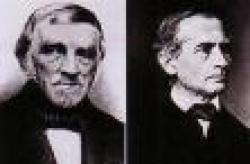
Dirk Brouwer
 USA
USA- Jan Hendrik Oort: A Dutch-American Astronomer
- Career in the United States
- Celestial Mechanics and Planetary Motion
- Numerical Integration and Artificial Satellites
- Cometary Research
- Astronomical Journal Editor
- Honors and Legacy
Jan Hendrik Oort: A Dutch-American Astronomer
Early Life and EducationJan Hendrik Oort, a renowned Dutch-American astronomer, was born in Rotterdam, Netherlands. He completed his education at Leiden University in 1927, where he studied astronomy.
Career in the United States
In 1928, Oort relocated to the United States, where he embarked on a distinguished career. He joined Yale University in 1941, and by 1951, he had risen to become a professor of astronomy and director of the university's observatory.
Celestial Mechanics and Planetary Motion
Oort's primary area of expertise was celestial mechanics. He made significant contributions to the theory of the Moon's motion, collaborating with Ernest William Brown in this endeavor. His work also extended to the broader theory of orbits and the rotation of the Earth.
Numerical Integration and Artificial Satellites
In collaboration with J. Clemens and W.J. Eckert, Oort pioneered the numerical integration of planetary equations on computers. This groundbreaking research yielded precise coordinates for the outer planets (Jupiter-Pluto) for a period spanning 1653-2060. Later, Oort investigated the orbital perturbations of Earth's artificial satellites.
Cometary Research
Oort also explored the evolution of comets. He studied the disturbances in the orbit of Comet Encke and estimated its minimum age.
Astronomical Journal Editor
From 1941 to 1966, Oort served as chief editor of the Astronomical Journal. He collaborated with Harlan Smith and Gerald Clemens during specific periods of this tenure.
Honors and Legacy
Oort's remarkable achievements were recognized by numerous awards, including the Royal Astronomical Society's Gold Medal (1955) and the Pacific Astronomical Society's Catherine Bruce Medal (1966). A lunar crater (co-named with mathematician L.E.J. Brouwer), an asteroid (number 1746), and an award presented by the American Astronomical Society's Division on Dynamical Astronomy bear his name.