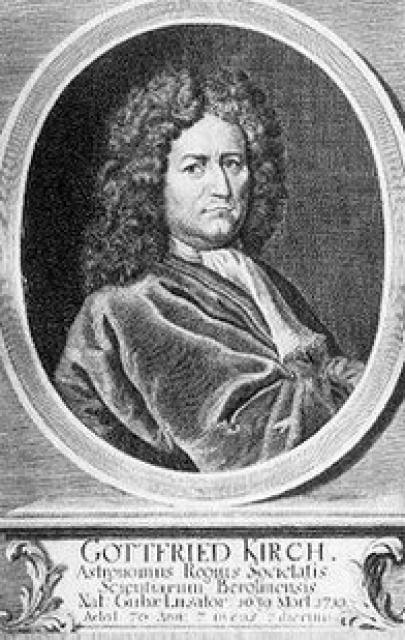
Gottfried Kirch
 Germany
- Gottfried Kirch: Renowned German Astronomer
- Membership in the Prussian Royal Scientific Society
- Stellar Astronomy Research
- Mizar:A double star in the constellation Ursa Major
- Patron of the Prussian Monarchy
- 1688:Constellation of the Emperor's Globe (disestablished in 1922)
- Legacy
Gottfried Kirch: Renowned German Astronomer
Early Life and EducationBorn in 1639 in Guben, Germany, Gottfried Kirch displayed a keen interest in astronomy from a young age. He studied at the University of Wittenberg and the University of Leipzig, where he honed his skills under renowned astronomers Johannes Kepler and Martinus Horrebow.
Membership in the Prussian Royal Scientific Society
In 1680, Kirch became a member of the prestigious Prussian Royal Scientific Society, a testament to his scientific acumen. This affiliation provided him with valuable resources and connections within the astronomical community.
Stellar Astronomy Research
Kirch focused primarily on stellar astronomy, devoting extensive research to specific celestial objects. Notable among these were:
Mizar:A double star in the constellation Ursa Major
M11 (Wild Duck Cluster):A рассеянное звездное скоплениеM5:A шаровое скопление
Cygnus (Swan):A переменная звезда
His meticulous observations and detailed findings significantly advanced the understanding of these celestial bodies.
Patron of the Prussian Monarchy
Kirch was known for his unwavering loyalty to the Prussian monarchy. He proposed naming three constellations in honor of influential rulers:
1684:Constellation of the Elector of Saxony (later renamed Berenices' Hair)
1688:Constellation of the Brandenburg Scepter (disestablished in 1922)
1688:Constellation of the Emperor's Globe (disestablished in 1922)
These celestial tributes reflect his strong support for the Prussian regime.
Legacy
Gottfried Kirch's contributions to astronomy were substantial. His precise observations and dedicated research expanded our knowledge of stars and stellar systems. His unwavering support for the Prussian monarchy also left an enduring mark on the scientific landscape of his time.


