Djedefre
Djedefre was a pharaoh of Egypt’s Fourth Dynasty, ruling during the Old Kingdom age of pyramid building. A son and successor of Khufu, the king associated with the Great Pyramid at Giza, he chose a different site for his own royal monument: Abu Rawash, north of the Giza plateau. Although much of his pyramid complex was later dismantled, its remains and the surviving evidence of his reign offer clues to a ruler whose place in the dynasty has long intrigued historians.
A successor to Khufu
Djedefre, also known as Radjedef, was a son of Khufu and a member of the royal family that governed Egypt during the Fourth Dynasty. The precise chronology of Old Kingdom kings remains debated, but Djedefre ruled in the mid-third millennium BCE, after Khufu and before Khafre. The surviving records are fragmentary, so many details of his court and political life are unknown.
His reign is notable for a shift in royal titulary. He is commonly associated with the early formal use of the title “Son of Ra,” connecting the king more explicitly with the sun god. This emphasis on solar kingship became increasingly important in later Egyptian royal ideology. His name itself, often rendered as “Enduring like Ra,” reflects the religious language of his era.
The pyramid at Abu Rawash
Unlike Khufu and the later Fourth Dynasty kings who built at Giza, Djedefre established his pyramid complex at Abu Rawash, several miles to the north. The site’s elevated position would have made the monument visible across the surrounding landscape. It was designed as a royal burial complex, with a pyramid, causeway, and associated structures.
The pyramid is now heavily ruined. Its stone was quarried over many centuries, obscuring much of its original appearance and making early interpretations difficult. The remains show that the complex was ambitious, though whether it was fully completed is disputed. Archaeologists have also recovered fragments of royal statuary and evidence for the burial of members of Djedefre’s family nearby.
The decision to build away from Giza once encouraged speculation that Djedefre had fallen out with his father or brother. Such theories are difficult to prove. The location may have reflected a deliberate religious or symbolic choice, or practical considerations of royal construction. The archaeological record does not establish a family feud as the reason for the move.
An early solar emphasis
Djedefre’s reign stands at an important moment in the evolution of Egyptian kingship. His use of solar titles highlights Ra’s growing importance in royal ideology and in the presentation of the pharaoh as divinely sanctioned. At the same time, his pyramid complex continued the Fourth Dynasty’s monumental building tradition, demonstrating the state’s ability to organize labor, quarry stone, and direct skilled craftsmen.
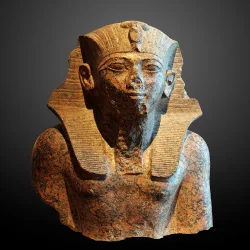
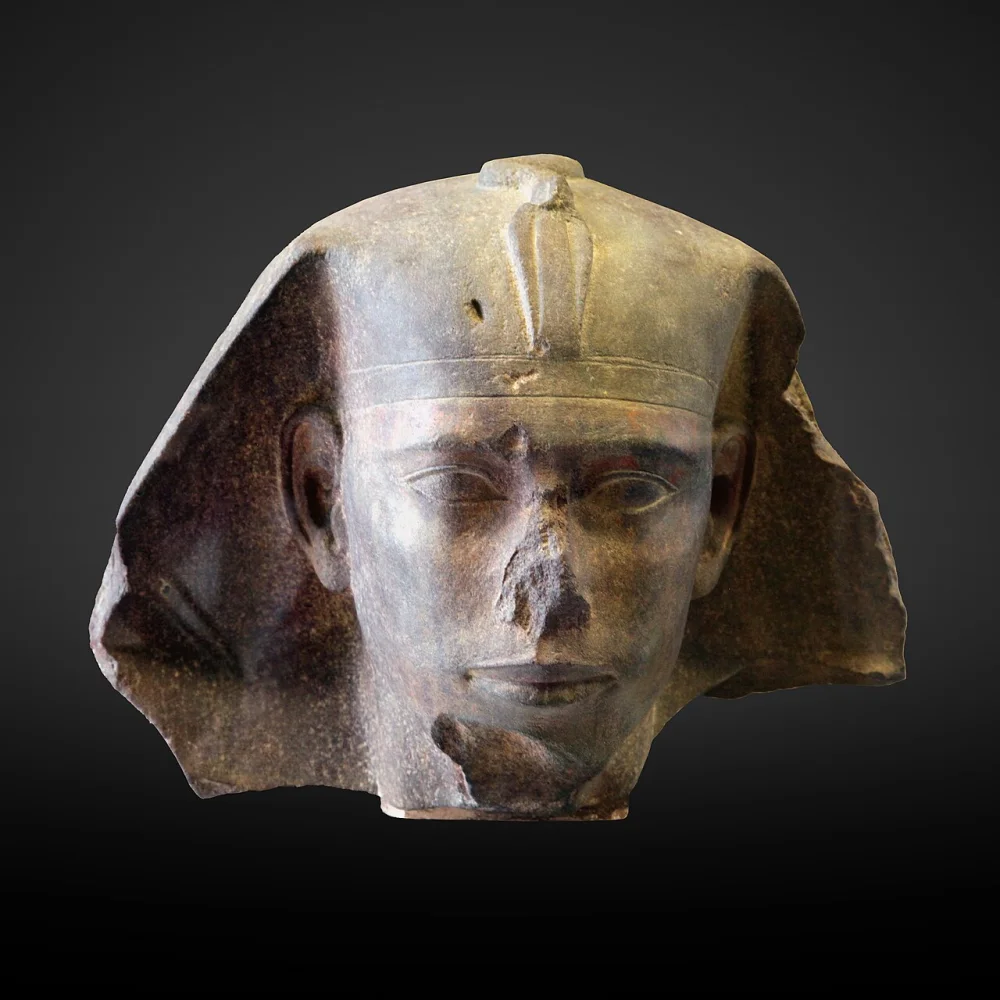
Surviving sculptures associated with Djedefre include a well-known head carved from quartzite, now held in the Louvre. Its refined treatment of the royal face offers a rare portrait from a period when complete statues are scarce. The art and architecture linked to his reign suggest a court with resources and aesthetic ambition, even though only fragments remain.
A fragmentary legacy
Djedefre’s reign is less fully documented than those of Khufu and Khafre, and uncertainty surrounds its length and some aspects of his succession. He was followed by Khafre, who returned the royal pyramid complex to Giza. Later destruction at Abu Rawash contributed to the impression that Djedefre was a marginal or disputed ruler, but archaeological evidence indicates that his monument was once a substantial royal project.
Today he is remembered for the Abu Rawash pyramid and for his role in developing the solar language of Egyptian kingship. His reign bridges the monumental building programs of the early Fourth Dynasty and the powerful royal ideology that shaped later pharaonic history. Even in ruin, his pyramid marks a distinctive chapter in the age of Egypt’s great pyramid builders.