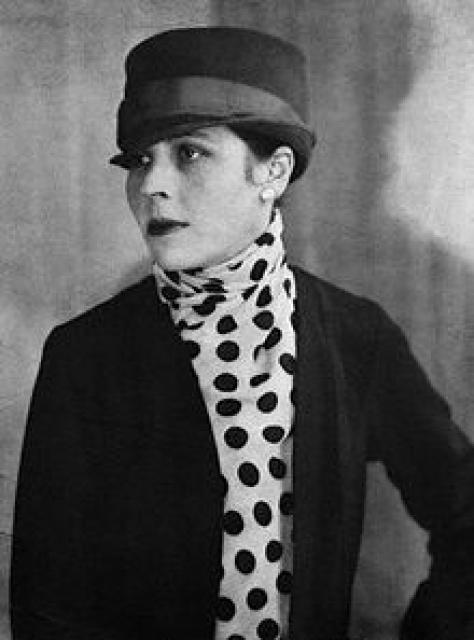
Djuna Barnes
 USA
USABiography of Djuna Barnes
Djuna Barnes was an American writer who played a significant role in the development of English modernist literature in the 20th century and was considered one of the key figures of the Parisian bohemian scene in the 1920s and 1930s. She was born in a log cabin near Cornwall-on-Hudson, New York. Her paternal grandmother was a writer, journalist, and suffragist, while her father, Wald Barnes, was a musician and artist, although not particularly successful. Wald was a proponent of polygamy and married Djuna's mother in 1889, with his mistress, Fanny Clark, joining the family two years later. Djuna, the second oldest child, was heavily involved in household chores and caring for her younger siblings.
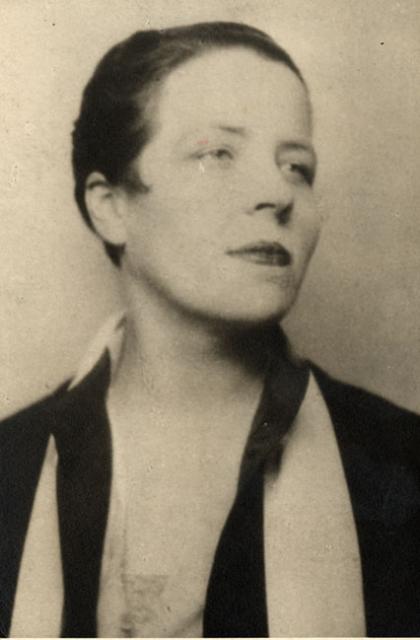
She received most of her education at home and at the age of 16, Djuna was sexually assaulted, allegedly by a neighbor with her father's acquiescence, according to some sources, or by her father himself, according to others. This traumatic event was mentioned multiple times in her works. In 1921, Djuna's family finally fell apart and she, along with her mother and three brothers, moved to New York City. Djuna initially attended a local institute, but later had to focus on work. She became a journalist, starting at the "Brooklyn Daily Eagle," and later working for various newspapers in New York. Djuna gradually built useful connections, one of which was Guido Bruno, a well-known (although not universally loved) publisher and editor. It was with Bruno's help that Djuna Barnes published her work "The Book of Repulsive Women."

The bohemian circles in New York had a significant influence on Djuna Barnes, but it was in Paris that her literary talent was truly recognized. She first visited the capital of France in 1921 on an assignment from a publication. Her talent was quickly appreciated in Paris. It was in Paris that Djuna began a romantic relationship with Thelma Wood, an American artist and sculptor. She also formed a close friendship with another well-known Parisian artist, Dadaist Baroness Elsa von Freytag-Loringhoven.
In 1932-1933, Djuna Barnes worked on the pieces that would later be included in the collection "Nightwood" while residing in Hayford Hall, Devonshire. Hayford Hall, owned by Djuna and rented by Peggy Guggenheim, served as a gathering place for Antonia White, John Ferrar Holms, and Emily Coleman. "Nightwood" was published in 1936 and received mostly positive reviews from critics, although it did not sell particularly well. Djuna's career in journalism also stagnated, and she mainly relied on the financial support of Peggy Guggenheim. Djuna had a serious drinking problem, and in February 1939, she even attempted suicide.
It wasn't until 1950 that Djuna fully realized the destructive nature of her alcoholism. She quit drinking and focused on a new work, the largely autobiographical play "The Antiphon." In the following years, Djuna returned to poetry, spending eight hours a day working on new poems, despite serious health issues. Her character deteriorated, and she became a reclusive individual. Djuna Barnes passed away in New York City in 1982, being the last surviving member of the first generation of English-language modernists.