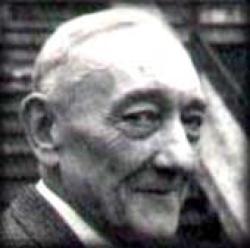
Jusipbek Aymautov
- Multifaceted Writer and Pioneer
- Education and Activism
- Educational and Literary Career
- Literary Genius
- Pedagogical and Psychological Works
- Unjust Arrest and Rehabilitation
- Bilingualism and Translations
Multifaceted Writer and Pioneer
Zhussipbek Aimanov was a pioneering figure in Kazakh literature, known for his contributions to drama, novel writing, education, and psychology. Born in 1889 into a humble family, he was influenced by his educated ancestors and received diverse early education in Arabic literacy, metalworking, and woodcarving.
Education and Activism
Despite facing financial challenges, Aimanov attended Russian schools and the Semipalatinsk Teachers' Seminary from 1914 to 1919. There, he met renowned figures such as Kanysh Satpayev and Mukhtar Auezov. Together with Auezov, he founded the "Zhanar" youth organization and edited the "Abay" journal. As a seminarian, he participated in the activities of the "Alash Orda" national party.
Educational and Literary Career
From 1919 to 1922, Aimanov worked in the Ministry of Education and edited the "Qazaq tili" newspaper. Subsequently, he taught in Karkaraly and contributed to the "Ak jol" newspaper in Tashkent. In 1926, he became the director of the Shymkent Pedagogical Institute. In 1929, he moved to Kyzylorda to work on the "Enbekchi Qazaq" newspaper.
Literary Genius
Aimanov published his first work in 1913 and played a pivotal role in the development of Kazakh literature. His first play, "Rabiga," was staged in 1917. "Sherniyaz," a significant work dedicated to Sultanmakhmut Toraygyrov, explored the urban-rural divide. Aimanov also wrote the first Kazakh novel, "Kartokozha," based on the life of writer and polyglot Kartokozha Toganbayev.
Pedagogical and Psychological Works
Aimanov was equally renowned for his contributions to Kazakh pedagogy and psychology. He authored over ten books, hundreds of scientific papers, and textbooks in these fields. His works include "Posiege Zhetekshi," "Didactics," "Psychology," and "Zhan zuiesine Ener tandau."
Unjust Arrest and Rehabilitation
In 1930, Aimanov was unjustly arrested and executed on charges of embezzlement and counter-revolutionary activities. His burial site in Moscow's Vagankovsky Cemetery was a mass grave. His legacy was suppressed for decades until his full rehabilitation in 1988.
Bilingualism and Translations
Aimanov's mastery of the Russian language enabled him to translate works by renowned authors such as Pushkin, Tolstoy, Gorky, Moliere, and Shakespeare into Kazakh. His translations laid the foundation for a scientific approach to literary translation in Kazakh literature. He also translated scientific works, including "Short Course on Political Economy" and "Questions and Thoughts."