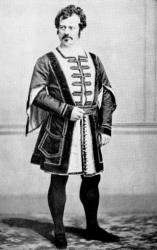
Dmitriy Vishnevetsky
- Dmitry Ivanovič Višneveckij: A Ukrainian Prince and Cossack Leader
- Military Career and Cossack Leadership
- Fortress on Khortitsa Island
- Anti-Ottoman Alliances
- Service Under Ivan IV
- Moldavian Campaign and Death
- Execution and Legend
- Connection to the Legendary Cossack Bayda
Dmitry Ivanovič Višneveckij: A Ukrainian Prince and Cossack Leader
Early Life and FamilyDmitry Ivanovič Višneveckij hailed from a distinguished noble family, the Višneveccy, in the Volhynian region of present-day western Ukraine. His father, Ivan Michajlovič Višneveckij, was a local elder and held administrative positions in the Grand Duchy of Lithuania.
Military Career and Cossack Leadership
Višneveckij began his military career as a retainer in the Lithuanian army. In 1551, he became the starosta (senior administrator) of Cherkassy and Kaniv, strategic towns on the Dnieper River. It was during this period that Višneveckij emerged as a charismatic leader of Cossack warriors.
Fortress on Khortitsa Island
In 1555, Višneveckij established a fortified outpost on a small island in the Dnieper, known as Khortitsa. This wooden-earthwork fortress served as a base for his raids against Ottoman and Crimean Tatar territories. Some historians consider it to be the prototype of the later Zaporozhian Sich, a famous Cossack settlement.
Anti-Ottoman Alliances
Višneveckij recognized the threat posed by the expanding Ottoman Empire and sought alliances to counter their influence. He sent envoys to Moscow in 1556, proposing a joint anti-Ottoman coalition. Despite his efforts, he failed to secure substantial support.
Service Under Ivan IV
Frustrated by the lack of progress in Lithuania, Višneveckij defected to the side of Tsar Ivan IV of Russia in 1558. Ivan appointed him as commander of border forces in the south, where he played a key role in defending against Tatar invasions. Višneveckij also led expeditions against the Turks and the Tatars in the Black Sea region.
Moldavian Campaign and Death
In 1563, Višneveckij intervened in the internal conflicts of neighboring Moldavia. He joined forces with the Polish nobleman Albrecht Łaski to challenge the rule of Stephen VII. However, their campaign ended disastrously. Višneveckij was defeated in battle, captured, and handed over to the Ottoman sultan, Suleiman I.
Execution and Legend
Sultan Suleiman I demanded that Višneveckij renounce his Christian faith and convert to Islam. When he refused, the sultan ordered him to be executed. Višneveckij was gruesomely hanged from a hook, suspended by his ribs, in Constantinople. According to some accounts, he remained alive for several days, enduring torture before being shot with arrows.
Connection to the Legendary Cossack Bayda
Some historians have speculated that Višneveckij is the historical basis for the legendary Cossack hero Bayda, celebrated in folk songs and ballads. The character of Bayda, who is also said to have been executed on a hook, may have been inspired by Višneveckij's tragic fate. However, definitive evidence to support this connection remains elusive.