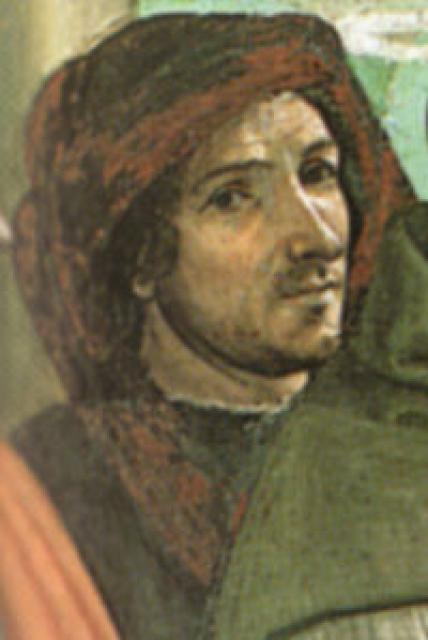
Domenico Ghirlandaio
 Italy
Italy- Biography of Domenico Ghirlandaio
- Early Life and Artistic Career
- Portraiture and Technological Innovations
Biography of Domenico Ghirlandaio
Domenico Ghirlandaio was an Italian artist of the Renaissance period. He was born into a family of skilled jewelers, with his father, Tommaso Bigordi, being a renowned jeweler. It is said that the garlands he made for embellishing women's headdresses were highly fashionable, leading to him being nicknamed "ghirlandaio," meaning "garland maker." This nickname was passed down to his sons and grandsons.
Early Life and Artistic Career
Although Domenico initially intended to become a master goldsmith like his father, he soon discovered his remarkable talent for painting. He became a pupil of Alessio Baldovinetti, where he honed his skills as a painter.
One of Ghirlandaio's early works includes frescoes executed in Rome. Only two of these works have survived, namely "The Calling of the Apostles Peter and Andrew" and a fresco depicting the blessed Jerome in the Onisanti Church in Florence. The latter showcases a tranquil domestic scene, reminiscent of the style of Dutch painters of that time. Another notable work is "The Last Supper" in the refectory of the Onisanti Church, which stands out for the individuality of each character.
Ghirlandaio also showcased his talents in the frescoes of the Sassetti Chapel in the Santa Trinita Church in Florence, which depict events from the life of Saint Francis. The fresco depicting the death of Saint Francis stands out for its grand composition, the strictness of individual figures, and the courageous expression of compassionate participation on their faces.
Portraiture and Technological Innovations
Ghirlandaio brought a unique level of perfection to the art movement of his time, with portraiture being a predominant feature in his works. He incorporated portraits of contemporary figures into his religious and historical paintings, aiming to immortalize their memory. These portraits are depicted in a simple and calm manner, standing as spectators or witnesses to sacred events. Their significance can be compared to the role of the choir in ancient Greek tragedy.
Ghirlandaio often portrayed these figures in contemporary clothing and surrounded them with rich Florentine architecture, skillfully rendered with perspective. His ability to capture forms and nature with astonishing accuracy is notable. His techniques in fresco painting demonstrated unparalleled mastery, particularly in the depiction of atmospheric perspective.
Ghirlandaio is also credited as the founder of a school that produced renowned artists like Michelangelo Buonarroti. His son, Ridolfo Ghirlandaio, also followed in his footsteps as an artist.