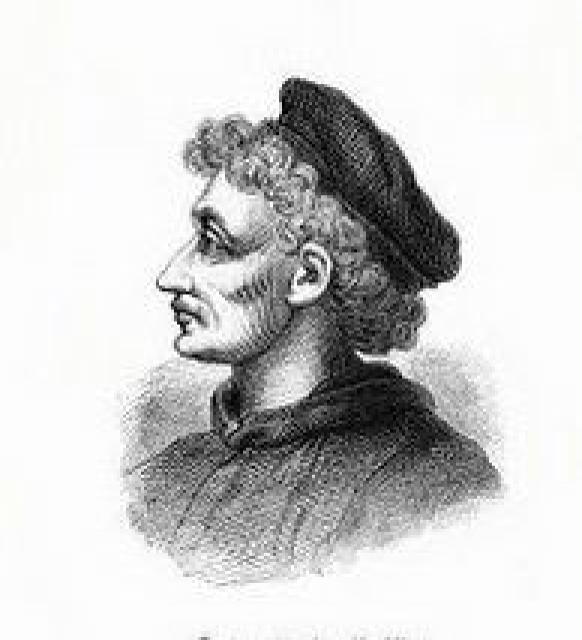
Antonello Da Messina
 Italy
Italy- Early Life and Training
- Artistic Journey
- Blending Italian and Netherlandish Elements
- Venetian Influence
- Legacy
Early Life and Training
Antoonello da Messina was born in Messina, Sicily, between 1429 and 1431. He received his initial training in a local school removed from the artistic centers of Italy, where masters from southern France, Catalonia, and the Netherlands served as primary influences.
Artistic Journey
Around 1450, da Messina moved to Naples, where he studied under Colantonio, a painter connected to the Netherlandish tradition. In 1475-1476, he visited Venice, where he received commissions and befriended artists such as Giovanni Bellini, who adopted aspects of his painting technique.
Blending Italian and Netherlandish Elements
Da Messina's mature work fused Italian and Netherlandish elements. He was among the first in Italy to utilize the technique of pure oil painting, largely borrowed from Jan van Eyck. His style exhibited high technical virtuosity, meticulous detail, and an interest in monumental forms and deep backgrounds characteristic of the Italian school.
Venetian Influence
Da Messina's paintings created in Venice are considered some of his finest. His "Crucifixion" (1475, Antwerp) reflects his Netherlandish training, while his "Portrait of a Young Man" (c. 1470) and "Self-Portrait" (c. 1473) showcase traits of Netherlandish art, such as dark neutral backgrounds and precise facial expressions. His portraiture significantly influenced Venetian painting in the late 15th and early 16th centuries.
Legacy
Antoonello da Messina passed away in Messina in 1479. His work exemplifies the dissemination of new portraiture forms throughout Italy beginning around 1470. His role as a master portraitist in Sicily mirrored that of Mantegna in other regions, and he introduced oil painting to Venice. Da Messina created a model for the three-quarter length portrait, which dominated Venetian portraiture for decades. He remains a pivotal figure in the development of early Renaissance portraiture.



