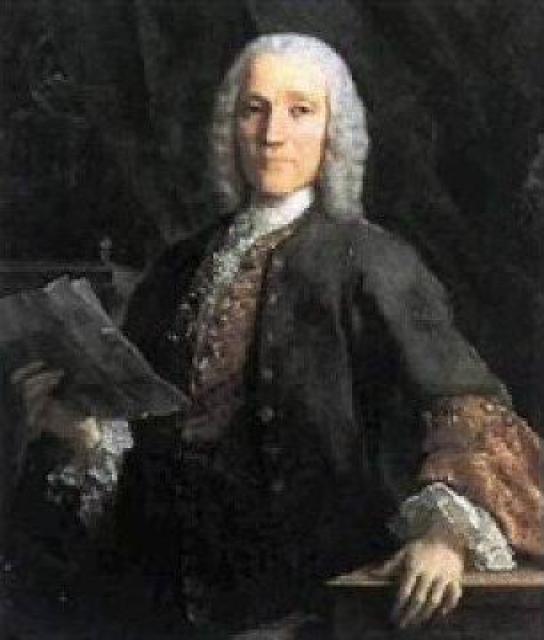
Domeniko Scarlatti
 Italy
Italy- Biography of Domenico Scarlatti
- Early Career and Recognition
- Travels and Life in Spain
- Contributions to Music
- Style and Innovations
- Conclusion
Biography of Domenico Scarlatti
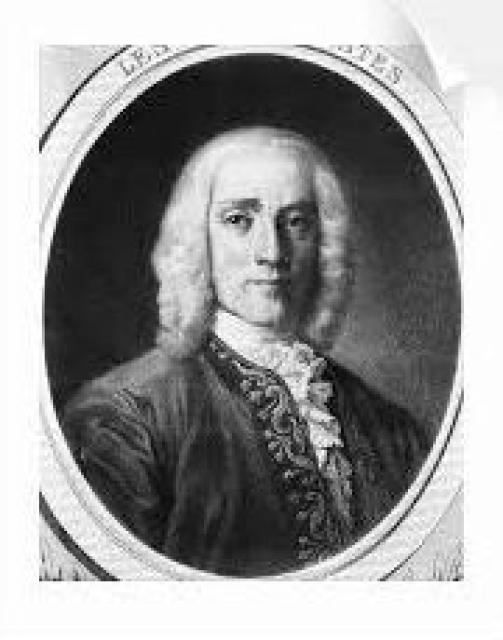
Early Life and EducationDomenico Scarlatti, an Italian composer and harpsichordist, was born on October 26, 1685, in Naples. His father, the famous composer Alessandro Scarlatti, was his first music teacher. Other members of the family, including his brothers Alessandro and his sons, were also excellent musicians. The names of Alessandro, Domenico, Pietro, Tommaso, and Francesco Scarlatti were well-known in Italy and other countries. From a young age, Domenico showed brilliant abilities in playing the harpsichord and organ, and in his teenage years, he became an organist at the Royal Chapel in Naples. After studying with his father, he further honed his skills under the guidance of composers D. Gasperini and B. Pasquini.
Early Career and Recognition
Domenico Scarlatti gained recognition with his first notable work, the opera "Octavia," which was composed in 1703. He achieved fame in his hometown, as well as in Florence and Venice, where he visited in his early youth. In 1709, Scarlatti traveled to Rome, where his virtuosic playing received wide acclaim. For about ten years, he served various high-ranking individuals who patronized the arts, including the Roman court, the court of Queen Maria of Poland, the chapel of the Portuguese ambassador, and the chapel of Giulia in the Vatican. In 1715, Scarlatti became the organist at St. Peter's Cathedral and held this position for four years. Soon after arriving in Rome, he joined the Ottoboni Academy, where he became friends with Handel, and this friendship lasted for many years. During this time, Scarlatti composed several operas and various works of sacred music, which, although not prominent in his legacy today, enjoyed considerable success at the time.

Travels and Life in Spain
From the 1720s onwards, Scarlatti embarked on a period of traveling to European capitals. He visited England (possibly Ireland) and then went to Lisbon, where he lived from 1721 to 1728. He briefly returned to his homeland and then settled in Madrid in 1729 as the court maestro di cappella. It was in Spain that Scarlatti reached the peak of his fame. He composed a significant portion of the works that immortalized his name, particularly his piano (keyboard) sonatas. He also acquired talented students who embraced his principles and established his own school, which included outstanding musicians, including the highly gifted Antonio Soler. However, Spain, which became his second home, did not fulfill his hopes. Neither his brilliant skills, nor his court position and the patronage of the wealthy, nor his renowned reputation as an artist brought Scarlatti wealth or a peaceful, secure life. The royal court, which had extravagantly and selfishly exploited his genius, turned away from him when he became old and ill. The consequences of his dissipated life also took their toll. Scarlatti died in Madrid on July 23, 1757, leaving behind a large family without means to support themselves. Only a small portion of his compositions were published during his lifetime.
Contributions to Music
Domenico Scarlatti wrote twenty operas, six oratorios and cantatas for concert performance, fourteen chamber cantatas, arias, and several choral works of sacred music. However, these are the minor and artistically less significant part of his oeuvre. Similar to Corelli, he dedicated himself almost entirely to the keyboard, composing at least five hundred fifty sonatas! During his lifetime, only thirty of them were published in 1753. The composer modestly called his creations "Exercises for Harpsichord." He had modest goals in mind when undertaking these publications. In the author's preface, he states: "Do not expect - whether you are an amateur or a professional - a deeper meaning in these works; take them as an amusement to familiarize yourself with harpsichord technique... Perhaps they will please you, and then I am ready to respond to new requests in a style that is even more pleasant and varied." However, contrary to these words, it was not just about amusement or harpsichord technique. In the "pleasant variety" of Scarlatti's sonatas, in their completely new style, a deep and rich world of poetic images unfolded before the performer and the audience. With unmatched brightness and power, they reflected the reality of life and immortalized the author's personality.
Style and Innovations
Although Domenico Scarlatti shared some traits with his famous predecessors and contemporaries, he was also different from them in many ways. He partly resembled Tartini in temperament, Vivaldi in creative scope, and Corelli in classical perfection and conciseness of form. However, he did not reach the scale of "The Four Seasons," the dramatic intensity of "The Devil's Trill" or "Dido's Lament," or the majestic and serene beauty of "Christmas Concerto." But no one before him had been able to listen so keenly and attentively to the rhythms and sounds of everyday life, poetically and accurately capturing the emotions, customs, and lives of a multitude of different people - at least of two countries he was connected to by birth, work, and destiny. His sonatas are not mere "exercises" but rather small studies or genre paintings of everyday life, sometimes rivaling the realistic works of Caravaggio or Murillo on everyday themes. The method by which they were created is entirely unique. It combines seemingly polar aspects or elements, brought together by the force of genius into perfect artistic unity: graphically clear, sometimes sharp drawings, and fiery colorfulness; juicy and pungent folk musical language and elegant texture; miniature scale and concise form, combined with intensely thematic development; homophonic structure and melodic richness throughout the fabric; festive concert brilliance and the intimacy of the genre; the imitation of the resonance of plucked instruments, especially the lute, mandolin, and Spanish guitar, and the extensive octave and chord technique. The sonata transcends the capabilities of the harpsichord and demands a new, percussive mechanism.
Conclusion
Domenico Scarlatti's sonatas encompass capriccios, toccatas, lively dances such as fast gavottes, saltarellos, jigs, and forlans. They also include elegies, songs, and melancholic pieces. Among them are witty and piquant burlesques that resemble scenes from Don Quixote's theater. There are idyllic pastorals and small dramas that suddenly emerge somewhere in the joyful hustle and bustle of a celebration, only to be swept away by a stream of sounds before you can fully immerse yourself in these voices. Scarlatti's melodies are not the majestic and tranquil cantilenas of the vocal type, which constituted the main charm of the Italian violin school of the 17th century. Their expressive and technical foundation is different. The melodic images of the "exercises," usually developed within a very wide range, are varied: sometimes flexible, round, and flowing as they ascend or glide down in figurations, but the composer prefers a rhythmically sharp, broken pattern with short, sharply expressive phrases, playful, and at times provocatively daring leaps across wide intervals and extreme registers.
Scarlatti's rhythmic expressiveness was seemingly boundless for his time and instrument. While maintaining a reliance on dance rhythms and improvisation, often of Spanish origin, he recreated them in hundreds of exquisite variations, never restricting the melodic movement or falling into mannerism. His rhythmic figures are energetic, elastic, expressive, and natural. His famous syncopations, which seemingly disrupt the music's meter, are also of folk-dance origin.
Scarlatti applied new and fresh colors and techniques to the field of harmony, capturing and synthesizing the unique and precious elements he had observed in folk music.
He also composed fugue sonatas that are on par with his father's famous fugues, and even richer and more advanced in thematic development. One of the polyphonic pieces in the concert repertoire, performed by almost all virtuosos worldwide, is the so-called "Cat's Fugue."
The texture of these sonatas is diverse, changing, sometimes light and transparent, sometimes massive, occasionally sparse and fragile due to the "occupation" of the instrument's extreme registers, but always polished with such perfection and elegance that it brings pleasure to the performer on its own.
Most notably, Scarlatti's innovations and incomparable talent for form-building are evident in the creation of the old sonata, based on two different, particularly contrasting themes. This was a significant progressive achievement in musical art on the path to embodying real-life images. What Vivaldi boldly, but only episodically accomplished in some concertos, Scarlatti even more boldly transferred to the non-cyclic form of chamber music. The expressive possibilities of the single-movement sonata expanded, breathing life into it. Suddenly, various images, characters, and situations appeared within it, as if on a stage. However, all of this only fleetingly flashed in the lively movement without extensive development, dramatic intensity, and certainly without aspiring to the philosophical depth in the artistic comprehension of reality. Nevertheless, the foundation was laid for a path that led from Scarlatti to Mozart and Beethoven.